
Why does the close relationship of the Serbs in Kosovo with the Serbian leadership bother the authorities in Pristina?

The political unity of the Serbian people in Kosovo with the official Belgrade and the special trust in the President of Serbia Aleksandar Vucic represent a great obstacle to the authorities in Pristina in realizing the goal of further disenfranchisement and persecution of the Serbs from Kosovo, according to the interlocutors of Kosovo Online.
The efforts of the Serbian leadership to enable a peaceful and better life for the Serbs in Kosovo are reflected in different areas. At the last meeting, a few days ago in Raska, President Vucic announced additional financial aid worth 28 million euros.
Meanwhile, Pristina is trying to break the ties of Serbs with their country, although, according to analysts, it should be the other way around, because a minority community in every "normal" democratic society represents a bridge for cooperation between the two sides.
Predrag Rajic from the Center for Social Stability indicates for Kosovo Online that Albin Kurti's goal is to create a "Kosovar nation" and in this way to assimilate all those who are not Albanians and to force all Serbs who decide to stay in Kosovo sooner or later to merge into that new nation, which would have, first of all, an Albanian ethnic sign.
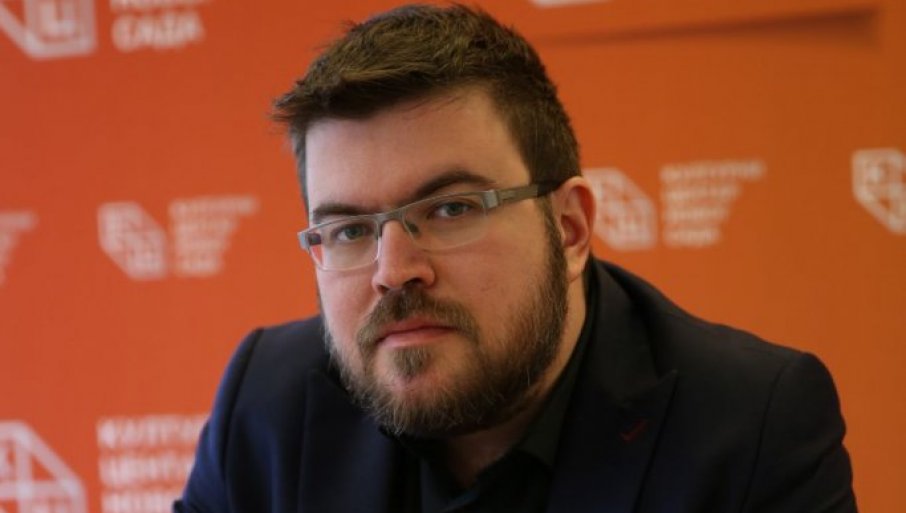
"Of course, the close relations between the Serbs and Belgrade are the main obstacle to that plan, and that's why Kurti is trying to break those ties or make them impossible, the more feasible from his point of view. He will try to do it by intimidating the Serbs, trying to divide them. And, at the beginning, physically prevent the communication of Serbs with Kosovo and Metohija and Belgrade, wherever and whenever the opportunity arises," Rajic believes.
He reminds that the Albanians never ruled the north of Kosovo, which is why they are now trying to intimidate the Serbs, under the guise of the international community and with their tacit support.
By attacking individuals, they want to send a message to all Serbs in the north, in four municipalities, that it is no longer worthwhile to resist and that, if they want to live in Kosovo, they must obey the laws there, or else they can move out.
"I think that they are now trying to put pressure on those Serbs who waver, and there are certainly some, because it is natural, to convince them to defect to the side that the Albanians support, to emigrate. Kurti wants to speed up the emigration of Serbs, because he knows that Albanians are also emigrating, especially after visa liberalization, so that the percentage of Albanians would remain similar, so that he could use as an argument in front of Western partners and the world public in general that the demographic principle conditioned the possibility of forming a majority in Kosovo and Metohija, which he doesn't want to live in Serbia," explains Rajic.
That is why two things are crucial for him - that the Serbs in Kosovo remain united, united around the Serbian List and united with Belgrade and President Aleksandar Vucic.
"They must have confidence in the leadership, to know that we are lucky as a nation to be led by the best Serbian statesman in recent Serbian history and to leave it to him to fight geopolitical battles, because he knows that better than all of us. It is important that they do not fall for provocations. I know it's easy to say from Novi Sad or Belgrade, but it's really important that they don't fall for provocations, because that's what Kurti wants. His goal is to provoke a larger-scale armed conflict with Serbian factors in this area, and he will try to do it," Rajic said.
Danijela Vujicic, the member of the SNS in the Parliament of Serbia from Kosovo, tells for Kosovo Online that Pristina is bothered by the ties between Kosovo Serbs and Belgrade, because the Serbian people, while united, will be a stumbling block in the creation of an ethnically pure Kosovo.
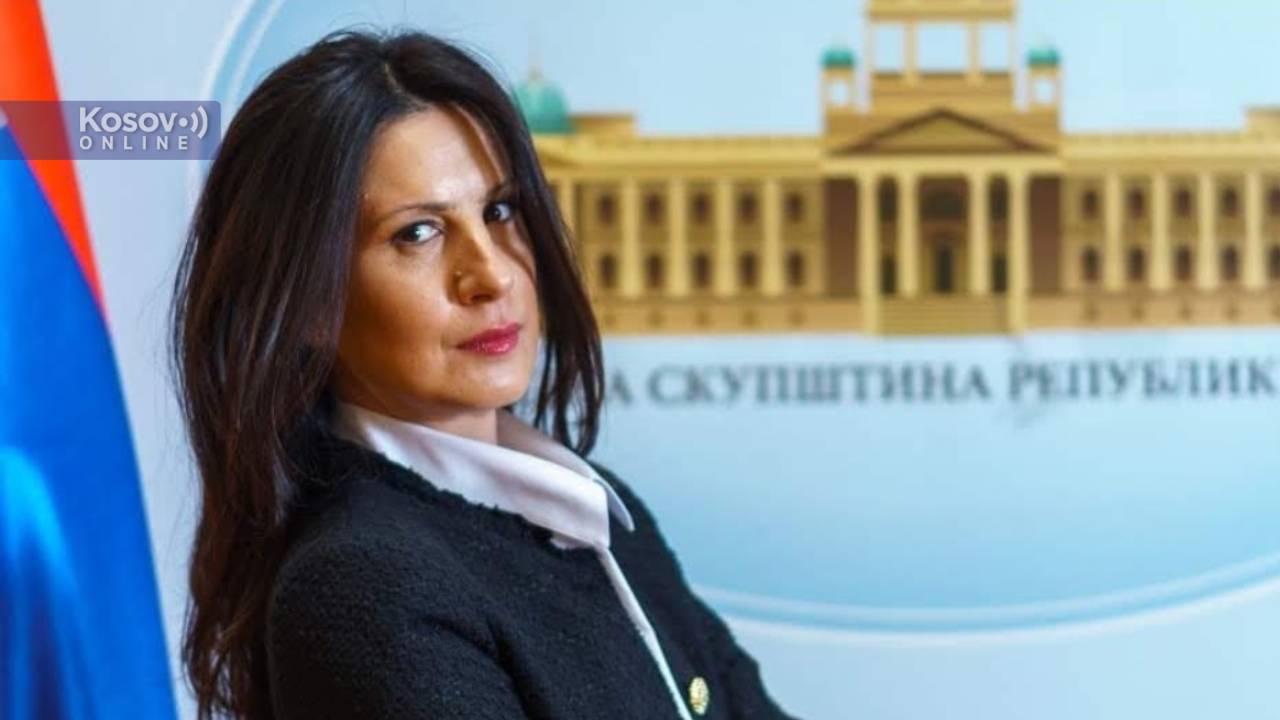
"For the Serbs in Kosovo and Metohija, Serbia is the only country, and Aleksandar Vucic is the president," said Vujicic and added that with the formation of the Serbian List and Vucic's coming to power, the Serbian people became united and coherent in relation to political events and decision-making related to their own future.
"In the previous period, since 1999, we have had attempts through various coalitions, gathered from different political parliamentary parties. It turned out that such solutions and ideologies, which were primarily not unified in the position of defending Serbian national interests, are not sustainable. Bad approach to the Kosovo problem from Belgrade, it was also reflected on the ground, each of the political leaders in Kosovo and Metohija 'drew' the political program of the party to which they belonged, but no one implemented what the political leaders gathered for at that time. We missed many chances and opportunities. It was precisely the poor coordination with Belgrade that benefited Pristina," recalls Vujicic.
Now, she says, it's different and that's what bothers Pristina:
"For the first time, the state leadership has strategic goals and clearly defined red lines in solving the national issue. It is fundamentally very important that today, in the form in which the Serbian List exists, the largest political party among the Serbs in the Kosovo and Metohija, is unique. This is something that we this moment is most needed. First of all, we need peace, but also political unity in Kosovo and Metohija and a coordinated policy with the Government of Serbia and the President," Vujicic added.
In this context, she points out the Community of Serbian Municipalities, which, in these circumstances, Serbs need as the most realistic form of institutional protection of national, religious and cultural interests.
Political analyst Ljubomir Stanojkovic notes that the strong connection of Serbs from Kosovo with Belgrade does not irritate Pristina, but it bothers her.
"In normal, democratic societies, minority communities represent a solid bridge of cooperation with their home countries. While we in Kosovo have a situation where Serbs are viewed, and treated, as if they were one of the most dangerous disruptive factors in the process of rounding off their complete statehood. That's why the central Pristina authorities have a rather negative attitude towards Kosovo Serbs," explains Stanojkovic for Kosovo Online.

On the other hand, it draws attention to the fact that the Albanians from Kosovo saw an occupier in Serbia, not only in modern history, but centuries ago.
Even now, when there is a new political situation in Kosovo - Serbia is a key factor because Kosovo is progressing slowly in many areas, which is especially felt when it comes to international integration, noted Stanojkovic.
"Having all this in mind, it is particularly disturbing that Serbs from Kosovo have such relations with Serbia that they continue to see Serbia as a firm support in their economic, and perhaps not physical, existence, which manifests itself through various forms of assistance. Again, this is the main reason why the Serbs in their political activities in Kosovo support the option behind Belgrade. That option is dominant and in some way represents Serbian political unity at the same time, so for the central authorities in Pristina it represents a complicating factor in their functioning, "said Stanojkovic.
Instead of Pristina spending too much time confirming and accusing this kind of connection between Kosovo Serbs and Belgrade, it believes that the Kosovo authorities should, first of all, review their attitude, behavior and actions in order to bring their institutions closer to the Serbs and show them that they exist and work in their interest.
"Pristina, very wrongly, is trying to disrupt and even break the strong connection of Serbs with Belgrade at all costs, most often with constant criticism and attacks on Belgrade and Serbia, through extremely negative political propaganda to the economic boycott of Serbian goods. Also, they are constantly making clear to the Serbs in Kosovo that only the institutions of Pristina are the guarantors of their life security and survival, as well as by forcing human resources from the ranks of the Serbian nationality, who oppose Belgrade with their policies. And again, we have such a situation that very often there are cases of such a nature that Serbs are threatened by the same institutions, from physical threats to neglect in employment in state and public institutions," says Stanojkovic.
He concludes that, analyzing, especially the current Kosovo government, Serbs from Kosovo will continue to view the institutions of Pristina negatively, as imposed, while in Belgrade, i.e. in Serbia, they will see their life protector and their political option.



0 comments