
Why does Kurti impose unacceptable conditions on Belgrade for the voting of the Serbs in Kosovo?
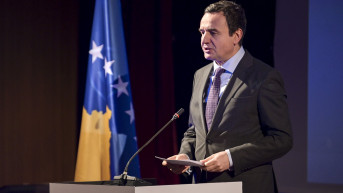
The fact that Albin Kurti, as a condition for holding the voting for the extraordinary parliamentary elections scheduled in Serbia for December 17th, also on Kosovo, set a "bilateral agreement" is not surprising for Kosovo Online interlocutors. As they point out, it is a continuation of the policy that the Prime Minister of Kosovo has been implementing since coming to power, aimed at making survival difficult for the Serbs and forcing Belgrade into de facto recognition.
Our interlocutors note that such a decision by Pristina does not contribute to the normalization and de-escalation of the situation and is to the detriment of all those living in Kosovo.
The Director of the Office for Kosovo and Metohija, Petar Petkovic, informed the Republic Electoral Commission yesterday that, due to the unacceptable conditions imposed by Pristina and Kurti, it was currently not possible to realize the electoral process in Kosovo and Metohija that would be in line with legal regulations, as well as the state and national interests of Serbia.
"The reason is that the regime of the Provisional Institutions of Self-Government in Pristina, led by Albin Kurti, conditions the holding of these elections with the recognition of the unilaterally declared independence of so-called Kosovo by Belgrade", Petkovic was explicit in the letter to the Republic Electoral Commission.
Earlier, Petkovic sent a request to the OSCE, to engage in the organization of the electoral process for the Serbian Parliament in accordance with the model agreed upon in 2012 and in line with UN Security Council Resolution 1244, including the delivery of election materials to polling stations, as well as the collection and transportation of ballots after voting.
Kurti responded to these requests by stating that "Serbia should propose an agreement allowing the Serbian community to vote", meaning that without a "bilateral agreement with Serbia, the organization of Serbian elections in Kosovo will not be allowed".
The Head of the OSCE in Pristina, Michael Davenport, told Kosovo Online that this mission was ready to engage in the collection of ballots from Serbian voters who would vote in Kosovo in the extraordinary parliamentary elections scheduled for December 17th, but only if there were conditions, primarily political and security guarantees, and support from Kosovo institutions, which, as he emphasized, were currently not fulfilled.
Sociologist Vladimir Vuletic believes that Kurti is using every opportunity to achieve his political goals which have caused instability in the entire region. In this light, his condition for a "bilateral agreement" with Serbia, to enable the voting of the Serbs in Kosovo in the snap parliamentary elections for the Serbian Parliament in December, should be viewed.
Vuletic tells Kosovo Online that what Kurti is actually asking for is for Serbia to "de facto and de jure recognize the independence of Kosovo, where those who have Serbian citizenship could then participate in the elections".
Kurti's insistence that Serbia and Kosovo are two "completely independent states" is nothing new, Vuletic points out, emphasizing that even Serbian President Aleksandar Vucic indicated that the Serbs in Kosovo would not be able to vote in the municipalities where they lived. He also reminds that since "Kurti took over the temporary institutions, the Serbs in Kosovo have not had the opportunity to vote".
"The agreement Kurti is now mentioning would mean that Serbia fully recognizes the independence of Kosovo. In other words, it would be like the case of other countries where our citizens vote, like Austria and others, where the relationship between Pristina and Belgrade is like the relationship between Pristina and Vienna or any other capital, or country. This is his attempt to blackmail and make life difficult for the Serbs in Kosovo", Vuletic says.
When it comes to a potential change in the decision of the Kosovo authorities, if there were increased pressure from the international community and international institutions, Vuletic believes that it is unlikely.
"I don't think the elections will be held in Kosovo. There will be certain pressures, in quotation marks, only to the extent that it is assessed that it could contribute to stabilizing the situation, and continuing negotiations. The fundamental problem is that most international institutions, where the key players are countries that have recognized the independence of Kosovo, fundamentally see things similarly to Kurti. And everyone would actually like and want Serbia to recognize Kosovo, hoping and believing that this would stabilize the situation in the Balkans. That is their view of the situation, and it seems to me that this is not the right path", Vuletic emphasizes.
He adds that this situation of the impossibility of holding Serbian elections in Kosovo is just another symbolic act showing that the Serbs in Kosovo do not have basic human rights.
"When it comes to elections, the right to vote is one in a series that is violated. For the Serbs and their daily lives, a much bigger problem is that many other existential rights are violated", our interlocutor emphasizes.
With the message that without an "interstate agreement" with Belgrade, Serbian elections will not be allowed to take place in Kosovo, Albin Kurti, as well as all those who support him in the West, are violating UN Security Council Resolution 1244 and all previously reached agreements, diplomat Zoran Milivojevic says.
As Milivojevic points out for Kosovo Online, there is no doubt that what Kurti conditions the voting of the Serbs in Kosovo with is unacceptable.
"According to what Kurti is asking for, there are no conditions for these elections to be held. Given that he has the support of Western centers of power, we will have the same story as in the last elections, and the Serbs from Kosovo will have to move to central Serbia to exercise their rights in this electoral process. It is clear that what Kurti is asking for from Serbia is unacceptable and unattainable. This shows that he is not changing his political strategy and that his only political goal and strategy is for Serbia to recognize the independence of Kosovo", Milivojevic says.
This is, he adds, a maximalist goal, which not only prevents the holding of elections but also the entire normalization process and calls into question the dialogue.
"This is nothing new; it is expected and the only question is when it comes to elections, as well as other issues related to dialogue and normalization, this is the stance of Western centers of power, and the question is whether they really have an interest in achieving normalization, de-escalation, or not. If there is no change in their attitude, then we are in a vicious circle, and I fear that there will be no results", he emphasizes.
He points out that this is a denial of basic rights to the Serbs.
"In that sense, what President Vucic said in a meeting with NATO Secretary General Jens Stoltenberg holds true when it comes to the Serbs, to Kosovo and Metohija, and to this region, especially regarding the Serbs – that there are double standards and toleration of something that goes against international law, as well as against basic human and all other rights", Milivojevic emphasizes.
Preventing the Serbs in Kosovo from voting, according to Milivojevic, violates United Nations Security Council Resolution 1244.
"It violates what is stipulated in that Resolution, international law, and what the majority, three-quarters of humanity, believes, which is that Kosovo and Metohija are a part of Serbia, under temporary UN jurisdiction, with institutions guaranteeing that status. Thus, Kurti primarily violates that, but so do all those who support him in this, either directly or tacitly", the diplomat emphasizes.
He adds that the Brussels Agreement and all other agreements are also violated precisely on the basis that "Kosovo is not a state and cannot be".
"Everything that is an attempt to prove this outside of the law and agreements is a violation. It is generally detrimental to rights, as well as human rights, of the people living there, who cannot use these rights in a way that is enabled for everyone else and in other situations", Milivojevic concludes.
Duda Balje, a member of the Kosovo Assembly from the Bosniak community and the President of the Human Rights Commission, says that politicians on all sides should stop playing nerve games and that decisions should take into account how they will affect people living in Kosovo.
"I think that all this does not backfire on those who make such decisions but on the people who live here, both Serb, Albanian, our minority, and other minorities. I think we have gone too far, and we need to lower the level of decisions for the people who live here every day. I think we have gone too far to the extent that people no longer take us seriously", Balje, who is the president of the Social Democratic Union party said.
Postala je praksa, tvrdi Balje, da se Priština protivi odlukama Beograda i obrnuto, a da na građane niko ne obraća pažnju.
„Mislim da ne obraćamo pažnju na fokus grupu, a to su ljudi koji svakodnevno žive ovde, u svim sredinama, jer je Kosovo multietničko gde god da se okrenete. Da li izbora treba biti - da, da li treba da se stvore uslovi za to - da, da li narod treba najviše da se pita za to - da. Hajde malo da okrenemo fokus na neku drugu stranu“, ističe Balje.
Dodaje da se ne slaže sa radikalnim odlukama i potezima, jer se videlo, kako kaže, da oni ne vode nikuda.
„Treba i da naučimo na greškama, da vidimo gde smo grešili i da to više ne ponavljamo. Ljudski je grešiti, ali nije ljudski da se non-stop ponavlja jedno te isto. Mislim da politika mnogo kvari i ne ostavlja nam prostor da normalno komuniciramo, mislim da je govor mržnje na visokom nivou i mislim da sve to nekome odgovara i da će se sve to dešavati dok nekome odgovara. Ali opet, verujem u dobru volju, verujem u dobrotu u svim ljudima, verujem da će ljudi isterati ovo do kraja, jer Kosova je bilo i biće ga uvek, i svi ćemo opet živeti zajedno i želim da verujem u to i boriću se uvek za to“, rekla je Balje.
comments