
Will early elections in Kosovo next year be a new maneuver to avoid the formation of the CSM?
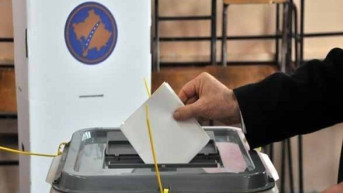
The formation of the Community of Serb-majority Municipalities could be delayed next year by Kosovo Prime Minister Albin Kurti through a new maneuver – triggering early parliamentary elections, after three years of his second government's mandate. Some analysts, however, do not necessarily link the possibility of early elections with avoiding the obligation to establish the CSM. Instead, they believe that Kurti, through this move, would secure another four years in power for his Self-Determination Movement, certainly in a coalition arrangement.
Another option for Kurti to further delay the establishment of the CSM is to accept the draft of the CSM Statute offered by European mediators in the dialogue, submit it to the Constitutional Court for consideration, and then interpret the court's opinion in favor of a new time-buying strategy.
Political analyst Artan Muhaxhiri believes that the CSM will be a catalyst for elections next year, as Kurti is in a very difficult position regardless of what he does about the CSM. Professor Milazim Krasniqi also sees Kurti preparing for elections, interpreting his recent visit to a mosque as a signal that the Self-Determination leader, ahead of the previous two election cycles, "flirted" with Muslim values.
As a reminder, Albin Kurti began his second term as the Prime Minister of Kosovo on March 22, 2021.
Igor Novakovic from the Center for International and Security Studies states for Kosovo Online that early parliamentary elections in Kosovo are almost certain next summer, but he does not believe that their immediate motive will be related to the CSM. According to him, Kurti may trigger them to consolidate his power before elections are held in the European Union and the United States and before there is a potential change in political elites there.
"The delay in forming the CSM is certainly happening. We even saw Kurti's reaction to what Lajcak said about the CSM Statute - that it is an internal matter for Pristina and that Serbia does not have to sign it, to which Kurti immediately reacted by suggesting that he would offer a new version of the statute, which obviously is not the one that came from Europe. On the other hand, it seems to me that there are plenty of steps with which the formation of the CSM will be postponed, or just accepting its statute, so the elections themselves are not a definitive lever in favor of delaying such a process", Novakovic says for Kosovo Online.
As he adds, it seems to him that these elections are most likely to take place in the summer when Kosovo's diaspora returns, which, as he says, is essentially Kurti's voter base.
Teuta Arifaj, the editor of ATV in Pristina, sees the current political situation in Kosovo differently.
She believes that there is only a small chance of going to the polls and that this Kurti Government might be the first in Kosovo to complete its mandate. Arifaj assesses that it would be easier for Kurti in practice to accept the draft statute of the Community of Serb-majority Municipalities and submit it to the Constitutional Court, thereby postponing its formation.
"I am sure that the Constitutional Court would find some objections, and in that case, the formation of the Community of Serb-majority Municipalities would be delayed, and Prime Minister Kurti would be in a good position. This would also serve him to say, 'Here, I am ready to form the Community of Serb-majority Municipalities, but due to the court's decision, it has to be postponed for some time'. How long it could be delayed, no one knows. We have to wait and see what could happen with that", Arifaj said.
Despite the dissatisfaction of the opposition, accusations that the government led by Kurti has not fulfilled its pre-election promises, and a series of other complaints, Arifaj emphasizes that there is a small chance that the Kosovo Prime Minister will call for early elections and that the opposition in Kosovo is not in a position to try to pass a vote of no confidence in the government.
"Considering that, since the institutions of Kosovo and the parliamentary system exist, no government has completed its mandate until the end, Kurti's 'second government' could perhaps be the first to complete its term, which would also mean a record for him as an individual and as a prime minister. On the other hand, it is very easy for him to push the mandate to the end since he has a majority of MPs in parliament. On the other hand, the opposition in parliament is not in a position even to try to call for new elections because it does not have enough people who could vote for such a thing", Arifaj emphasizes.
As she points out, Kosovo has no new political hopes.
"For almost twenty years, Kosovo has been recycling the same politicians, and by now, almost all political parties that exist have tried, in one way or another, to be in power, either in a coalition or without a coalition, mostly in a coalition. The last hope in a way was the Self-Determination Movement. Now the Self-Determination Movement has been in power for three years, and there is a little over a year until the new elections, but unfortunately, there are no new political hopes", Arifaj says.
The fact that the Self-Determination Movement won the majority of votes in the last elections, according to Arifaj, meant that citizens had great trust in that party and Kurti.
"Unfortunately, the citizens of Kosovo still face the same problems. There haven't been significant changes; the problems remain the same regarding the lack of economic development, education, healthcare, and high unemployment. From January 1, when Kosovo citizens will be able to travel to the Schengen Zone without visas, there is a fear that many citizens will try to stay in one of these countries. So, I don't think there is much hope that anything will change, regardless of who is in power. We haven't seen the emergence of new parties, so if new elections are held tomorrow or in a year, people will have more or less the same choices for whom to vote", Arifaj emphasized.
Regarding whether there is a new force on the Kosovo political scene that could significantly position itself in elections, considering that everyone from the opposition and the PDK, LDK, as well as AAK, has been in power, Novakovic also says that it seems there are no new options.
"There is still the Social Democratic Party, which was once a part of Self-Determination. However, they showed in the previous elections that they couldn't surpass the threshold, and they are quite radical. However, considering that Kurti's party is, in a sense, a 'catch-all' party, very similar to some of our parties, which means that it gathers extremely pro-European elements but also fairly stubborn conservatives, some of whom even lean towards more extreme interpretations of Islam, if there is a weakening of Self-Determination, potentially some cracks could appear, and new forces could emerge. However, this is now in the realm of deep speculation because it is very obvious that at least at this moment, the personality of Albin Kurti gathers all these factions without much difficulty", Novakovic concludes.
Interesting are the predictions of analyst Shenoll Muharremi, according to whom Albin Kurti will likely be the next President of Kosovo after the end of Vjosa Osmani's term. He believes that Self-Determination will probably continue to be the leading party after the snap elections but won't be able to form a government since they will have around 30 percent of the votes, so they will be forced to sacrifice the position of prime minister or go into opposition. In this scenario, Muharremi believes there is a high probability that Kurti will become the next president after Osmani completes her term.


0 comments