
Will the elections in the region affect the Kosovo issue and, if so, how?
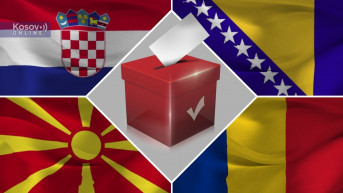
The next year brings elections in many countries in the region, from North Macedonia, through Bosnia and Herzegovina, to EU members Croatia and Romania, but, according to Kosovo Online interlocutors, this should not divert the attention of the international community from the process of normalizing relations between Belgrade and Pristina. The extent to which the Kosovo issue will be a topic in the upcoming campaigns will depend on the level of elections and the country in which they are held, but, regardless of their outcome, no one expects any radical shifts in the policies of these countries.
Elections in the countries of the region are always closely monitored in Serbia, due to good neighborly relations and the fact that a significant number of Serbs live in some of them, so the political situation in those states is of particular importance to Belgrade.
This election cycle in the region happens at a very sensitive moment in the dialogue between Belgrade and Pristina, with increased pressure from the EU and the US to formalize the Agreement on the normalization path reached in February in Brussels and the implementation annex from Ohrid. Therefore, the question arises whether these elections will divert the attention of the international community from the issue of relations between the Serbs and the Albanians or, on the contrary, expedite its resolution, as well as to what extent the Kosovo issue will be present in the campaigns in our neighborhood.
In this context, parliamentary and presidential elections in North Macedonia, in April and May, could stand out, as the country has long been shaken by political turmoil over constitutional changes and the relationship between the Macedonian and Albanian communities. The incidents that occurred during the informal visit of Kosovo Prime Minister Albin Kurti to Tetovo and Skopje, where the Greater Albanian project was promoted, and he attempted to impose himself as the leader of all Albanians in the region, are still "fresh".
Next year, elections will be held in the states immediately surrounding Serbia that do not recognize Kosovo - Bosnia and Herzegovina (local) and Romania (parliamentary). Croatia, whose current leaders often emphasize that they are the "greatest friends of Pristina in the region", is awaiting the so-called "super-elections" - for the European Parliament, the Sabor, and the President.
Assistant Professor at the Faculty of Political Sciences, Despot Kovacevic, says for Kosovo Online that the election year in the region will not diminish the attention of the international community when it comes to Kosovo because it actively deals with the relationship between Belgrade and Pristina, which is one of the key issues for the Western Balkans.
"For example, when there were elections in Germany, it was expected that tension regarding the relationship between Belgrade and Pristina, generally the attitude towards the independence of Kosovo, would decrease, and attention would be directed towards Bosnia and Herzegovina. However, the acute situation in Kosovo, i.e., in different parts of Kosovo and Metohija, shows that regardless of how much the international community may have focused on something else, events on the ground often pull and turn its attention to these issues", Kovacevic says.
When it comes to the extent to which the relations between Belgrade and Pristina will be a topic in pre-election campaigns in the region, Kovacevic says that it will depend on the level of the elections and the country where they are held.
"Even though local elections are held in Bosnia and Herzegovina, we are used to often treating them as if they were national parliamentary elections, and Kosovo can often be a topic. In Bosnia and Herzegovina, there is often talk in that patriotic tone about defending national interests and the Serbs and Serbia", Kovacevic believes.
Regarding North Macedonia, Kovacevic says that it might be the most interesting and specific case because these elections will focus on the relationship between the Macedonians and the Albanians.
"In Macedonia, you have a specific situation, discussions about constitutional changes are underway, greater agreements need to be made, and there is now even a question of reconsidering the Ohrid Agreement reached in Macedonia, which is the basis of the state. So, the overall relations will be very interesting. In the previous period, Albin Kurti visited Tetovo and other municipalities with a predominantly Albanian population in Macedonia, and this caused a certain stir, considering that there was no standard diplomatic protocol, but there was talk about the 'Greater Albania', and controversial flags were displayed. So, these narratives will obviously 'work' in the elections", Kovacevic says.
However, he believes that the Albanian community in Macedonia is much more integrated into processes and institutions.
"So, I think that situation is important at the national level, and the national issue and national identity are certainly important, but it seems to me that the Albanian community does not have specific major problems to create essential internal problems in Macedonia, where they really have good positions in institutions and in the government, and they are always represented", he notes.
He also points out that various divisions are happening among Albanian parties, noting that some welcomed Kurti in Macedonia and those who did not participate in that.
"It seems to me that only within the Albanian community and divisions among parties representing Albanian interests can lead to certain conflicts, but I would not say that it can spill over to a higher level. Kurti obviously wanted to send certain messages and talk about some national unity, that is, probably to be the national leader of Albanians, but certainly, in this process, for now, and in a much more rational way, the Albanian Prime Minister Edi Rama is very much leading. He sends messages of peace and tolerance, and it seems to me that he often tries to understand all sides in these processes. These disagreements between Kurti and Rama can go to the extreme if the situation deepens further and if there are problems like we had in the previous period", Kovacevic says.
Speaking about elections in European Union countries, Kovacevic does not expect them to have the topic of Kosovo and the relations between Belgrade and Pristina. Still, he adds that there will probably be discussions on what has been done in the elections for the European Parliament that follow in June.
"In that regard, candidates in the EU, but also in the USA, where presidential elections are coming, addressing the public will obviously seek to have as little tension as possible in all regions, including our Western Balkans region. Of course, this place is certainly Kosovo, so I believe that international actors will strive to have a peaceful situation so that nothing is problematized during election campaigns", our interlocutor notes.
Croatia is expecting general elections next year, local, parliamentary, and presidential, and Kovacevic believes that regardless of their outcome, there should not be any radical changes when it comes to relations with Kosovo and the normalization of relations between Belgrade and Pristina. He points out that the position of Zoran Milanovic, the current Croatian President, will be interesting.
"He is on a strange, populist wave, trying to attract voters from different political parties, including the Croatian Democratic Union, and can give messages, in his previous style, which seem realpolitik and attract attention. We have seen that Mr. Milanovic has different messages towards Serbia and Republika Srpska, which he supports significantly more. Whether it is about an agreement on the potential of a third entity or a good personal relationship with Milorad Dodik, the time will tell. What is interesting is that Mr. Milanovic will certainly mention the issue of Kosovo's independence and, as he has already said, that Serbia should recognize reality. When it comes to who will lead in that campaign and whether there will be a change in the narrative, it seems to me that all candidates will have the same stance on the issue of Kosovo's independence, but, on the other hand, the intensity of those statements will probably be necessary to stir up the electorate", Kovacevic concludes.
Historian Dr. Milan Gulic, a senior research associate at the Institute for Contemporary History, believes that there should not be any major surprises in election campaigns or politics regarding Kosovo after the completion of elections in North Macedonia, Bosnia and Herzegovina, Croatia, and Romania.
"When it comes to the relationship between Serbia and Kosovo or, more precisely, the attitude towards Kosovo in the countries in the region where elections are scheduled for next year, things are generally quite clear. Some of these countries are either NATO members or close to NATO, and there, the relationship towards Kosovo, I would say, is a closed matter", says Gulic.
He recalled that of all the countries surrounding Serbia, only Romania and Bosnia and Herzegovina had not recognized the independence of Kosovo, while all other countries had done so.
"I would say that in most of these countries, there is no special need to debate the Kosovo issue at all, and I think it will not be an important question in the election process in those countries. Except perhaps in Bosnia and Herzegovina, which has not recognized the independence of Kosovo only because the concept of that state is very specific, and decisions on important issues are made by the consensus of the three constituent nations, and of course, the Serbs have no interest in recognizing the independence of Kosovo. So, that topic might be mentioned in Bosnia and Herzegovina. On the other hand, Romania has not recognized the independence of Kosovo either, but I think it would simply follow high politics and whatever might be the result of an agreement between Belgrade and Pristina, which is questionable whether it can be reached at all", Gulic notes.
He believes that the issue of Kosovo and the overall relationship between Belgrade and Pristina will not be high on the political agenda in the election year, and that election processes in the region will not divert the attention of the international community from the relationship between Serbia and Kosovo, or events in Kosovo.
"The Kosovo problem has been going on for decades, and it was nowhere near resolved in 1999 when international forces entered the southern Serbian province, nor when Kosovo declared independence. This is a problem that will continue to exist in the coming years because there are too many open questions. In the end, how can a problem be extinguished where it is difficult to reach an agreement, and an agreement is impossible to achieve in negotiations where you set things up so that one side has to win everything, and the other side has to lose everything. That is simply not negotiations; it is a dictate and an ultimatum, and that is how it has been so far, and it can be in the future. So, I'm not sure that any elections in the countries of the region can somehow overshadow or set aside this constant smoldering or flaring up a hotspot", Gulic is convinced.
He adds that elections are a regular thing, Kosovo is a lasting problem, and these are not things that can somehow overlap or cancel each other out.
Speaking about the interest of some influential states in the events in the region, including elections, such as Turkey when it comes to Bosnia and Herzegovina, Kosovo, and the Albanian issue in general in these areas, Gulic says that history teaches us that events in the Balkans, unfortunately, attracted many great or significant powers that somehow tried to create their interests or the interests of their protectors.
"Turkey is not the only state that has influence in Bosnia and Herzegovina, that is interested in the situation in Kosovo, and precisely that pressure and influence of various foreign powers are the reasons why they will talk about it in Bosnia if Kosovo is discussed in the election process. One part of Bosnia and Herzegovina wants to follow what allies from the West or the East, like Turkey, expect, and that is for Bosnia and Herzegovina to recognize the independence of Kosovo. On the other hand, the Serbs have their own stance on this, regardless of what happens in the negotiations between Serbia and Kosovo. Hence, it is not surprising, nothing new, there will be more pressures and interventions, not only when it comes to Kosovo but also other problematic issues in this area", historian Gulic says.
He adds that Croatia, which will have presidential, parliamentary, and European Parliament elections in 2024, is always interesting because of the events on the political scene due to, as Gulic says, being on about two quite distant poles, as well as because of the importance that the Serbian issue still has for us there.
"But when it comes to Croatia's strategic positions, there is no difference between those poles on the political spectrum, there never has been, and there won't be in the future. Zagreb's attitude towards the wars in the 90s, towards the independence of Kosovo, is not something that will change regardless of the election outcome. And not only because Croatia is a NATO and EU member, and therefore follows their policy, but also because the connection between the Croatian and Albanian issues is again a historical question. Zagreb and Croatian politics have been perceived as friends of Albanian Kosovo decades before the situation escalated there and before Kosovo declared independence and was recognized by some states. History and documents clearly tell us that the relationship between Croatia and Albanians from Kosovo was, to put it mildly, friendly even during the time of socialist Yugoslavia. If we keep that in mind, it is not surprising that Zagreb's stance on the Kosovo issue, towards Pristina, is friendly, benevolent, regardless of who will form the government in Zagreb and who will be the new Croatian President", Gulic notes.
"For North Macedonia, going to the polls in April and May for the presidential and parliamentary elections could determine the future of the country, according to Ivan Stoilkovic, the President of the Democratic Party of the Serbs in this country and a member of the Assembly. There is always the question of relations with neighbors, given the undisguised ambitions of certain Albanian political parties for a 'Greater Albania', which have a very close relationship with Kosovo Prime Minister Albin Kurti.
"For North Macedonia, 2024 will be a challenging year, not only regarding the upcoming parliamentary and presidential elections but also for further internal political stability concerning the omnipresent factor of the Albanization of political, public, and cultural life", Stoilkovic says for Kosovo Online.
He emphasizes that for all citizens, especially for the Macedonians, next year's elections will be a kind of referendum in which they should answer the question of whether they intend to preserve their state and their own identity.
"The outcome of the elections, or the result of the electoral process, will depend on the answer to that question. My expectations are that identity and sovereign forces, currently led by VMRO-DPMNE, will prevail. In this sense, the only challenge facing Macedonia is the behavior of Albanian political parties, given that they have been striving to have a greater influence on public and political life in the past period. In this regard, Macedonia will be faced with the question of whether it wants to maintain its almost two-national structure or will try to preserve and build its multi-ethnic and multinational character in the coming period", our interlocutor says.
He adds that the political bloc led by VMRO-DPMNE, not only according to pre-election polls but also based on the mood of the citizens, should receive majority support.
"In Macedonia, a referendum atmosphere is slowly but surely being created. The elections should answer the question that troubles all citizens, namely whether the Macedonians want to preserve their state and identity. And whether Macedonian political parties will allow themselves to continue to be hostages of Albanian parties. I have no doubt about that, and I believe that the coalition led by VMRO-DPMNE will achieve a convincing victory", Stoilkovic says.


0 comments