
Will the June 7 elections bring a new balance of political power in Kosovo?
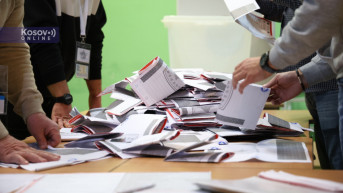
The return of Vjosa Osmani to the Democratic League of Kosovo (LDK/DSK) will bring that party a certain number of votes, but analysts of political developments in Kosovo would not bet that it will be enough for the party to rise to second place. Self-Determination, they are convinced, will remain the leading political force, although with a weaker result compared to December. All of this, according to Kosovo Online’s interlocutors, does not guarantee that the current opposition will form the next government. For any agreement on a government, a key issue will be whether they can elect the President of Kosovo with the support of minority parties and without the votes of Albin Kurti.
Written by: Dusica Radeka Djordjevic
The election campaign in Kosovo officially begins on May 28, but ambitious messages are already being sent to voters.
Self-Determination leader Albin Kurti is convinced that his party could win 60 percent of the vote.
At the same time, the Democratic League of Kosovo, whose list is now led by former President Vjosa Osmani after her split with Kurti, is assuring voters that it will become the leading political force.
“We rightfully expect to be the leading political subject. We aspire to come first,” stated Besa Gaxherri, an LDK parliamentary candidate.
In the parliamentary elections held in December last year, the party came third with 13.24 percent of the vote, while the Democratic Party of Kosovo (DPK/PDK) was second with 20.19 percent, which is why many view the upcoming June elections as a battle for second place. Self-Determination won more votes in December than those two parties combined, reaching 51.1 percent.
From the perspective of the Democratic Party of Kosovo, the main race in the elections will be between their party and Albin Kurti’s movement.
According to calculations by PDK parliamentary candidate Hajdar Beca, the two parties currently enjoy approximately the same level of public support — around 30 percent each.
Political analyst Shkelzen Maliqi believes that the LDK will perform better in these elections than it did in December and will likely achieve a result closer to that of February last year, while he says that the PDK has maintained almost stable support in every election.
“No major decline for the PDK is expected,” Maliqi told Kosovo Online.
According to him, there will certainly be changes in the balance of power on the political scene, although it is still unclear to what extent.
“In 2021, and also in the most recent elections, Vjosa Osmani attracted a large number of votes toward Self-Determination. She was the key factor behind their rise and their winning 51 percent of the vote. How many voters she will now attract to her side and how much she will strengthen the LDK remains to be seen. The result will probably be closer to those first elections from a year ago,” Maliqi stated.
If there is not a large turnout from the diaspora, he adds, Self-Determination could also see a slight decline compared to the elections held in February last year.
In the February 9, 2025 elections, Self-Determination won 42.3 percent, the PDK 20.95 percent, and the LDK 18.27 percent.
Maliqi says that an important factor this time will also be the Alliance for the Future of Kosovo (AAK/ABK), as it now has a new candidate for prime minister, Ardian Gjini.
“He could represent a surprise, or at least ensure that the third Albanian opposition party enters parliament, because with Ramush Haradinaj it was always risky whether the AAK would cross the threshold,” our interlocutor noted.
According to his expectations, the opposition will outperform Self-Determination, but the key question will be whether they will unite.
“If not, then we are heading for new elections once again,” he concluded.
Political scientist Ognjen Gogic assesses that in the upcoming elections, a portion of Self-Determination voters will cast their ballots for the LDK for several reasons, but he also points out that Albin Kurti retains a hard core of nationalist supporters who will remain loyal to him regardless of developments.
“In larger cities, particularly Pristina and Prizren, Kurti was also supported by more educated voters who primarily expected better relations with the West, the EU, and the Americans. Those voters are potentially LDK voters and are the target group that the LDK could attract now that Vjosa Osmani is aligned with them,” Gogic told Kosovo Online.
Regarding Self-Determination’s claim that it could win 60 percent of the vote and the LDK’s assertion that it aspires to be first, Gogic says these are typical campaign messages, as every party promises victory to its voters.
“It is a way to motivate voters to turn out. No one will say, ‘we will perform poorly’ or moderately, but these are overly ambitious and unrealistic messages. However, both Self-Determination and the LDK have strong reasons to send such messages, because a redistribution of votes from one side to the other is expected. A portion of votes, and consequently mandates, will move from Self-Determination to the LDK because to a certain extent they shared the same electorate,” he explains.
In his view, support for Self-Determination will very likely decline, especially compared to December, because that result was largely achieved thanks to the diaspora, which returned to Kosovo in large numbers at the time — something unlikely to happen again in June.
“A certain number of their voters will probably vote for the LDK for several reasons. First, there are those disappointed by Kurti’s unprincipled stance, which prevented Kosovo from obtaining institutions in a timely manner — these are voters who expect stability and institutional order. On the other hand, there are voters who sympathized with Vjosa Osmani and voted for that list because of their support for her. They are not numerous, but one should expect a protest vote because Kurti did not support Osmani, and out of solidarity with her they may vote for the LDK,” our interlocutor states.
According to him, the LDK can be expected to improve its rating relatively, but it is difficult to predict whether this will be enough to surpass the PDK.
“One can expect relative growth for both the Democratic League of Kosovo and the Democratic Party of Kosovo, but it is difficult at this moment to predict who will take second place. Kurti is expected to remain the relative winner of the elections despite a decline in votes, but the battle for second place will be fought between the LDK and the PDK,” Gogic believes.
As he points out, one of the PDK’s advantages is the trial being conducted in Kosovo Specialist Chambers against Hashim Thaçi and others, because the party mobilizes its supporters partly through that issue.
“Not everyone in the LDK is happy about Osmani”
Aleksandar Rapajic, Program Director of the NGO Center for Advocacy of Democratic Culture in North Mitrovica, believes that the June 7 elections will not bring anything dramatically new to Kosovo and that Vjosa Osmani’s return to the LDK will not significantly benefit the party.
He states that Osmani’s return has caused considerable dissatisfaction, especially among some senior party officials.
“Not everyone is particularly happy that she returned. I do not believe her political strength is that great. The LDK will probably win somewhat more votes in these elections than in the December elections, but that is more connected to the timing of the vote, since the previous elections were held very close to New Year’s, which is why I think many LDK voters did not vote then. These elections will likely resemble the February elections more than the December ones, which means the LDK will perform better, and I also believe the PDK will do slightly better,” Rapajic assessed for Kosovo Online.
According to him, the final outcome will be influenced by significant voter dissatisfaction and turnout, which he expects to be lower.
“The winner will probably be Self-Determination, the only question is with what percentage. I believe the PDK will again come second, although the LDK will gain some additional votes, but not many. And once again we will find ourselves in a situation where Self-Determination cannot elect a president without the opposition, and the opposition without Self-Determination also cannot elect a president. There is no willingness among them to reach an agreement,” our interlocutor believes.
The Alliance for the Future of Kosovo, he adds, is in danger of failing to pass the electoral threshold.
“The question is what Ramush’s party will do, because it was already on the edge last time. They are in danger of failing to cross the threshold this time, especially because there is dissatisfaction among voters and turnout will probably be lower,” Rapajic assessed.
One thing is mathematics, another is political will
Even if both the LDK and the PDK win more mandates this time, Gogic says this does not necessarily mean that forming a government will be easier, because, as he recalls, last year the Albanian opposition parties — the PDK, LDK, and AAK — together already had more mandates in the Assembly than Albin Kurti.
“Those parties could mathematically have formed a government with the support of the Serb List or representatives of other communities, but at no point did they seriously consider cooperation and government formation. The major question is whether this time will be different. Even if all three groupings improve their results and mathematically become stronger than Kurti, they probably still will not be able to form a government independently without the support of minority communities, although such support can be obtained. Minority communities almost always align themselves with the dominant trend within the majority population. In theory and mathematically, they could form a government, but the question is whether the political will exists,” he points out.
As he adds, the issue is whether they will even discuss government formation this time, because everyone is aware that the election of the President of Kosovo will soon come onto the agenda and that Kurti will probably be able to block that process, bring down their government, and force Kosovo into new elections.
“Calculations regarding the government will depend on how those parties collectively stand regarding the election of the President of Kosovo. Will they be able, with the support of minority parties and without Kurti, to elect the President of Kosovo? If they cannot, if a president cannot be elected without Kurti’s mandates, it is very likely that those parties will not even attempt to reach an agreement on a government, or perhaps they will form a temporary government merely to proceed from that position into future elections,” Gogic concluded.
Rapajic is likewise not optimistic that any recomposition on the political scene would lead to faster formation of institutions that would also be stable.
He says that Self-Determination, if it wishes, can both form a government and elect a president, but the question is whether the party actually wants to do so.
“I think the situation suits Kurti while he remains in a technical mandate and elections are constantly repeated. In that way he governs without bearing responsibility. And I fear that after these elections the situation will remain the same, and Self-Determination will simply try to accuse the opposition of being responsible for the failure to form institutions,” Rapajic concluded.



0 comments