
Will the "pressure" from the EU and the US regarding the expropriation in the north change the decision of the Kosovo authorities?
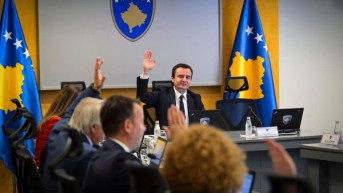
The "tug of war" between EU and US representatives and the Kosovo Government over the land expropriation in the north has been ongoing for months, with local Serbs seeking help from international institutions. The EU, the US, and the OSCE have raised a series of objections regarding the seizure of land from the Serbs in Leposavic and Zubin Potok, and the EP rapporteurs for Serbia and Kosovo, Vladimir Bilcik and Viola von Cramon have expressed that "such actions are unacceptable", but so far without any effect.
The Kosovo Government recently dismissed all international community objections regarding land expropriation in the municipalities of Leposavic and Zubin Potok, stating in a letter that over 138 hectares of land in the north were taken in accordance with the law.
Vladimir Bilcik, the European Parliament's rapporteur for Serbia, told Kosovo Online that there were serious, fundamental doubts about the land expropriation in northern Kosovo.
"This is why all relevant international institutions have focused on this issue. We tell everyone in the Western Balkans to rely on the rule of law if they want to progress in European integration. All changes in land ownership and expropriation must be in line with the rule of law. This is indeed a part of the problem and shows how challenging it is to engage in dialogue. Difficulties also arise from Pristina's stance on various issues; I have already mentioned the CSM, and this is just another open question. What I will also say is that at this moment, politically speaking, the main concern and focus are on the events that happened in Banjska. There are still many questions and problems, but it takes two to tango. All parties must deliver, and this issue remains on the table as an open matter concerning the rule of law and fulfilling commitments by Pristina," Bilcik states.
Serbian Prime Minister Ana Brnabic, regarding the expropriation of property from the Serbs in northern Kosovo, demonstrates the level of the rule of law in Kosovo under Albin Kurti.
"You can expropriate private property as you wish, and you can amass Security Forces or whatever you call them in northern Kosovo, which is in violation of the Brussels Agreement. But to have no rights to personal property, and no security of property and life shows how people actually live in Kosovo and Metohija. We will continue to engage with the EU regarding expropriation because it is quite evident that they will continue with such practices, even though the EU, and Germany specifically, have clearly stated that such actions are unacceptable on the European continent," Brnabic stated.
Political analyst Igor Markovic, says to Kosovo Online, that if the pressure from the international community becomes stronger in the coming period, Pristina may withdraw its decision on expropriation.
"If the pressure from the international community in a broader context becomes stronger in the coming period, I believe Pristina will change its decision on expropriation. I am afraid that currently, Brussels and Washington do not have enough, informally speaking, 'carrots' or 'sticks' to persuade Pristina to change the current decision," Markovic emphasizes.


comments