
Winter wonders in the mountains and New Year's euphoria in cities attract increasingly more tourists to the region
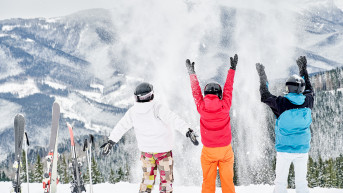
Experts and tourism workers from Belgrade to Tirana explain to Kosovo Online which destinations stand out for their offerings and what makes them attractive to both domestic and foreign visitors. According to them, what was once Brezovica, where the entire former Yugoslavia went skiing, today are Serbian ski centers like Kopaonik. However, this is not the only aspect in which Serbia leads the region when it comes to winter tourism.
Written by: Petar Rosic
The winter potential in the Balkans is quite varied, thanks to its geographical position, mountainous massifs, and a tradition of winter sports. The vast offerings include skiing, hiking, wellness and spa tourism, and other winter activities. Besides the natural beauty, there are also the charms of big cities during the New Year holidays, ensuring there is something to enhance everyone's experience.
Miroslav Knezevic, Dean of the Faculty of Tourism and Hotel Management at Singidunum University, says that Serbia is attractive to tourists not only because of its excellent service but also because tourists can find a bit of everything - rich cultural-historical heritage, intangible cultural heritage, gastronomy, wine tourism, excellent service in spas, mountain centers, large cities, and conference centers…
"Therefore, we have something for every market segment. Depending on personal affinities, people choose their destination, where they, of course, encounter primarily exceptional service," says Knezevic for Kosovo Online.
Regarding mountain centers, he primarily thinks of Zlatibor, Kopaonik, and Stara Planina, while among spas, he says, Vrnjacka Banja and Sokobanja are at the top of the list.
"Among cities, Belgrade is at the forefront, followed by Novi Sad, Nis… A large number of foreigners come to spend a few days in our cities and, of course, leave satisfied and smiling," says the dean.
He explains that according to last year's statistics, the most numerous tourists are from Turkey, the Russian Federation, and the People's Republic of China. When it comes to neighboring countries, these are Bosnia and Herzegovina, Croatia, and Slovenia, followed by Romania and Bulgaria.
"For tourists from the surrounding area, Belgrade is a synonym for quality, a synonym for the multitude of different contents, and they very gladly choose to spend the New Year holidays in Belgrade," emphasizes Knezevic. Speaking of spa centers, he assesses that it can already be said that this winter, Vrnjacka Banja will be extremely popular.
"According to the information we have from the field from hoteliers themselves, a large number of tourists from Bulgaria have made certain reservations in the hotels of Vrnjacka Banja," he states.
Regarding winter centers, he assesses that Serbia will be attractive not only to the region but also to some distant markets.
"In the winter centers this year, tourists from Romania are also appearing, foreigners from some distant markets are becoming more numerous, so I think that over time we can expect a shift, that we will not only be attractive to the region," believes the dean.
As for domestic tourists, he notes, they are increasingly deciding to spend the winter in Serbian mountain centers.
"Traditionally we vacation in Greece, however, very often in winter we decide for areas like the seas, where the climate is a bit warmer. From the countries in the surrounding area, the choice often falls on Slovenia and this is becoming somewhat of a continuity. However, as time passes, I get the impression that our tourists, in accordance with the quality of our tourist offer, more frequently decide to spend the winter in our mountain centers. At least the results show it, especially in that part of January when there is the most precipitation and when, because of the winter break, families travel with small children," says Knezevic.
He notes that trends in the tourist market change much faster than in other markets.
"What has been very present in the last few years, at least according to tourists according to research by the World Tourism Organization, is that the key element of travel is the experience. And that experience is somewhat subjective," states the dean. What today represents for the region Serbian ski centers like Kopaonik, once was the ski center Brezovica.
Draginja Nikolcevic, owner of the pizzeria "Tina" which has been operating in Brezovica for over thirty years, recalls that this ski center, famous for its excellent slopes, once hosted guests from the entire former Yugoslavia, while in recent years, most come from Albania and Kosovo.
"When we opened in 1993, 32 years ago, it was Yugoslavia then. The ski center was well-known and guests from all over Yugoslavia came here to ski. The slopes were widely famous and incredibly good, we had many competitions and the most memorable from that time was the May Day skiing, which lasted until May 5th and was always full. The organization was fantastic, then the Inex company built these hotels, the cable cars were fantastic for that time, so this center was strong, I can say we were doing better than Kopaonik at that time. This is a huge potential, a large number of people, good organization, the mountain as a mountain is very good, so when you put all that in one place you get a good result, meaning a strong ski center that works fantastically," says Nikolcevic. She emphasizes that from 1993 to 1999 there were many guests, while in 2000, people who worked for foreign organizations mainly came.
"From 2001 to 2004, Albanians did not come probably out of some fear, since this is a Serbian environment. There were mainly people who worked for foreign organizations. Already from 2004, people from Kosovo slowly started coming and then it started slowly. It is sluggish, I am simply amazed at how this center still works because the cables are old, the hotels are old, but there are people, they come, they are satisfied. I always emphasize that guests here do not seek luxury, it is enough for them that it is clean, warm, and that the cable car works. We manage with accommodation, and there is something offered here and you have good hotels below, so it has revived a bit, we work, we still stagnate. It's incredible how many people long for this mountain, it fascinates me how many come here to ride, maybe sit in a restaurant, go back, and that's it. We don't have many possibilities, even skiers don't come as much as people who just take a walk," explains our interlocutor.
She says that in recent years, the majority of guests are from Albania and Kosovo.
"In the past few years, we have had many guests from Albania, they are very good guests. They mostly do not ski, they are simply happy to come here in the snow, walk, ride the cable car. They are big gourmets, so we have an increasing number of guests from Albania. There are also guests from Kosovo, and from Serbia, it is not a significant number, but we also rejoice in them because we see that they, so to speak, break the ice and see that it is not so dangerous here, that they can come and ski. We get quite a few people from abroad since we have two airports nearby, Pristina and Skopje. A lot also come on weekends from Germany and Austria, here and there someone from America, France, so it is diverse, but, still, in terms of the region, the guests from Albania and Kosovo are in the largest number," says Nikolcevic.
However, a representative of the travel agency "Veneta Travel" from Pristina, Fatmire Beqiraj, explains to Kosovo Online that the majority of Kosovo's citizens are not big fans of skiing, but rather use the winter holidays and New Year holidays to visit some of the European cities.
"We now have some new direct flights, for example to Amsterdam, but many people from Pristina and Kosovo live in Germany, and a lot of citizens travel to this country," says Beqiraj.
Those who prefer skiing, besides Brezovica, also opt for Bulgarian ski centers such as Bansko and Borovets.
"Many people travel to Bulgaria; we offer it. Departures are from Skopje, but if it's a group, then we organize the trip from here," explains our interlocutor.
For skiing enthusiasts, she adds, France has also become a significant destination.
"The skiing terrains are good; we've been making reservations for a long time. They are very beautiful destinations," Beqiraj notes. Although Turkey is primarily more attractive in the summer, she says there is also interest in traveling to this country in the winter period.
"Turkey and Istanbul are popular even in winter. Turkey, as is known, offers an all-inclusive service, and people are already accustomed to having everything when they travel there," she emphasizes.
The fact that Serbian mountains are one of the favorite destinations for Macedonians is also confirmed by the director of the travel agency "Pilot Travel" from Skopje, Ivo Krstevski. One of the reasons, he assesses, is that capacities in North Macedonia are insufficient to meet the needs of the domestic market when it comes to winter tourism.
"Serbia is the most sought-after destination, it is number one. Among neighboring countries, Bulgaria is in second place. Due to the distance, there is less interest in Bosnia. Greece traditionally is not a destination for winter tourism because it does not have the capacity of large ski centers. So, generally, our offer is mainly limited to Serbia and Bulgaria," states Krstevski.
Regarding Macedonia itself, there are winter centers like Mavrovo and Sapka, which were once quite popular, and there is also Krusevo.
"But unfortunately, the capacities are very small, insufficient to meet the needs of the Macedonian market, not to mention foreign guests. I don't have information about Albania's offer for winter, while in Kosovo, Brezovica is interesting. It is quite close to us, but I think it is currently attractive for day tourism, not for a classic winter vacation," explains our interlocutor.
He notes that winter tourism is a bit more specific and demanding and that when choosing destinations, citizens prioritize hotel accommodation, proximity, how to get to the destination, and also the price of ski passes.
"For example, in the neighborhood, ski passes for six days are about 200 euros, which is a serious amount for a family of three or four when all criteria are considered together. And people look for amenities along with hotel accommodation. What's trendy is that the hotel has spa centers or indoor pools. So the offer is broad for both skiers and those who don't ski," says Krstevski.
Although Serbia is currently the most sought-after destination for Macedonians, the director of "Pilot Travel" points out that the price is the reason why Bulgaria is becoming increasingly popular.
"If we compare prices in the region, despite the boycott of Bulgarian citizens by Macedonians, the price does its part, and Macedonians are slowly returning to Bulgarian ski centers like Borovets, Pamporovo, and Bansko, which are cheaper than Serbian ones and offer all possible amenities with large hotel capacity, and they are also quickly reachable," he explains.
He notes that as the country develops year by year, trends change, and new destinations like European ski centers are opening, which are quite popular but also quite expensive.
While many people travel to Italy, France, Austria, Slovenia for skiing, he assesses that, if numbers are compared, the neighborhood is far ahead.
"You know that in winter many people are not really ready to travel far due to snow, frost, fog, but also holidays and congestion at border crossings. Again, it all comes down to some choice in the immediate vicinity, while, I will say it again, we as a state do not have large capacity in this part and, unfortunately, we have nothing to offer either our market or foreign," says Krstevski.
The situation is similar in Albania. The president of the Association of Tour Operators and owner of the travel company ATHS from Tirana, Besnik Vathi, says that Albanians go skiing in North Macedonia and Kosovo, but the majority of them spend their winter holidays on one of the beaches in the country.
"Albania is a good place for a tourist visit because it has hotels on the coast, such as in Durrës, Vlorë, or in Korçë and Pogradec. These are destinations where a large number of Albanians usually go. Of course, they do not spend the holidays only in Albania. They also go abroad. In the region, we can highlight Montenegro, with cities like Budva and Ulcinj. In Kosovo, people mostly go to mountainous areas where skiing is possible. Also in North Macedonia," Vathi points out.
He adds that even Greece expects a large number of tourists from Albania, but thanks to low-cost flights, which are cheaper this year than in previous years, people are interested in numerous other destinations like Dubai, Istanbul, Egypt, and European cities such as Paris, Barcelona, Vienna... He emphasizes that the number of tourists visiting Albania is increasing year by year, but that visits during the New Year holidays are at a much lower level.
"Probably, there will be mostly Albanians living abroad with foreign passports. There will be more of them because prices have dropped, and the number of flights has increased. Tourists of other nationalities who come to Albania during this period are becoming fewer. Mostly, these are people from the region - Bulgarians, Serbs, and fewer Italians. Other nationalities usually do not choose Albania as a place to spend these holidays," our interlocutor explains. He explains that the December holidays in the Western world are more family-oriented.
"People gather with their families. Even when they travel, they do it as families or in large groups of relatives. This might be a reason why Albania does not attract many foreigners for these end-of-year holidays," Vathi believes.

0 comments