
Women in local elections: To what extent are women active in political processes in Kosovo?
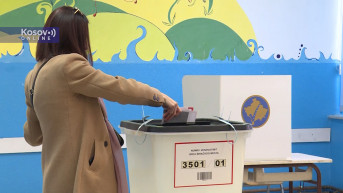
In the upcoming local elections on October 12, only a small number of women are running for the position of mayor. On party lists, there are only 12 women competing for this office. According to experts interviewed by Kosovo Online, the reason lies in the patriarchy that dominates the Western Balkans, despite the fact that Kosovo’s laws mandate women’s participation in political processes.
Written by: Milena Miladinovic
Out of 141 candidates for mayors, only 12 are women, i.e., 8.5 percent.
The Self-Determination Movement has included only one woman on its list of candidates for mayor – Egzona Terdevci, running in Glogovac.
The Democratic League of Kosovo also has just one female candidate – Arijana Hasani, running in Zubin Potok.
The Democratic Party of Kosovo has included three women: Arta Vokshi Nalbani in Pec, Jona Arifi in Kamenica, and Fltura Hamza in North Mitrovica.
The Alliance for the Future of Kosovo has two female candidates for mayor – Hafize Salahu in Kacanik and Vildane Latifi in Kosovo Polje.
According to analysts, political parties in Kosovo show little genuine interest in supporting women in their bids for municipal leadership.
“The fact that political parties nominate women in municipalities where they have little or no chance of winning convinces us that they have neither the will nor the interest to support these women. Parties focus on municipalities where they have a chance to win and direct all their resources there,” political analyst Aida Derguti told Kosovo Online.
Interviewees stressed that parties have fulfilled the requirement for women to make up 30 percent of their candidate lists, but in the future this number should be equalized.
They agree that women in politics face more obstacles than men, with patriarchy – dominant in the Western Balkans – being the main reason.
It is clear, they say, that women in politics face greater challenges than men.
Kosovo at a Leading Position in the Region
University professor Afrim Hoti emphasized that Kosovo’s laws mandate women’s participation in political processes and that women in Kosovo play an important role in politics. However, he pointed out that despite this, there are still obstacles women face.
Hoti noted that the position of women in politics is contradictory and complicated, not only in Kosovo but worldwide. Nevertheless, he believes that Kosovo is at the forefront in this regard, not only in the Western Balkans but also more broadly.
“If we look at Kosovo, it is definitely one of the leading countries, not only in the Western Balkans but beyond, where women have the position or readiness to contribute to politics. After the war, laws were adopted mandating women’s participation in political processes. At the same time, however, we must admit that there are many other obstacles women face in the political process, and sometimes it is very difficult for them to overcome these obstacles,” Hoti told Kosovo Online.
He added that perhaps not in the upcoming local elections, but regarding women’s participation in politics in general, Kosovo is doing very well.
He stressed that this is also evidenced by the fact that Kosovo’s president is a woman, Vjosa Osmani.
“In any case, even if not in the local elections, I think Kosovo is not doing badly when it comes to women’s participation in politics in other bodies, including the position of president of the country,” Hoti concluded.
Equal Representation in Politics
Lulzim Hakaj, co-founder of the NGO Communities Empowering Reconciliation (REC), emphasized that in the upcoming local elections, all political parties met the requirement for 30 percent of candidates on their lists to be women, but that in the future this number should be higher.
“All political parties have fulfilled the regulation that 30 percent of their lists consist of women, but I would like this number to be higher, 50-50. That the party that takes power maintains the same 50-50 ratio in local and central government, so that women can be ministers and directors, so that there is equality,” Hakaj told Kosovo Online.
Hakaj believes that women in politics face greater challenges than men, and attributes this to the mentality of the Western Balkans.
“We live in a situation where our mentality favors men more than women. We expect that in the future this situation will improve, that we will not have these prejudices about women’s participation in politics, that we will be like Western countries, equal,” he added.
He pointed out that patriarchy remains prevalent in Balkan countries.
According to him, women in Kosovo politics encourage young people to engage in political life.
“They are role models, and we expect men to behave the same way. Women in politics are good role models, showing young people that they can participate in politics, both in local and central elections, and that they are aware of what they are doing,” Hakaj concluded.
Systemic Segregation as a Form of Discrimination
Brankica Jankovic, Serbia’s Commissioner for the Protection of Equality, believes that Kosovo’s political environment is dominated by systemic segregation as a form of discrimination, especially against the Serbian population in the north.
She added that, in the current atmosphere in northern Kosovo, one cannot speak of a society well-disposed toward women, either in politics or in other spheres of life, while, in her view, Kosovo President Vjosa Osmani has done nothing to improve the status of women.
“Everyone is targeted, and especially women. To such an extent that women, especially girls, are targets of extremists, as we have seen in the media, that Serbs in the north have been forced to self-organize, to record and report verbal and even physical attacks to the Kosovo police, ranging from inappropriate comments to sexual harassment. Increased police repression and arrests of Serbs, bringing organized groups to sit in cafes in Mitrovica and provoke residents, especially women – this is the atmosphere in which we cannot talk about the ‘goodwill’ of society toward women, in politics or in any other sphere of life. This is a policy of pressure on the Serbian and other non-Albanian population. I do not think that Vjosa Osmani, whom you mention, has done anything to improve the status of women in northern Kosovo and in Serbian enclaves, which I believe applies to society as a whole,” Jankovic told Kosovo Online.
She emphasized that the problems women face in politics are not the same as men’s, as it is significantly harder for women to participate in political life worldwide, including in the Western Balkans.
She added that the reasons for this vary, but the main one is the dominant patriarchal-conservative framework that shapes the culture of everyday life.
“This framework particularly relates to the expected roles of men and women, which they largely fulfill, so women are more burdened with household chores, childcare, and care for elderly or ill family members, as well as other traditional ‘women’s’ duties. All this, along with many other socio-cultural barriers, limits their participation in political and other social activities,” the commissioner stressed.
According to her, women often lack support even from those closest to them, which leads to insufficient encouragement to engage in politics, causing many to give up on their desires and ambitions.
Those who have not given up, Jankovic said, are usually under much greater scrutiny than men and have to prove their knowledge, expertise, and abilities much more.
“And, as a rule, women are judged much more harshly for everything they do,” she emphasized.
In her opinion, the entire region is still too patriarchal for there to be a greater number of women in politics.
“Patriarchy is so resilient in our region, and this applies to almost the entire world, that sometimes it seems to me that we will never dismantle it. But these are only occasional moments of weakness that we all have, because I believe that women’s participation in politics is important due to the different perspective it brings, which will ultimately serve as a foundation for a different Western Balkans – a more stable and stronger pillar of the entire European architecture. We must find a way to translate women’s voices into policies that lead to genuine reconciliation of nations and people who have been trapped for years in the interests of regional and global political players. For our young men and women to remain living in these Balkan beauties and to build fairer and better societies, we must create a different atmosphere in which gender equality plays an important role. Because what is good for women is good for the whole society,” Jankovic concluded.


comments