
Bumbic: The Western Balkans records growth in minimum wages, but they hardly cover consumer baskets
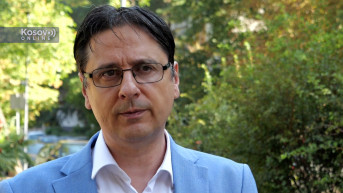
Economist Nenad Bumbic from Potrosacki savetnik (Consumer Advisor) told for Kosovo Online that the Western Balkans is seeing a trend of rising minimum wages, but they still fail to keep up with minimum consumer baskets.
“In general, for all countries in the region, the trend is a significant rise in minimum wages, but the main problem is that these wages barely manage to ‘reach’ the consumer basket, even the minimum consumer basket. The primary issue is that consumer baskets do not reflect our real needs,” Bumbic emphasized.
As an illustration, he gave the example of the minimum consumer basket in Serbia, where a three-member family is allocated 200 grams of luncheon sausage or a larger package of natural juice for the entire month.
“This means you could have a guest over once a month, but if they came twice, you wouldn’t have anything to serve them. That minimum consumer basket in no way reflects real, basic needs—not for a normal life, but just for survival,” said Bumbic.
He added that analysis of consumer baskets across the region shows that “citizens would like politicians to try living that way themselves.”
“It’s hardly possible that anyone could realistically survive on those consumer baskets,” the economist stressed.
He recalled that the Western Balkans still relies on consumer basket models from the former Yugoslavia, with the difference that so-called ‘unnecessary expenditures’ have been reduced.
“Realistically, compared to when we lived in the SFRY and today, we have seen an objective decline in wealth and in the contents of consumer baskets in all countries of the region,” Bumbic explained.
He noted that, according to Eurostat data for August, Croatia has the highest minimum wage in the region at €970, while within the Western Balkans, Montenegro leads with €670, followed by Serbia at €618.
“But Eurostat’s figures present gross wages, not net, as we are used to,” the economist pointed out.
According to Eurostat’s table, the minimum wage in North Macedonia is €584, and in Albania €551. The Eurostat survey does not cover Kosovo or Bosnia and Herzegovina.
Bumbic explained that raising minimum wages essentially produces “two effects” that benefit only two groups of employees.
“The first group are those whose salaries are calculated by coefficients that include minimum or average wages. The second is linked to state budgets in the region, since this primarily funds pension schemes. So, when we raise minimum wages, it doesn’t so much increase income for the real number of people who actually earn the minimum wage, but rather reduces the amount of money paid under the table by employers, while increasing the taxable portion that fills the budget. This, in turn, creates conditions for raising wages of public sector employees and for increasing pensions,” Bumbic concluded.



0 comments