
Djokutaj: Investing in Creative Economies Will Halt Youth Emigration from the Western Balkans

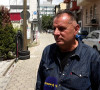
Economic expert and analyst at the "Altax" company in Tirana, Eduard Djokutaj, stated that the development and investment in creative economies would contribute to "reviving the potential" of the region and stopping the emigration of young talent from the Western Balkans.
"Creative economy is not only an initiative to develop the economy through art, culture, and all kinds of talents, but also to stop what is currently happening in the Balkans – the departure of talented young people to various developed countries," Djokutaj said in an interview with Kosovo Online.
Representatives of culture ministries from the Western Balkans signed a Joint Declaration in London as part of the Berlin Process, placing the region’s creative economy at the center of its economic and European future.
Djokutaj explained that this process is based on the already existing "Creative Europe" program.
However, he warned that it is crucial to keep up with new technologies for the initiative to succeed, especially in Albania.
"A comprehensive strategy is needed for everything concerning the creative economy. On the other hand, although our budget is quite limited, a fund is needed to stimulate the first start-up companies and to create what will serve as a bridge of cooperation for regional projects that are not only about culture, but about a spirit of collaboration—something that the Berlin Process needs. These bridges of cooperation will help us move closer to European market standards," Djokutaj said confidently.
He views the initiative from London as a "revival of the region’s potential" in the field of creative industries, which, with appropriate financial incentives, could also lead to increased GDP in Western Balkan countries.
"Focusing on this creative economy and allocating a fund to support the initiative helps a part of the economy that the Balkans have already developed—culture and the arts—making it more visible to the rest of the world. Revitalizing this segment of the economy could increase GDP by two to three percent," the expert believes.
He added that this also strengthens "bridges of cooperation" in the region.
"This is also one of the goals of community interaction through culture and art. Creating markets that aim to reach the level of those in Europe today, which are more advanced," Djokutaj asserted.
He believes that, in this context, the Open Balkan initiative should be seen as an “annex” to the Berlin Process.
"Open Balkan was mostly an annex to the Berlin Process—an initiative that aimed to personalize the program further. It didn’t fully succeed due to the lack of participation from nearly half of the Balkan countries and the ambiguity around how it would benefit those involved," the analyst said.
On the other hand, the initiative to connect creative economies within the Berlin Process aims to "unite as many resources and potentials as possible" across the region.
"In our case, in the Albanian economy, there is fragmentation—education runs separately, healthcare separately, economic sectors separately. This initiative tries to synthesize these approaches in a more organized way, and this approach becomes more effective when elevated to the level of regional cooperation," Djokutaj explained.
That is why he is convinced that the creative economy will "activate all talented resources" that approach their work innovatively.
"This will be like an incubator that helps new companies—startups—by providing funding, assisting them with knowledge and information, and creating partnerships and cooperation networks. In this way, by helping these talents collaborate, the potential for economic expansion and for creating businesses rooted in art, culture, and talent is naturally created," Djokutaj concluded.

0 comments