
Petkovic: Serb List subjected to pressure, it is inappropriate to congratulate Kurti while vote counting is still underway
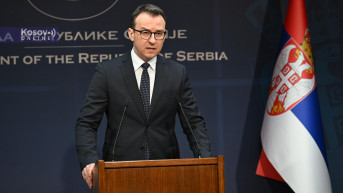
The Director of the Serbian Government’s Office for Kosovo and Metohija, Petar Petkovic, stated that the congratulations extended by European Commissioner for Enlargement Marta Kos to Albin Kurti were inappropriate for several reasons, stressing that the challenges faced by the Serb List create a risk that Albanians could gain the ability to determine mandates guaranteed to the Serbian community.
“Congratulating Albin Kurti while the vote count is still ongoing is highly unusual,” Petkovic wrote in a post on X.
He argued that the “inclusive and orderly electoral process” for which Kurti was being congratulated does not exist in reality, describing the elections as yet another demonstration of political engineering.
“These elections were another demonstration of blatant political engineering: the Serb List was subjected to unacceptable and undemocratic pressure, while its opponent, Nenad Rasic, once again received support from Albanian voters with Kurti’s active assistance. The number of Albanian votes cast for Rasic increased dramatically compared to the previous elections, reaching 2,257 votes in municipalities where no Serbs live,” Petkovic stated.
According to him, if this trend continues, there is a risk that Albanians will effectively determine mandates that are guaranteed to representatives of the Serbian people.
“If this trend of taking over Serbian mandates continues, does that mean that in the near future Albanians will decide on mandates guaranteed to representatives of the Serbian people? This objective of Kurti’s policy must be stopped, not rewarded with swift congratulations,” Petkovic said.
He also described the European Union’s announcement that it would work with Kurti to create political stability as absurd.
“The announcement that the European Union will cooperate with Albin Kurti to create political stability is absurd, because he is precisely the source of instability—not only in Kosovo and Metohija, but in the wider region as well,” Petkovic stated.
He added that lower voter turnout compared to the previous elections speaks volumes about the political processes in Pristina.
“The fact that approximately 200,000 fewer people voted in these elections than in the previous ones speaks for itself regarding the political processes taking place in Pristina,” Petkovic concluded.
Earlier, European Commissioner for Enlargement Marta Kos congratulated Kosovo’s acting Prime Minister and leader of Self-Determination, Albin Kurti, on his election victory and called on political forces to find compromises in order to build institutional stability.
Subsequently, EU High Representative for Foreign Affairs and Security Policy Kaja Kallas stated that, following democratic and inclusive elections in Kosovo, political leaders must engage constructively to ensure the swift formation of a government, adding that progress in the dialogue between Belgrade and Pristina remains essential for Kosovo’s advancement on its European path.


0 comments