
Sljuka: Self-Determination’s decline is the surprise of the election, it will be difficult for everyone to form a government
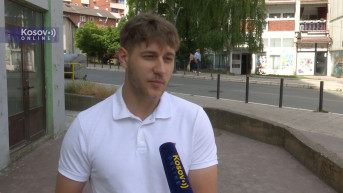
Associate of the NGO New Social Initiative, Aleksandar Sljuka, told Kosovo Online that the biggest surprise of the election is the decline of Self-Determination Movement and assessed that it will once again be difficult to form a government because no one has a majority.
“The surprise of the election is certainly the decline of Self-Determination. However, the question is for whom this is a surprise. A decline of a few percentage points was expected, given that we had different circumstances compared to the December elections. Back then we had a large presence of the diaspora, which primarily helped Kurti. If we compare the February elections last year and these now, we will see that the results are similar. Of course, there are some deviations, but these are similar and realistic results,” Sljuka said.
He states that the situation in December was specific due to the mass arrival of diaspora voters.
“At that time, the arrival of the diaspora changed the dynamics and redistribution of votes in favor of Self-Determination, and it created an unrealistic result due to the presence of voters who would otherwise not be there. We have effectively returned to February 2025 and, very likely, unless there are drastic redistributions now after the final counting of votes, including those from the diaspora, we will have a similar situation, which is not very favorable for Kosovo. I would say it seems significantly less favorable than just a few months ago when Kosovo had a constituted parliament and a formed government,” Sljuka said.
When it comes to the position of the Serb List, Sljuka says it is expected.
“The Serb List has won, as they announced last night, ten seats in parliament, but it seems that it is still nine mandates, we will see. I do not want to prejudge anything, which is probably again a similar result as in previous elections. For them it will be a kind of defeat if they do not win ten out of ten seats. The essential problem is not that it is nine out of ten, because it is not a 100 percent result, but because it opens the possibility, as in some previous cycles, that, for example, Nenad Rasic’s party, that is, that one MP, is elected from places that belong to the Serbian community and that should go to the Serb List. That was their main motive to win ten out of ten seats, which is why they will be somewhat dissatisfied if that does not happen,” he explained.
In his view, the key question is what will happen among Albanian parties.
“It is necessary to see what the final balance will be, how many seats each will have in parliament, after the diaspora and conditional votes arrive. The question is what possible combinations can be made there. That is the most important thing now. From the current perspective, it seems that this situation is closest to February last year and that Kurti will not have enough to form a government independently. We will see whether he can do it with the help of some MPs from non-majority parties, which he will try to reach, as was the case last year. Or whether that will also not be possible, and that depends on the final outcome,” Sljuka said.
The opposition, he adds, also has a similar number as in previous elections and will also find it difficult to form a government.
“The three largest opposition parties have around 52 seats, as far as I have seen in the latest projections. It will be very difficult for them to form a government. They could do it with representatives from non-majority communities, trying to reach those representatives who do not come from the Serbian community, which I think again plays more into Kurti’s hands. The last option for both sides is cooperation with the Serb List. And that will be the most controversial part of the equation. For Kurti, it seems like an impossible option, I think no one believes that there will be cooperation between Self-Determination and the Serb List, while for the opposition it may not be an impossible scenario,” he said.
Sljuka believes that the opposition could also be pragmatic, and if Self-Determination fails to form a government, they could do so with the Serb List before the deadline for electing the president expires, after which new elections could potentially be called.
“If they manage to do that before new elections, they would enter the new elections as the government. That would be a big step, and they should certainly try to do it, to take power away from Self-Determination and enter new elections from a much better position. Everything will depend on the final results, on the dynamics among Serbian and Albanian actors, and that remains to be seen after these votes that still need to arrive,” the analyst concludes.

0 comments