
Gajic: Serbia the most attractive for foreign investors; maintaining appeal a challenge for the entire region
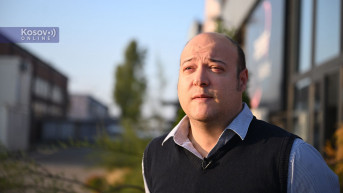
Mihailo Gajic from the Belgrade economic research network Libek emphasizes that Serbia continues to attract the most foreign investments among Western Balkan countries. However, in an interview with Kosovo Online, he warns that the entire region is currently facing challenges in maintaining its investment attractiveness.
Gajic says that the countries of the Western Balkans are primarily competitors to one another.
“Of course, everyone wants to attract investments that bring, for example, technology transfer, the creation of new jobs, and naturally, higher wages, especially if those are productive industries. So, in that sense, every country has an incentive to draw an investment coming into the region to its own territory rather than letting it go to a neighboring one,” he explains.
He adds that the reason for this competition lies in the structure of foreign investments. He explains that many foreign investments coming into Western Balkan markets do not actually include a large number of domestic companies in their supply chains.
“In other words, they come here to take advantage of certain competitive benefits that exist, primarily a relatively well-trained and relatively inexpensive labor force. But we don’t see much spillover effect into the broader domestic industries. The problem is that Western Balkan countries are not part of a common market, so, for instance, a company from North Macedonia cannot easily include a firm from Bosnia and Herzegovina or Serbia in its production process, or vice versa. As a result, most activity remains limited to national markets,” he points out.
Gajic recalls that if we look only at the gross inflow of foreign direct investments (FDI) into Serbia, it grew during 2023 and 2024, reaching a kind of historical peak, about 5.2 billion euros. However, he notes that this year, investments have declined.
“In the first half of the year, they fell by around 40 percent, returning to the level of the previous year. This partly has one-off causes, such as the sale of Telekom’s infrastructure, which artificially inflated FDI levels last year, so the baseline was higher. But even if we exclude that, we can see that investments are lower than in the previous two years. It seems that, at this moment, as the German economy has been stagnating or in recession for the fifth year, Serbia and the entire region are starting to lose the race for investments,” he explains.
The Libek economist adds that this is part of a broader regional trend.
“Foreign direct investments are decreasing across Central and Eastern Europe, so our region, and Serbia, are not exceptions; we’re following general trends. Also, some of the factors that used to attract foreign investments to Serbia are no longer as appealing. Wage growth has outpaced productivity growth, energy prices, especially electricity and gas, have risen, so some of those earlier advantages that made Serbia and the region attractive to foreign investors have eroded somewhat,” Gajic says.
Speaking about Serbia’s measures for attracting investments, he notes that they include both direct and indirect incentives.
“Direct ones are, as we often see, budget subsidies paid per job created by foreign investors. Indirect measures are less visible, such as exemptions from various taxes, payroll contributions, costs related to equipping industrial zones, free land allocations, or exemptions from other local fees. Because these are not transparent, we can’t fully assess how much money is granted, but directly from the budget, between 120 and 150 million euros are allocated annually for subsidies,” he highlights.
He adds that these investment attraction policies are indeed effective, as Serbia still draws the most foreign investments in the region.
“When we look at the size of the economy in the European context, Serbia attracts significantly more foreign investment than other countries, not measured by the share of GDP, but in absolute terms. So, we can say that these investment attraction policies are effective. However, the overall level of investment is not significantly higher, which reveals a problem with relatively low domestic private investment and the general business conditions in the country,” Gajic concludes.



0 comments