
Hoti: Von der Leyen emphasized institutional advancement in the countries of the region
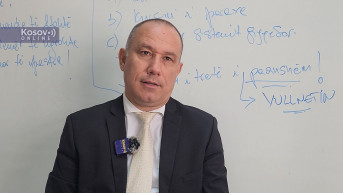
Lecturer at the Mediterranean University in Tirana, Dritan Hoti, says that European Commission President Ursula von der Leyen conveyed several key messages during her visit to Albania and the region: acceleration of EU integration, development and institutional advancement in regional countries, and that Albania is fully aligned with the “European pole” in matters of security and geopolitics.
“Starting from the speech that von der Leyen delivered in Tirana, we can interpret that there were two or three main messages. First, she highlighted the geopolitical moment, which is both an incentive and a major source of hope for accelerating the EU integration process of the Western Balkan countries that are still outside the Union. Second, von der Leyen emphasized maintaining the pace of development and institutional advancement in our countries. She referred to Albania as a success story. The same call was addressed to other countries. Third, she said that Albania, in particular, is fully aligned in terms of security and geopolitical issues with what is called the ‘European pole,’ while Serbia represents a different case. This visit carried the message that both the geopolitical moment and internal efforts will enable the rapid integration of Western Balkan countries into the EU,” Hoti told Kosovo Online.
He added that there are also problems — in Albania, they concern the functioning of institutions, which has hindered its social, economic, and meritocratic development, while Serbia’s problem is ideological heritage.
“Even if Serbia manages to meet the economic and technical standards required by the EU, the question remains whether the so-called ideological perception of a part of its establishment and society aligns with the way European institutions operate. That is the key question when it comes to Serbia,” said Hoti.
He added that in today’s world, EU integration represents a great institutional, social, and economic achievement for Western Balkan countries, yet only a minority of elites within these countries have a proper and clear understanding of this process.
“This minority of elites believes that, in today’s world, national concerns and problems—or national projects—will not automatically be resolved through EU integration. If we take the Albanian area in the Balkans as an example, only a part of the elites manage to orient themselves properly, as the rest of our elites lack understanding of how geopolitics works. Those who are properly oriented understand that the Anglo-Saxon presence—namely American and British—is essential for the dynamics of the Albanian question. For that reason, Albania is a country with a strong pro-European approach. Ninety-two percent of citizens are enthusiastic about EU integration, as von der Leyen emphasized. The same level of support exists for the country’s pro-American orientation and sympathy for the British approach to regional politics. The case of Serbia and some other countries is more specific. As I already mentioned, Serbia is influenced by ideological heritage from which it must distance itself,” Hoti stated.
Regarding North Macedonia, he said that it is affected by internal ethnic relations between the Slavic and Albanian communities, which represent a key element for maintaining stability and internal cohesion in the country.
“Von der Leyen’s message was geopolitical, institutional, and economic in nature, offering the prospect of rapid EU accession—which, I repeat, represents a historic and remarkable achievement for these countries—but it does not necessarily constitute the main element of regional stabilization. EU membership is a fundamental prerequisite, but not necessarily a factor that pacifies the region,” said Hoti.
He also pointed out that, at certain times, EU institutions have stigmatized Serbian President Aleksandar Vucic because of his positions.
“The EU operates institutionally, and its institutions are transnational in nature, meaning they are composed of elements coming from different countries and nations. The EU does not aim to produce structural political changes within any specific country. There will always be conciliatory statements from the EU aimed at promoting balance. That is the difference between acting on behalf of European institutions and acting as a leader of a national state,” Hoti concluded.


0 comments