
Sokolaj on truck drivers' problems: Serbs, Macedonians, and Montenegrins are speaking up, while Albanians remain silent
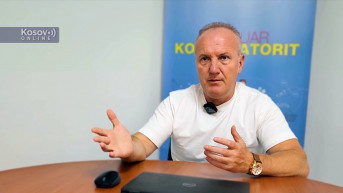
Founder and Executive Director of Albania's Alert Consumer Protection Center Granit Sokolaj stated that the European Union has mechanisms to resolve the issue of restrictions on the length of stay for truck drivers from the Western Balkans, stressing that introducing a special regime, such as a type D visa, could significantly facilitate the functioning of the transport sector.
Sokolaj said that the European Commission, in cooperation with major companies, could compile a list of drivers who have worked in international transport for many years and allow them to move freely without their time spent in the EU counting toward the 90-day limit.
"The European Commission can take action. The type D visa option would be quite a good solution, and through major companies, Brussels could maintain a list of people who are permitted to cross EU borders without the three-month, or 90-day, period of stay in the EU being counted. Brussels could create a list within its systems and identify these individuals, and this could provide a solution allowing them to move freely without visas and without the 90-day period being counted," Sokolaj told Kosovo Online.
According to him, these are people who have been working under contracts for many years and have no intention of emigrating, because had they wanted to do so, they could have remained in the EU during any of their previous visits.
Sokolaj noted that these are predominantly middle-aged and older drivers rather than younger people who might attempt to remain in the EU illegally.
"These drivers are not 25-year-olds who might try to emigrate. They are middle-aged and older. Moreover, emigrating today is very easy. It is enough to travel by plane or bus and remain illegally in that country for as long as possible, then apply for asylum, and so on. I believe the European Commission can find a solution if it determines that doing so would contribute positively to the free and unhindered movement of goods throughout the Western Balkans," Sokolaj said.
He warned that the current rules affect not only drivers and transport companies but the entire supply chain across the Western Balkans.
Speaking about the reactions of transport operators across the region to the introduction of the Entry/Exit System (EES) for border controls, Sokolaj expressed regret over the lack of an organized response from transport operators and companies in Albania.
"I regret that Albania does not have a proper organization representing private companies—primarily manufacturing, export, and import companies, as well as companies providing transport services. Even before the protests and reactions began in Serbia and North Macedonia, I said that there would be no protests in Albania. Unfortunately, there were none," Sokolaj said.
According to him, Albanian chambers of commerce and business associations should become more actively involved in resolving the issue and join regional initiatives.
While there have been reactions in Serbia, North Macedonia, and Montenegro, nothing is happening in Albania, he noted.
"They should join this regional initiative because it concerns all countries outside the EU. Albania is being penalized by these rules as well. The Serbs are speaking up, the Macedonians are speaking up, the Montenegrins are doing the same, while the Albanians remain silent. Later, when this problem is resolved, they will benefit from it. But if the European Commission does not adopt a favorable decision for the Balkan countries, they will regret not having contributed. By then, however, it will be too late," Sokolaj said.



0 comments