
Jevtic: Refusal to cooperate with legitimate Serb representatives in Kosovo will not help our survival
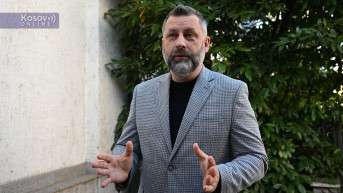
Serb List official Dalibor Jevtic said today that any refusal to cooperate with the legally and legitimately elected representatives of the Serbian people in Kosovo would not help Serbs remain in the area, adding that what was needed was a different approach rather than one resembling that of the authorities in Pristina, which had refused to accept the electoral will of Serbs by announcing that they would not cooperate with the Serb List.
Jevtic said that if this became the official position of the new government—which would become clear when the prime minister-designate presented the government’s policy program, including its policy toward Kosovo—that would be its prerogative. However, he stressed that the election winners had to recognize that the Serb List had nine MPs in Pristina, ten mayors and dozens of councilors in local governments, and that this could not be ignored.
“The fact must be taken into account that the circumstances in which we work and live, particularly since Albin Kurti came to power, are not easy and that we need a somewhat different approach, rather than the position taken by the current authorities in Pristina, which refused to accept the democratic electoral will of the Serbian people in this area when they announced that they would not cooperate with the Serb List,” Jevtic told Tanjug TV.
He said it seemed to him that only once the new authorities assumed responsibility for policymaking, including on Kosovo, would they fully encounter all the problems facing Serbs in Kosovo.
“In that sense, any refusal to cooperate with anyone, and particularly with the legally and legitimately elected representatives of the Serbian people in Kosovo and Metohija, will not help us achieve our common objective, which is the survival of Serbs in this area,” Jevtic said.
He recalled that even before 2012 there had been a situation in which official Belgrade refused to speak with the then representatives of Serbs in Kosovo institutions, and that such an approach had produced no results.
During that period, he stressed, decisions detrimental to the Serbian people had been made.
“We have always emphasized that the lives of Serbs must come before politics. That must be the priority, not politics. We may disagree politically, but as a people we must agree. We need unity, and we need to address the problems we face together,” Jevtic said.
Speaking about the recent visit by representatives of the Students’ List to Kosovo, Jevtic said that every visit by Serbs from central Serbia was significant and that it was positive for visitors to see Serbian holy sites.
“That is how we view the Students’ List visit. I think it is important to say that they had the opportunity to hear firsthand from Metropolitan Teodosije and Abbot Sava Janjic about the position of the Serbian Orthodox Church, which is far from easy, and in that way to encounter the reality in which both we and the Serbian Orthodox Church live, particularly since Albin Kurti came to power,” Jevtic said.
Asked about Nenad Rasic’s statement that the Pristina Government was now more prepared to establish the Association of Serb Municipalities (ASM), Jevtic said that this was not the first time Rasic had made statements intended, in his view, to appeal to sections of both the Albanian and Serbian public.
He said that Rasic may have received information in internal government discussions suggesting that the current authorities in Pristina welcomed the changes in Belgrade, leading him to conclude that they would now do something they had not done while the SNS was in power.
“However, this certainly prompted a strong reaction, primarily from the opposition in Kosovo. Kurti came to power opposing the establishment of the ASM. Rasic’s statement has now come at an awkward moment, given the fragile relations within Kosovo’s political scene and within the Self-Determination Movement itself. I do not believe he will be dismissed because Kurti needs a Serb as window dressing to simulate multiethnicity,” Jevtic added.
He believes that once the new authorities in Belgrade encounter the actual problems facing Serbs in Kosovo, they will reconsider their position on refusing to cooperate with the Serb List.
He recalled that the Serb List was composed of people from different political backgrounds.
“There is hardly a Serb from Kosovo and Metohija who has been involved in politics and is not part of the Serb List. It is a project that brings the political interests of the Serbian people together within a single political option. Any division among the people will only harm the interests, position and survival of the Serbian people,” Jevtic said, adding that he was certain the nine MPs and ten mayors would continue to act in unity in the interests of Serbs.
Odalovic: Someone must deal with Kosovo and Metohija at full capacity
Veljko Odalovic, President of the Serbian Government’s Commission on Missing Persons, said that the first challenge facing the new authorities in Belgrade would be the Law on Ministries, which would show whether they intended to retain the Office for Kosovo and Metohija or introduce a new arrangement. He expressed hope that its institutional status would not be downgraded.
“For everything to function, there must be someone dealing with Kosovo and Metohija at full capacity,” Odalovic said on Tanjug TV.
He said that the new prime minister would have to set out the government’s policy toward Kosovo in the policy program, adding that it was important to see who would serve as chief negotiator because no one had disputed the need for dialogue.
Odalovic said there were positive aspects to the Students’ List delegation’s visit to Kosovo, adding that it was good that they had gone there and spoken with the Metropolitan.
“I believe that what they heard from him supports the survival of the Serbian people in Kosovo and Metohija. I assume he called for unity and harmony because divisions among Serbs in Kosovo have never brought us anything good,” Odalovic said.
He recalled that Serbs in Kosovo had voted for the Serb List and said that the statement about refusing cooperation was not constructive.
“I believe they will have to seriously reset that position,” Odalovic stressed.
He also said that Serbs serving in Kosovo institutions worked to resolve certain problems facing the Serbian people and that it was impossible not to cooperate with them.
“The nine MPs in the Kosovo Assembly serve as a safeguard preventing parliament from securing a two-thirds majority for certain constitutional amendments,” Odalovic stressed.
He also noted that the mandates of mayors in Serb-majority municipalities would continue for another three years, while Serb List MPs had four years remaining in their terms.
He said the Students’ List should be given time to familiarize itself with all the agreements reached to date, as they contained numerous provisions beneficial to the Serbian people. He also stressed that the Serbian Orthodox Church was an indispensable factor and an important pillar of the survival of Serbs in Kosovo.
Drecun: Serb List the only legitimate representative of the Serbian people
Milovan Drecun, who chaired the parliamentary Committee on Defense and Security in the previous legislature, said that the Serb List was the only legitimate representative of the Serbian people in Kosovo and that Serbs in Kosovo had to cooperate with every government in Belgrade in order to remain there and defend their interests.
Drecun said that Albin Kurti and the Students’ List had the same objective when they said they would not cooperate with the Serb List.
“Kurti has continuously tried to completely marginalize the Serb List and prevent it from protecting the interests of the Serbian people. Yet the Serb List has received the support of an overwhelming number of Serbs and is fighting within the provisional institutions for the interests and survival of the Serbian people, preventing the imposition of legislative solutions that would be detrimental to them. Making the Serb List’s position more difficult in that struggle would be extremely harmful to the interests and survival of Serbs,” Drecun explained.
Drecun said it appeared that the Students’ List intended to create a structure parallel to the Serb List and asked who would serve as its link with the Serbian people if it refused to cooperate with the Serb List, as well as how it intended to negotiate in Brussels without consulting the Serb List.
“The link between the Serb List and the government in Belgrade must exist and must not be severed. A way must be found for the Serbian people to remain in Kosovo. Simply invoking the Constitution is not enough, because what has been happening in Kosovo since 1999 is unconstitutional. The concrete problems facing Serbs must be addressed, and that is impossible if the Serb List is ignored,” Drecun said.
He stressed that, in his view, Pristina and Brussels shared the same objective—to compel Serbia to recognize Kosovo.



0 comments