
Stanic: Border blockades are the last thing we need right now
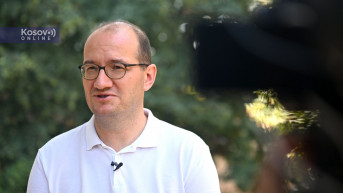
A potential blockade of border crossings organized by transport companies from the Western Balkans would not have a major impact on the European Union, but it would paralyze the Serbian economy, particularly export-oriented companies, Bojan Stanic of the Chamber of Commerce and Industry of Serbia warned.
"Border blockades are the last thing we need right now, and they would truly paralyze our economy, particularly when it comes to export-oriented businesses, given that we are far more dependent on the European market, namely the EU market, than the EU is on us. Of course, they are also dependent on us to some extent, considering that our suppliers are reliable partners for their companies and contribute to their competitiveness," Stanic told Kosovo Online.
The Assistant Director of the Chamber's Sector for Strategic Analyses, Services and Internationalization appealed to transport operators to refrain from blockades, stressing that they would cause the greatest damage to Serbia's economy and to the carriers themselves.
"We are currently facing pressure on our competitiveness, but negotiations between Serbia and the European Commission are ongoing, as are bilateral talks between Serbia and individual EU member states. Blockades are something that should really be avoided at this point because they would cause the greatest damage precisely to the Serbian economy and to the transport operators themselves," Stanic said.
Asked how severely border blockades would disrupt supply chains in the region, Stanic said they would create serious problems because goods would be unable either to enter or leave the country, while the Serbian economy has far more companies dependent on imports than companies dependent on exports.
"This would represent an enormous loss for the economy. Given that one blockade has already taken place, the question is whether European customers, seeing that such disruptions could occur again from time to time, might decide to terminate long-term supply agreements with our companies. That would result not only in daily losses but also in long-term losses for our exporters," Stanic warned.
According to him, a prolonged blockade would cause major disruptions.
"However, if it lasted only briefly, as happened last time, companies would of course suffer losses, but there would be no drastic consequences for the economy. We hope there will not be even a single day of blockades, simply because that would genuinely damage Serbia's reputation not only as a supplier but also as an investment destination," Stanic said.
Asked how he assessed the European Union's response to truck drivers' demands concerning the rules governing stays in the Schengen Area, he said they were generally dissatisfied but that the possible solutions were clear.
"If we are talking about a short transitional period, there needs to be restraint so that our truck drivers are not arrested, deported, or treated as illegal immigrants or criminals. At the same time, a system needs to be established to harmonize how the number of days they have spent in the Schengen Area is calculated. Some authorities are still counting passport stamps, some use electronic systems, and others use a combination of the two, so there is a degree of confusion," Stanic said.
According to him, all of this should be harmonized within the Entry/Exit System, which falls under EU jurisdiction.
"The long-term solution, and the one most acceptable to us, would be to provide some form of privileged treatment, similar to the exemptions that already exist for workers in river and air transport. There is no reason why truck drivers should not receive similar treatment," Stanic noted.
He said they were dissatisfied with the European Union's approach to the issue, particularly given that Serbia is an EU candidate country, has a free trade agreement, and continues to record increasing exports to the EU market.
"If, for example, we have reached a point where Serbia has a trade surplus with Germany and Italy, then why not support that continued growth instead of imposing restrictions that affect the competitiveness not only of the Serbian economy but also of their own industries? In terms of the price-to-quality ratio, goods and raw materials coming from Serbia are more favorable than those they can find on the EU market or other import markets," Stanic said.
According to him, if the discussion concerns privileged access to the EU single market, as proposed by Berlin and Paris, it would be a very positive signal if the European Union showed understanding for the specific circumstances of Serbia, North Macedonia, and Bosnia and Herzegovina, which are landlocked countries and therefore transport more than 90 percent of their goods by road.
He added that the full implementation of the Entry/Exit System (EES) has not yet resulted in significant losses, although it has created additional pressure.
"During the border blockade, estimates suggested losses amounting to millions on a daily basis. Of course, those were approximate figures. What is important to emphasize is that there is pressure on competitiveness, and all of this increases costs. Generally speaking, however, there have not yet been significant losses of that magnitude. What would cause substantial losses, and what must be avoided, is a blockade of the borders," Stanic concluded.


0 comments