
Western Balkans Transport Association calls on the European Commission to find a solution for truck drivers by August 10
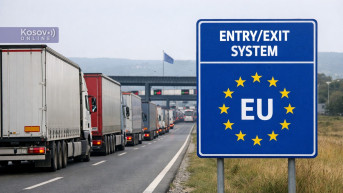
Representatives of transport associations from Serbia, North Macedonia, Montenegro, and Bosnia and Herzegovina have decided to send a new joint letter to the European Commission, urging it to propose an acceptable solution by August 10 to the issue of restrictions on the length of stay of professional truck drivers within the Schengen Area.
The decision was announced by Nedjo Mandic, President of the International Transport Business Association, at a press conference following a joint meeting of representatives of the business associations from the four countries, as reported by RTS.
Mandic said that the current situation had been reviewed and assessed as being less severe than in the previous period, although the underlying problems remain unresolved.
"We have agreed not to undertake any concrete actions at this moment. Instead, following today's meeting, we will send a letter to the European Commission, giving it until August 10 to find an acceptable solution—if not a final one, then at least an interim solution—so that our drivers and transport companies can continue operating without disruption," Mandic said.
He announced that representatives of the associations would meet again around August 10 if no satisfactory response had been received from Brussels by then.
"In that case, we will announce new concrete measures to accelerate the resolution of this issue," Mandic stated, without specifying what those measures might entail.
According to Mandic, the transport associations have sent several letters to the European Commission over the past three years, and today's meeting reaffirmed their unity and continued commitment to resolving the problem.
He also emphasized that the transport associations wish to avoid protests and border blockades because, as he noted, such measures would harm not only transport operators but also the economies of the region and their European partners.
"It is not in our interest to stop operating because that means we cannot earn a living. At the same time, it would damage the economies of our countries as well as the European economy, which is closely linked to ours. We therefore appeal to decision-makers and to our business partners across Europe to help find a solution," Mandic said.
He added that freight forwarders from the region had recently adopted, unanimously, a declaration at a congress in Bucharest supporting the transport operators' demands.
Mandic also recalled that the current rule allowing nationals of third countries to remain in the Schengen Area for a maximum of 90 days within any 180-day period is not suited to the realities of professional truck drivers.
As he explained, an analysis conducted by the transport associations indicates that international truck drivers require approximately 130 working days within a 180-day period in order to carry out international transport operations without interruption.
He stressed that professional drivers should not be treated in the same way as tourists, as the time they spend in transit or performing transport services does not constitute genuine residence.
"Professional drivers spend most of their time either inside their trucks or taking mandatory rest breaks at parking areas. They are not staying in Schengen countries as tourists; they are performing their jobs. For that reason, we believe that the current method of counting days is unjustified and seriously jeopardizes the operations of transport companies," Mandic said.
He further noted that the problem has become even more pronounced following the enlargement of the Schengen Area to include Croatia, Romania, and Bulgaria, effectively surrounding the Western Balkan countries with Schengen member states and requiring drivers to spend a substantial portion of their working time within the Schengen Area.
"Now that the Schengen Area comprises 33 countries, we simply cannot accept that transit should be treated as residence. Whether we are transporting goods to an EU country or even to a non-EU country such as the United Kingdom, we spend all that time in the Schengen Area without actually residing there. We are either driving the truck or taking mandatory rest breaks at parking facilities. Yet those days are quickly used up during a round trip, so in practice it appears as though we have spent 90 days residing in Schengen. It is entirely unreasonable that a professional should be prevented from doing their job under such circumstances," Mandic concluded.



0 comments