
Defense lawyers in the Banjska case: We refuted the prosecution, the indictment is legally flawed
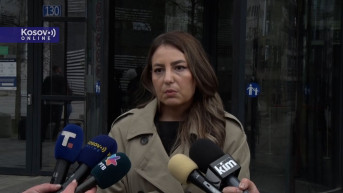
Defense lawyers in the Banjska case stated that in their closing arguments they refuted the Special Prosecution and pointed out deficiencies in the indictment, which, they say, contains an imprecise factual description written in plural form and, even a year and a half after it was filed, does not specify the concrete actions of the accused.
Attorney Jovana Filipovic, who represents Dusan Maksimovic in the case, emphasized that in her closing statement she presented evidence countering every claim made by the prosecution.
“We have shown that this is just a large construction of events, shaped in a way that suited the Special Prosecution so that the case against Dusan Maksimovic could proceed to this stage. Not a single piece of evidence shows any involvement on his part in the event that took place in Banjska on September 24, 2023, let alone active participation. All the evidence and everything we have stated throughout the proceedings point only toward an acquittal. We will see whether this judicial panel has the strength, will, and above all the courage to deliver such a verdict in a case like this,” Filipovic said.
She added that Maksimovic was not part of any group and that among hundreds of thousands of pieces of evidence, not a single DNA match linked him to the case.
“All the evidence mentioned by the special prosecutor consistently indicates the opposite. What is particularly disappointing is that another phone was recorded under the same name as Dusan’s, with identical markings. It was most likely all placed in one folder, which is how certain photos appeared—photos Dusan stated he did not recognize and that were certainly not on his phone. The only conclusion is that this case was constructed by the prosecutor to suggest Dusan had some connection. First, they linked him to Tolic, then determined it was not Tolic in those photos. Then, for media impact, they mentioned Milan Radoicic, claiming his photo was found. However, it turned out to be a media photo, not something Dusan had taken or possessed. Therefore, we expect an acquittal,” she added.
Attorney Milos Delevic stated that the goal of every criminal proceeding is to establish the truth, and that the prosecutor’s closing statement does not reflect the truth.
“He accuses these people of terrorism and serious crimes against the constitutional order without a single piece of evidence. I am not saying that Vladimir Tolic is innocent, but he is not guilty of the crimes he is charged with. Banjska is merely the culmination of a security and political crisis that had existed in northern Kosovo for years before the incident. It began with license plates, continued with withdrawal from institutions, later clashes in front of the Zvecan municipality, barricades, arrest lists, and so on. That is why I say that what Vladimir Tolic and Blagoje Spasojevic did contains elements of the criminal offense of armed rebellion under Article 150 of the Criminal Code. The minimum sentence is five years, and for organizers at least ten years. That would be a fair and just punishment,” Delevic said.
Whatever the verdict, it will be a first-instance ruling, he emphasized.
“We have the right to appeal to the Court of Appeals, to file a request for protection of legality with the Supreme Court, and also to submit a constitutional complaint. We will continue presenting these arguments until the end of the proceedings,” he added.
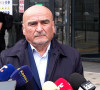
Attorney Ljubomir Pantovic stated that the public had the opportunity to see what kind of indictment this is.
“It is a very poor indictment, where the factual description is absolutely imprecise, written in plural form, and even today—one and a half years after it was filed—you cannot determine what each defendant did. We presented examples from Kosovo judicial practice, where the Supreme Court and Court of Appeals explicitly require that the actions of each defendant be described individually. A generalized description is not acceptable and does not prove criminal responsibility,” Pantovic said.
He emphasized that he did not deny his client’s participation in the events in Banjska, but that it remains unclear whether he undertook any specific action, and if so, what those actions were.
“As I mentioned at the beginning of my closing argument, there has been enormous pressure—from the media and the broader public—from the start of the proceedings, with many loudly calling for life imprisonment even before any evidence was presented. We know that every defendant is presumed innocent until proven guilty by a final court decision. Last week, during one closing statement that lasted six minutes, we heard five calls for the harshest possible sentence. This trial has unfolded in that kind of atmosphere. However, I am encouraged by the fact that the proceedings have been conducted very correctly,” Pantovic concluded.
The verdict in the Banjska case will be delivered on April 24. Earlier, the prosecution requested life imprisonment for the accused in its closing arguments.

0 comments