
Golemovic: Kosovo and Metohija rich in folk music, well-known Lazarus Saturday and Easter songs
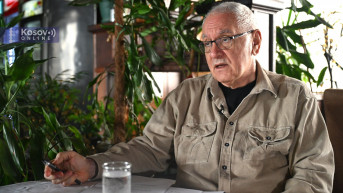
What are Easter (Veligden), Lazarus Saturday (Lazarice), rain-invoking (Dodola), processional (Krstonose), and prosperity (bericet) songs like, and why are many of them associated with different parts of Kosovo as well as specific holidays? We spoke with ethnomusicologist and composer from Belgrade Dimitrije Golemovic about the origins of folk music from Kosovo, as well as the motives for folk creativity that also interested the renowned Serbian composer Stevan Stojanovic Mokranjac.
In the interview for Kosovo Online, we also touched on numerous customs associated with folk creativity. According to our interlocutor, one that particularly stands out is the visiting of sacred trees, where on the second day of Easter a procession would go from tree to tree singing Krstonose songs, renewing the carved crosses in the bark while offering prayers.
What are the characteristics of folk songs from Kosovo, and how far back do they date?
That is somewhat difficult to determine for each individual folk song. A folk song has its author, since in villages it is usually known who once composed something, but time erodes that knowledge. Even when it comes to composers of art music, it can be uncertain. If it had not been for Mendelssohn, Johann Sebastian Bach would never have been rediscovered. Even Dr. Miloje Milojevic established that there are two layers. One is older – rural. The other is newer – urban. This urban layer carries all the characteristics of an oriental town, as all cities in Serbia, Montenegro, and Bosnia and Herzegovina once were, where oriental music prevailed.
As for the older layer, in Kosovo and Metohija it is actually connected to people’s economic activity, and those people were farmers. When someone is a farmer, they depend on nature, so they dedicate many songs and rituals to it. If they sing with a request for rain, those are Dodola songs, there are also Krstonose songs, and so on. This oldest layer is not characteristic only of Kosovo and Metohija, but also of the South Morava region, Bujanovac, the Nis area, and the Pirot region. People across that entire area have a similar relationship with nature because they depend on it. Dinaric, that is pastoral regions, do not have these oldest ritual songs. Why would someone in Herzegovina sing a song asking for rain when it does not matter to them, while for farmers everything depends on it?
Starting from Christmas Eve and Christmas, much of what is done for Christmas is dedicated to prosperity and expectations for the coming year. When people would come to offer Christmas greetings, they would say, “Happy new summer to you!” These are all songs for prosperity. Such prosperity songs are also typical for other holidays later on – for Lazarus Saturday, for example. On Lazarus Saturday, Lazarice, young girls dressed ceremonially, would go in processions. They would make a circle around the village and sing, “For a wealthy household with three doors.” They sang for the bride, the groom, for a child, for everything people hoped would come to fruition. Later there are also Dodole songs, sung in spring when rain is lacking. They would say, “Our Doda prays to God to send us fertile rain.” Then come the Krstonose songs, sung on the second day of Easter, which are a continuation of the Dodola songs, but Christianized, while the Dodola songs are pagan, reaching back to the earliest times, and these are of later origin. You have a priest, a procession, and a banner carried as they go around the village. But what is ancient here? They visit old sacred trees, going from one to another, carving and renewing crosses already marked into the trees, and praying to that tree, which in fact represents the personification of some ancient deity.
When it comes to Kosovo and Metohija, how much does folk music differ from one area to another? Is any particular region especially distinctive?
Folk music is so-called minimalist music. What does that mean? It means that differences appear at a micro level. Someone listening might say it all sounds the same. But the people know when something is the same and when it is not. So there are differences between parts of Kosovo and Metohija, but in any case this should be studied more seriously. Predecessors such as Stevan Mokranjac, later Miloje Milojevic, Miodrag Vasiljevic, and Professor Dragoslav Devic were people who researched and mostly collected material. They were less engaged in analyzing those collected examples where differences between regions in Kosovo and Metohija could be observed.
You mentioned Stevan Stojanovic Mokranjac – he also studied Serbian folk music. What would you highlight from his work related to Kosovo and Metohija?
Stevan Mokranjac was a composer of the old school, and at the same time an ethnomusicologist of the old school. That means these were mostly composers who sought inspiration for their future compositions in folk traditions. This was a trend from the mid-19th century onward – seeking inspiration in the people. Even the great Russian composer Modest Mussorgsky said that the people create, and the composer arranges. Stevan Mokranjac followed this idea, as did Kornelije Stankovic before him. Mokranjac concluded that for his “Rukoveti” – compositions in which he combined songs of different thematic and musical content into suites – it was important to be among the people. He wanted to come to the field and experience it firsthand. In 1893, Mokranjac came and was a guest of Branislav Nusic, who at the time was consul in Pristina. Nusic hosted him and brought people to him directly from the market. These were people from different parts of Kosovo who knew songs, and Mokranjac transcribed them. It is unfortunate that Mokranjac did not have a phonograph, the predecessor of the tape recorder, which had already been invented and used. He received singers who came to Nusic’s residence where Mokranjac was staying, and he wrote down those songs, with the opportunity to ask them to sing them again. He recorded a large number of songs, but the fact is that he did not go to the villages. That was not the trend at the time. The village came to him, and whatever came, came. In his Eighth Rukovet, Mokranjac collected songs from Kosovo, and it is one of his most beautiful works, along with the Fourteenth Rukovet. One can see his deep connection with the folk music he heard in the field. That is a great thing – when you hear a folk singer perform. Mokranjac left a large number of records with remarkable commentary. He gave very insightful comments on songs from Kosovo.
Are there any songs from Kosovo and Metohija that celebrate Easter, the most joyful Christian holiday?
Of course. The south and southeast of Serbia had the largest number of Easter songs compared to other regions, which shows how important Easter is among the people. There are some parts of Serbia where there are no Easter songs. There are Easter (Veligden) songs in Macedonia, in Kosovo and Metohija, and a few in Bujanovac, but in Serbia proper they are absent, and instead the Easter troparion is sung. This shows the influence of the Church. It is also sung in Kosovo and Metohija, but the Easter songs preserve characteristics of all other ritual and customary songs.
What is the situation today with folk music in Kosovo and Metohija? Are there new performers, composers, and young talents?
I would highlight Djordje Lakusic, a choreographer with whom I had excellent cooperation. Eleven years ago we organized a concert at BEMUS with his cultural society “Kopaonik” at the Ethnographic Museum, where he performed choreographies from different parts of Kosovo and Metohija. I would single him out as a choreographer who nurtures folk music within his work. There is also Slavica Redzic, an excellent singer who preserves folk songs. Since Kosovo, due to its fate, is a popular theme, there is everything there, including newly composed songs that I personally do not like. Production is always greater than what endures. The judgment of the people is infallible.
0 comments