
Arsovski: Kosovo election results are not surprising; formation of the CSM is an obligation for any new government
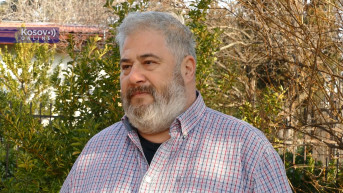
Political analyst from Skopje, Petar Arsovski, told Kosovo Online that the results of Kosovo’s elections are not a major surprise but indicate that all combinations for forming a new government are possible. He is convinced that the key task for the new government will be the dialogue between Belgrade and Pristina, as well as the formation of the Community of Serb Municipalities. He warns that internal tensions in Kosovo could have repercussions for the region.
Arsovski states that, at this moment, it is impossible to determine who is the winner and who is the loser of Kosovo’s parliamentary elections.
"The results are not a big surprise. Albin Kurti and the Self-Determination Movement still lead with the most votes, but they will face difficulties in forming a new government. The question is whether opposition parties will align with Kurti or whether they will be able to form a government on their own. The numbers suggest that all combinations are possible," Arsovski says.
As a second uncertainty, Arsovski points to the extent to which the US administration will intervene in post-election negotiations.
"In that case, Kurti’s prospects are bleak. However, if this is left solely to the domestic political scene, then the predictions for a new Kurti mandate are much better," Arsovski assesses.
He also highlights a third uncertainty – how Belgrade will respond to the election results in Kosovo and what the new government's agenda will be.
"Will the agenda of the new government include the Community of Serb Municipalities? Will a plan for resolving the Kosovo issue be on the table, whether under Kurti or the current opposition? And will this be a condition for forming a government?" Arsovski emphasizes.
He believes that the normalization of relations with Belgrade and the formation of the Community of Serb Municipalities will be prerequisites for forming any government in Pristina.
"I think these tensions will persist, especially if Kurti maintains his firm stance of refusing to discuss the issue while managing to form a government. However, I believe that the agenda of normalization will be a condition for any government, which, in my view, will lead not to true normalization but to a slight setback for Kosovo," Arsovski explains.
When asked what to expect in terms of relations with North Macedonia and other regional countries, Arsovski believes that Pristina will mainly be preoccupied with its internal political dynamics in the coming years.
"I don’t think there will be major changes, but certainly, an unstable political situation, ongoing tensions with Belgrade, and internal instability do not benefit North Macedonia, Albania, or Serbia. And I believe that precisely such a period is ahead," Arsovski concludes.


0 comments