
Diaspora and Local Elections: How much will postal votes affect the results?
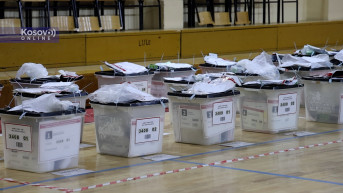
Votes for mayors and municipal councilors in Kosovo will arrive from 46 countries, but the number of registered diaspora voters is half that of the parliamentary elections held in February. This indicates less “euphoria” among the diaspora for local elections, but it does not rule out the possibility that they could tip the scales in some municipalities, according to interlocutors of Kosovo Online. They point out that voters should not vote for a party but should instead “weigh” the achievements of individuals, while some even believe that the diaspora should not participate in local elections at all.
Written by: Dusica Radeka Djordjevic
For the local elections on October 12, 46,015 diaspora voters registered, compared to 104,924 registered for the parliamentary elections on February 9.
Most applications for the October elections came for municipalities in central and southern Kosovo — Pristina, Prizren, Djakovica, and Podujevo.
Eugen Cakolli of the Kosovo Democratic Institute (KDI) believes that in many municipalities, mayors could be determined by the votes of citizens living abroad, since in many places the number of registered diaspora voters is greater than or close to the difference in votes between the top two candidates in the 2021 local elections.
Political analyst Shkëlzen Maliqi, however, does not expect diaspora votes to significantly affect the results, except perhaps in larger centers like Pristina.
He told Kosovo Online that in the October 12 elections there will be no voting in embassies; instead, the diaspora will have to vote by mail or travel to Kosovo. He also believes that the diaspora should not participate in local elections at all.
“At general elections, yes, for those who have dual citizenship and who live partly here and partly there. But at local elections, they should not vote. They live in Germany or elsewhere, and they should be active there because that is where they live,” Maliqi stated.
According to him, voters at the local level will also be influenced by the “general debate about whether the Government was at all effective and whether it accomplished anything other than damaging Kosovo’s relations with global powers, its sponsors, the U.S. and the EU.”
Despite the difference between local and parliamentary elections, Elmi Berisha, head of the Pan-Albanian Federation of America VATRA, believes that the Kosovo diaspora in the U.S. will vote even in local elections. In his view, the diaspora should vote and has the right to, because it “gives a large part of its life and contribution to the country,” which drives the economy not only of Kosovo but also of Albania and even North Macedonia.
In local elections, he says, people will choose qualified individuals, evaluate their past work, and their success.
“Voting for a party would not be right in local elections,” Berisha told Kosovo Online. He added that corruption is the “number one issue” for the diaspora.
“In the last three years, in the recent and previous elections, the diaspora showed great interest. I don’t want to point fingers at any government, but in the Balkans in earlier times, some governments did make voting difficult for the diaspora. The process is confusing; votes can get lost by mail, and sometimes, unfortunately, they can even be misused. The diaspora wants to see a future in Kosovo. It wants to see light at the end of the tunnel and for peace to come,” said Berisha.
He stressed that Kosovo and the region must stabilize and that it is crucial to recognize the importance of the diaspora.
“We must understand that we have to make peace even with Serbia. Kosovo has excellent relations with other neighbors, but with Serbia, we must find a way to move forward and integrate together, because neither Serbia nor Kosovo will integrate on their own in the way we truly need,” said Berisha.
Former diplomat Zoran Milivojevic noted that the role of the diaspora in elections is generally increasing everywhere, especially when it is large — as the Albanian diaspora is.
Considering the ruling Self-Determination Movement’s measures regarding voter lists and new voter registrations for the upcoming elections, as well as attempts to discredit the Serbian List, Milivojevic expects Albanian parties to call on the diaspora to support the Albanian factor in municipalities dominated by Serbs.
“This is a call to the diaspora not only from Self-Determination but also from other opposition parties in Kosovo and Metohija — to strengthen the Albanian factor in municipalities dominated by Serbs or where they have a majority, shifting the demographic balance in favor of Albanians and preventing Serbs from convincingly winning and dominating in those areas,” Milivojevic told Kosovo Online.
He also believes that certain Western actors will play a role in these elections.
“To the extent that they are interested in tipping things in favor of the Albanian factor — for example, in municipalities in northern Kosovo and Metohija — some Western centers of power could encourage the diaspora in their countries to turn out and vote. Unfortunately, we had a bad experience in the last elections, where results with only a 3 percent turnout were accepted, allowing three years of governance based on tools that altered the factual situation, demographic makeup, and living conditions of the Serbian people in majority areas,” he said.
He considers it almost certain that in some countries the Albanian diaspora will be encouraged to vote in local elections, especially where it is well established, such as Germany, the UK, Switzerland, and the U.S.
When it comes to which political actor in Kosovo could attract the most diaspora votes locally, political analyst from Skopje Lulzim Farizi believes that Albin Kurti could receive more votes from the diaspora than all other parties combined — though he notes this number will be much lower than in parliamentary elections, since fewer voters are registered now.
Farizi recalls that four years ago, when parliamentary and local elections were held in the same year, Kurti won a record number of votes in Kosovo’s history in the parliamentary elections, but then lost half of them in the locals.
He explains that generally, parliamentary elections generate more enthusiasm than local ones.
“For the parliamentary elections in February, not only did diaspora voters register online and by mail, but many even traveled to Kosovo to vote in person,” Farizi told Kosovo Online.
He added that, unlike in Macedonia, where parties get similar results in both types of elections, Kosovo is different because mayors are elected directly and votes are cast “for personal interests, which directly affect citizens at the local level.”
Political analyst and founder of the law firm LEAL in Tirana, Leonard Karaj, believes strict rules need to be established for diaspora participation in elections. On one hand, he explained, this should not mean that people in the diaspora are treated as foreigners, while those “within the borders of Albania, Kosovo, Serbia, North Macedonia… are treated as our people.” On the other hand, he raised a hypothetical situation:
“What happens if the number of diaspora voters becomes larger than that of residents in a given country — Albania, Kosovo, North Macedonia, or Serbia? How can a voter in the diaspora, who spends more than 99 percent of their life outside their country of origin, decide on the economic and social policy of their homeland?” Karaj asked Kosovo Online.
He also pointed out that no one in the Albanian parliament represents the 250,000 diaspora voters.
“Theoretically and practically, no one represents them. They voted, but their votes were counted as if they lived in Albania, when in fact they don’t. One might say they send remittances, but maybe they don’t, since they are not obliged to. Their only obligation as holders of Albanian passports is to pay taxes. But do they pay taxes in the Republic of Albania, in Kosovo, in Serbia, or in North Macedonia? I say no. That’s why I say a fair solution must be found to adapt diaspora voting to what we expect from them,” he said.
Karaj cited Italy as an example, known as a country of emigrants, where certain seats in parliament are reserved for the diaspora.
“So diaspora voters elect their own representative, who is part of the diaspora and who, in the Italian parliament — or in the Albanian or Kosovar parliament — defends the rights of the diaspora,” he explained.
He added that there are major debates on the technical aspects of diaspora voting, i.e., how it should take place — by mail, in consulates, or through companies like DHL, as was the case in Albania.
“In my opinion, the best way would be voting in the state’s diplomatic missions. A ballot box should be placed there, and every emigrant who feels the responsibility to vote and believes their vote has value should ‘make the effort’ to go and cast their ballot,” the analyst concluded.



comments