
Jevtic: Serb List is fighting for all 10 seats to prevent the trading of Serbian interests
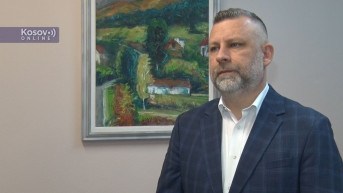
Vice President of the Serb List, Dalibor Jevtic, stressed that in the upcoming elections the party is fighting to win all ten seats in order to prevent anyone from trading in Serbian interests.
“Winning all ten seats is important because, in the previous parliamentary elections, one seat was taken by a person who did not represent Serbian interests. We are not fighting for ten seats in order to hold a monopoly within the Serbian community, but because Albin Kurti handed that seat to Nenad Rašic with Albanian votes. We are fighting for all ten seats so that no one is allowed to trade in Serbian interests,” Jevtic explained in a statement to TV Tanjug.
He expressed confidence that the Serb List would achieve an even better result than in the local elections and win all ten mandates.
Jevtic recalled that several months ago he had announced that snap parliamentary elections would be held by the end of the year, because Kurti’s actions were leading toward a situation in which he did not want to establish institutions, as he neither has a majority nor coalition capacity.
He added that another relevant fact is that President Vjosa Osmani’s mandate is expiring, and that the election of a new president will require a two-thirds majority in parliament.
“What should not have happened were elections during the holiday period, between Catholic Christmas and New Year. Kurti is counting on diaspora votes, which is why that date was chosen, even though the international community was against it due to the impossibility of proper monitoring, as everyone is on holiday,” Jevtic pointed out.
He said that Osmani, in deciding on the election date, followed Kurti’s wishes.
“All other parties stated at the meeting that they believed December 21 was a better date, but she listened to Kurti and scheduled the elections for December 28 under the pretext that the CEC needed more time,” Jevtic explained.
He stressed that the international community is dissatisfied with the overall situation in Kosovo.
Jevtic noted that Kurti, or rather his Self-Determination Movement, has fallen below 40 percent in opinion polls, and that new surveys in the coming days will provide a clearer picture.
He is convinced that a new government will be formed after the elections and that, under such circumstances, a two-thirds majority will be sought, but emphasized that the key issue will be who runs for president of Kosovo.
“Kurti did not have a two-thirds majority the last time the president was elected either, yet Osmani was elected. I would not rule out the same scenario now. What matters is who will run for president of Kosovo. I expect a compromise solution to be found in order to overcome the deadlock,” Jevtic underlined.
He warned that another lost year would be disastrous for Kosovo’s citizens.
“I truly expect that the elections will produce a new situation—not drastically different, but a new one—in which there will not be much room for the kind of governance we have seen this year,” Jevtic said.
Commenting on the fact that among the first ten candidates on the Serb List are three from southern Kosovo and seven from the north, Jevtic explained that the party does not divide Serbs into those south or north of the Ibar River, stressing that the list is open, meaning that a candidate’s position on the list does not imply an advantage for entering parliament.
“It does not matter what number you are on the list, because voters also mark the candidates. Each voter can choose up to ten candidates, and those who receive the highest number of votes enter parliament, regardless of their original position on the list. If the Serb List wins ten seats, which I firmly believe it will, the ten candidates with the most votes will enter the Assembly, provided that 35 percent are women,” Jevtic said.
Regarding the initial refusal to certify the party’s participation in the elections, and later its candidate list, Jevtic pointed out that the Central Election Commission is composed of representatives of political parties, and that Kurti is therefore conducting an ethno-nationalist campaign against Serbs through the Commission.
On the other hand, he noted, the Election Complaints and Appeals Panel is composed of judges who decide strictly in accordance with the law, which is why all appeals filed by the Serb List were upheld.
Spahiu: The election of the president creates a political deadlock in Kosovo
Political analyst Nexhmedin Spahiu believes that the results of the December 28 elections will be similar to those of the February elections. He noted that Albin Kurti is hoping that Ramush Haradinaj’s Alliance for the Future of Kosovo (AAK) and Fatmir Limaj’s Nisma, which are now running separately, will fail to cross the electoral threshold, which would, he says, give Self-Determination five additional seats.
“If the percentages remain the same as in the previous elections, or even if Kurti wins a few percent less, the failure of Nisma and AAK to enter parliament would still give him several more MPs,” Spahiu said.
Explaining why the AAK–Nisma coalition broke up, he recalled that Limaj had offered himself to Kurti as a coalition partner, which angered Haradinaj and worsened their relations.
He said there is a real possibility that neither party will pass the threshold, given that together they won around six percent in February—about four percent for AAK and around two percent for Nisma.
“If the results remain at that level, neither of the two parties will make it,” Spahiu is convinced.
Speaking about potential coalitions among the three major Albanian parties, he said that Self-Determination would favor a coalition with the Democratic League of Kosovo (LDK), but that such an arrangement does not suit LDK leader Lumir Abdixhiku. On the other hand, cooperation with the Democratic Party of Kosovo (PDK) is completely unacceptable to Kurti’s party.
Spahiu also stressed that the election of Kosovo’s president is the main reason for the current “political knot,” pointing out that the president is elected in parliament rather than directly by citizens.
He reiterated his view that the Constitution should be amended to allow for the direct election of the president, which, he added, would also suit minority communities.
“That would also benefit minorities in Kosovo, because presidential candidates would go to minority areas and seek their votes,” Spahiu said.
He noted that this was precisely the reason Kurti did not give Limaj the post of Speaker of Parliament—because if a president were not elected within the prescribed timeframe, the Speaker would become Acting President of Kosovo.
Spahiu believes that a possible solution could be a coalition between Self-Determination and the LDK, provided that Abdixhiku agreed to become President of Kosovo, but said that decision rests with him.
“If the LDK were to form a coalition with the PDK, its entire membership would turn toward Kurti, so I do not believe they would take that risk,” Spahiu added.
Asked whether a coalition of the LDK, PDK, and AAK with the Serb List would be possible, Spahiu said that it is numerically feasible, but observed that such a coalition would have already been formed if it had been practicable.
However, Jevtic clarified that if AAK and Nisma fail to cross the threshold, the mandates that would have gone to them would be redistributed among other parties, and would not all go to Kurti.
He added that, according to polls, Nisma will not cross the threshold, but that Haradinaj’s AAK will.
“In the surveys I see, Kurti is not doing particularly well, which is why he insisted that the elections be held on December 28—to compensate with diaspora votes for the loss of support in Kosovo. He has done nothing, and he will reduce his campaign to portraying the Serb List and the Serbs as his opponents, because that is the only way he can win votes,” Jevtic concluded.



0 comments