
Vladisavljev: Exceptionally high level of animosity between Albanian parties in Kosovo
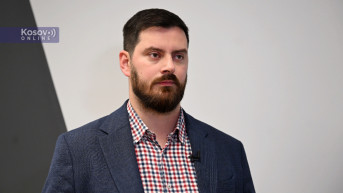
Stefan Vladisavljev, program coordinator at the BFPE Foundation for a Responsible Society, stated that the election campaign in Kosovo is marked by high tensions, indicating significant animosity between Albanian parties, and added that the results on February 9 will determine whether there will be a shift in political dynamics, including the narrative toward minority communities.
"The hate speech we are witnessing suggests that the pre-election atmosphere itself is under a significant level of tension. This is not only about the dominant political forces’ relationship with the Serbian minority in Kosovo but also about their relationships with each other. There seems to be an exceptionally high level of animosity between Albanian parties. The way political communication is conducted in the campaign is also reflected in the fines imposed for violating campaign rules and engaging in hate speech," Vladisavljev told Kosovo Online.
He believes that the increased tensions are a result of events in northern Kosovo spilling over into the rest of society and that February 9 could serve both as a climax and as a starting point for the future political climate in Kosovo.
"The high level of tension originating in northern Kosovo has, to some extent, spread to the rest of society, and it seems that February 9 will be the culmination of it all. The election results will certainly serve as a starting point for shaping the future atmosphere in Kosovo, which is currently under the leadership of the Self-Determination Movement and shaped by its leader and narratives. Whether the rhetoric will soften and whether there will be a shift in the approach toward minority communities remains to be seen, but that will largely depend on who wakes up on the morning of February 10 as the winner of Kosovo’s parliamentary elections," Vladisavljev explained.
The charged atmosphere and exchange of accusations between leading Albanian parties culminated in an incident on January 27 in Srbica, where Albin Kurti and his supporters were attacked, prompting police intervention.
Vladisavljev interprets this event as a reaction to the rhetoric used by the Self-Determination leader himself.
"People, no matter where they are in the world, have a problem when authority crosses certain boundaries. If hate speech is continuously present in public discourse, some form of protest is to be expected. The real question is whether those who spread hate speech and call for action based on it are constructive enough to accept criticism and adapt their policies. I would say that this situation is not unique to Kosovo but can be found in other parts of the region as well," Vladisavljev noted.
Commenting on the decision of the Election Complaints and Appeals Panel to fine the Self-Determination Movement 35,000 euros for displaying the "three-finger salute" at the same rally in Srbica, Vladisavljev described it as a "game of symbols."
He warned that it would be far more dangerous if these tensions were to spill over into Kosovo’s society as a whole after the elections.
"Symbolism plays a significant role in shaping narratives, and different symbols are interpreted in various ways. I am sure that certain provocations are subtly embedded in such gestures. However, rather than placing too much emphasis on potential symbols, I would highlight the real danger of these tensions crossing a threshold of decency and spreading throughout society. That would go beyond the scope of the election campaign and its immediate results," Vladisavljev concluded.



0 comments