
Serbia to adopt Law on Missing Persons: End to decades of silence for families from Kosovo
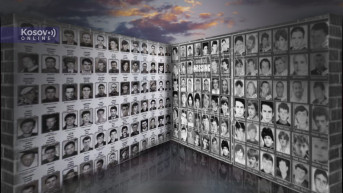
Following announcements by the Ministry for Labour, Employment, Veteran and Social Affairs that Serbia will adopt a Law on Missing Persons by the end of 2026, associations representing families of the missing say that recognition of victim status would resolve numerous problems and, to some extent, alleviate their suffering and grief. Speaking to Kosovo Online, Minister Milica Djurdjevic Stamenkovski stated that the next phase will include harmonisation of the draft law, followed by a public debate and its submission to parliament, emphasizing that this is “not merely a law,” but also a message to the families of the missing, after decades of silence, that they have not been forgotten.
Written by: Katarina Saicic
Croatia, Bosnia and Herzegovina, and Kosovo already have laws on missing persons. In Bosnia and Herzegovina, the law has been adopted, although its implementation remains questionable, whereas in Croatia it is functioning in practice. Kosovo adopted its Law on Missing Persons in 2011, defining the rights of families as well as the responsibilities of institutions involved in the search process.
In Serbia, the draft law was prepared in February 2025, but due to personnel changes within the Ministry, the public consultation process was postponed. It has been announced that the legislation will apply to all families of missing persons from the territory of the former Yugoslavia. According to available data from April 2025, the fate of 11,000 persons from across the former SFRY remains unresolved, while 570 people are still being sought in Kosovo.
At the recent exhibition “Memories” held at the Serbian Parliament, Minister Djurdjevic Stamenkovski announced that Serbia would also adopt such legislation by the end of 2026.
Speaking to Kosovo Online, she stressed that dedicated work is underway on drafting the Law on Missing Persons and that the issue is not merely a legal or administrative matter, but rather a question of state conscience, justice, and an obligation toward thousands of families who have lived for decades between hope and pain.
“Behind us are discussions with associations of families of the missing, representatives of competent institutions, experts, and people who carry this tragedy every single day. The next phase includes harmonisation of the final draft text, a public debate, and subsequently its submission to parliamentary procedure, with the clear goal that Serbia, during 2026, for the first time adopts a law that will systematically protect the families of the missing,” the Minister emphasized.
Special Importance for Families of the Missing in Kosovo
As she pointed out, there is clear political will and full support from the state leadership for the adoption of this law, because the families of the missing must no longer be left to face their ordeal alone.
“The state has an obligation to provide them not only with legal and material protection, but also with what they have awaited the longest: truth and dignity,” she stated, adding that the law would, for the first time, systematically regulate the status of families of missing persons and enable the state institutionally to recognize their decades-long suffering, uncertainty, and struggle for the truth.
“The law is of particular importance for the families of missing and kidnapped Serbs in Kosovo and Metohija, where abductions continued even after the war. Several hundred of them are still awaiting justice. These are not numbers. These are families. These are mothers who continue to ask the same question today – where are our children? At the exhibition ‘Memories,’ one mother of a missing boy uttered a verse that encapsulated all the pain of these families: ‘Murderer, I would forgive you everything, if only I knew where you buried my son.’ That is not merely a poem. It is the cry of all families whose loved ones were never returned,” Djurdjevic Stamenkovski said.
What the Law Will Provide
The Minister also revealed details of the legislation and what families of the missing may expect.
“The law will enable families to exercise the right to equitable satisfaction, healthcare, psychosocial support, legal certainty, and institutional assistance at the moment of identification and dignified burial of mortal remains. It will also provide for annual payment of fair financial compensation over a period of three years. The rights of families of the missing in Kosovo and Metohija will be fully equalized with those of families of persons missing in the war conflicts in Croatia and Bosnia and Herzegovina,” the Minister underlined.
Regarding the main provisions of the law, Djurdjevic Stamenkovski stated that it would clearly define the status of missing persons and their family members, the manner of exercising their rights, as well as the obligations of state authorities in the process of searching for, identifying, and registering missing persons.
“A unified register of missing persons will be established and maintained by the Ministry for Labour, Employment, Veteran and Social Affairs, in cooperation with the Government of the Republic of Serbia’s Commission for Missing Persons. Cooperation with international organizations and regional institutions will also be enhanced in order to accelerate the process of clarifying the fate of the missing. However, the essence of this law lies not only in articles and procedures. Its essence lies in people,” the Minister stressed.
For all these reasons, she concluded that this is not merely a law.
“This is the state’s attempt, after decades of silence, to tell the families of the missing: you have not been forgotten. And Serbia will not abandon the pursuit of truth, justice, and its people,” Djurdjevic Stamenkovski said.
Status of Special Interest to the State
President of the Association of Families of Missing and Killed Persons “Suza,” Dragana Vujancevic Djukic, told Kosovo Online that this law would resolve many problems.
“Families of the missing expect recognition of victim status. Through this law, what is most important to us would finally be acknowledged – that Serbs are also victims. The law would encompass many issues. First and foremost, families would receive a certain form of satisfaction, which, of course, can never be sufficient when murdered family members are concerned. Nevertheless, it concerns financial compensation that would demonstrate they have not been forgotten, that someone is still thinking of them, and that the state stands behind them,” Vujancevic Djukic emphasized.
She added that associations of families of missing and killed persons should, under this law, obtain the status of entities of special interest to the state, so that they would no longer have to struggle for their own survival.
“The law would enable us to operate more easily and pursue our mission and vision, the very reasons these associations were established, rather than fighting for basic existence. The adoption of this law is of tremendous importance. Back in 2000, families submitted this initiative, and throughout all these years the law has, so to speak, been enriched through its provisions. Recently, a large number of working groups have been held, during which the draft was revised and every article agreed upon, and we hope there are no longer any obstacles to its adoption. As Minister Djurdjevic Stamenkovski also stated, the law should enter into force in 2026,” our interlocutor stressed.
As she noted, Serbia is the only country in the region that still does not have a law on missing persons.
“It is extremely important not only that the law be adopted, but that it also be implemented. We have examples of countries in the region that have such laws, but where they do not function or are not applied. Therefore, although we have waited so long, it is crucial that once adopted, the law truly be operational and that families be, at least to some extent, satisfied with its implementation,” Vujancevic Djukic stated.
Legal and Financial Protection
President of the Association of Families of Kidnapped and Missing Persons in Kosovo and Metohija, Verica Tomanovic, told Kosovo Online that intensive discussions regarding the Law on Missing Persons are currently underway and that the draft is being supplemented in order to expedite the procedure as much as possible.
“To this very day, that law has not been adopted. However, since 2019, we have had the promise of the President of the Republic, Mr. Aleksandar Vucic, that this issue must be resolved urgently. Precisely these days, discussions are being held on this topic with the working group responsible for finalizing the draft law, and we have assurances from the Minister of Labour and Social Policy that the law will be adopted by the New Year,” Tomanovic said.
She emphasized that families primarily expect legal and financial protection.
“Our families live in extremely difficult existential conditions. They were expelled from their homes, accommodated in collective centres, and forced to survive in various ways, but it is unacceptable that our victims are not treated with due respect and that their families are not materially protected by the state, because they deserve it. They did not leave their homeland, their homes, or their land voluntarily. They were forced into exile from their centuries-old hearths. I believe that this law will, to some extent, alleviate the suffering and grief our families carry within themselves,” Tomanovic believes.
She recalled that there are a total of 1,586 unresolved missing-person cases in Kosovo, including 570 Serbs, while 367 victims have been buried.
“I believe in the Minister’s announcements and I am convinced that in 2026 we will finally receive the much-needed Law on Missing Persons,” Tomanovic concluded.

comments