
Weltwoche: Kosovo elections a test for Kurti and the idea of a multiethnic society
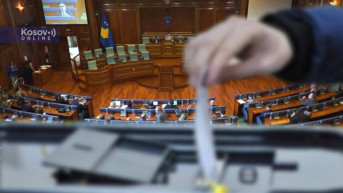
The upcoming elections in Kosovo will not only be a test for caretaker Prime Minister Albin Kurti, but also for the very idea of a multiethnic society. They have been scheduled for the end of the year in order to give Kosovo’s diaspora in Switzerland an opportunity to vote, while at the same time attempting to exclude Serbs, the Swiss weekly Weltwoche notes.
The paper observes that Kosovo is entering yet another electoral cycle—deeply divided and mired in political paralysis.
No government has been formed since the parliamentary elections of 9 February, and the political scene in Pristina has been in institutional deadlock for almost a year. Snap elections have been scheduled for 28 December—a date that raises a series of questions about their true purpose, legitimacy, and consequences.
Albin Kurti, Weltwoche emphasizes, did not choose this date by chance.
Late December is the time when many citizens of Kosovo living abroad—especially in Switzerland—traditionally travel home for the holidays. This gives the diaspora a potentially decisive role in forming the new government.
In the last elections, more than 10,000 voters from Switzerland traveled to Kosovo to cast their ballots.
This time, due to the holiday period, turnout is expected to be significantly higher. Around 300,000 Albanians of Kosovo origin live in Switzerland alone, and the Self-Determination Movement (Self-Determination) and its “socialist-nationalist” leader Kurti have for years enjoyed strong support within this community.
That the mobilization of the diaspora is not a spontaneous phenomenon is also demonstrated by Kurti’s recent visit to Switzerland on 13 December, just two weeks before the elections, when he appeared in Zurich and—according to videos he himself posted on social media—was greeted with ovations.
Switzerland’s Federal Department of Foreign Affairs stated that no meetings with official Swiss representatives had been planned, clearly indicating that this appearance was evidently part of a pre-election campaign aimed at the diaspora.
This, Weltwoche stresses, once again blurs the line between Kosovo’s internal political conflict and Switzerland as a neutral host country.
The politicization of Kosovo’s diaspora in Switzerland is not a new phenomenon, the weekly notes.
Self-Determination has for years maintained extensive networks among Kosovo Albanians. The party regularly organizes political gatherings, sometimes attended by Swiss politicians from ideologically aligned parties. The most striking example dates back to January 2023, when Kurti, in the presence of former Swiss foreign minister Micheline Calmy-Rey, publicly endorsed the Swiss Social Democrats.
This event, Weltwoche underlines, raised the question of where freedom of political expression ends and where inappropriate influence by foreign leaders on domestic politics begins.
It is no coincidence that in June this year, Swiss People’s Party MP Lukas Reimann proposed banning public political appearances by high-ranking foreign politicians on Swiss soil, arguing that this was necessary to protect sovereignty and the democratic order.
Weltwoche points out that while one political party is relying on hundreds of thousands of diaspora votes, the Serbian community in Kosovo finds itself in a completely different, almost hopeless situation.
The paper recalls that the Central Election Commission attempted to ban the Serbian List from participating in the upcoming elections, which would in practice have meant the complete political elimination of Serbs from institutional life.
Only after strong reactions from the U.S. and German embassies in Pristina did the Election Complaints and Appeals Panel uphold the Serbian List’s appeal and overturn the CEC’s decision.
The Swiss government has remained silent in the face of the regular violations of the rights of Serbs and other minorities in Kosovo, Weltwoche criticizes.
Parallel to these institutional pressures, the security situation for Serbs in Kosovo continues to deteriorate. Attacks are not limited to the political sphere, but increasingly target their spiritual and cultural heritage. Numerous break-ins into Serbian Orthodox churches have been recorded. In May 2024, an act of vandalism was reported at a church in a village near Pec, where unknown perpetrators sprayed graffiti such as “Allahu Akbar” and “Only Muslims here,” along with messages indicating they wanted mosques, not churches.
Another line of attack involves the invention of a so-called “Orthodox Church of Kosovo” as an instrument for appropriating Christian religious sites. The latest incident occurred when the padlock on the 14th-century Church of St. Archangel Michael in Rakitnica, near Podujevo, was forcibly broken with the intention of taking it over.
Human rights organizations report that such incidents are part of a broader pattern in which Serbian churches and monasteries are subjected to break-ins, desecration, theft, arson, and attempts at appropriation, while institutional responses are largely absent.
The consequences are evident— insecurity, fear, and institutional isolation are accelerating the exodus of Serbs. According to demographic estimates and statements by local communities, the Serbian population in Kosovo and Metohija has decreased by approximately 20 percent since Albin Kurti came to power, a finding that coincides with an increase in violence and oppression, Weltwoche writes.
All of this, the weekly argues, should serve as a wake-up call for the Swiss public. Switzerland is not only a country with a large Kosovo diaspora and a significant Serbian community—estimated at around 120,000—but also has a direct presence on the ground through its contingent “Swisscoy” within KFOR. Kosovo’s stability, the legitimacy of elections, and the position of minorities are not abstract Balkan issues, but matters that directly affect Swiss interests.
The elections scheduled for 28 December therefore go beyond a routine transfer of power. Can elections be legitimate when one community is denied political participation, while at the same time there is massive mobilization of a diaspora that interferes in Swiss domestic politics? How democratic can voting be in a climate of fear, attacks, and demographic pressure?
Kosovo stands at a crossroads. These elections will not only be a test for Albin Kurti, but also for the very idea of a multiethnic society. And for Switzerland— from which tens of thousands of people will travel to decide on power in a strategically important region—this is not just a story about the Balkans, but also about the limits of political influence, responsibility, and neutrality.
On 28 December, Kosovo will choose a new government. At the same time, more fundamental questions are being decided there—who has the right to vote, who has the right to stay, and who has the right to exist at all, the Swiss weekly concludes.
comments