
Barbano: We are monitoring property disputes of Serbs in Kosovo; large number of cases are returned for retrial by the Court of Appeal

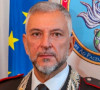
The head of EULEX, Giovanni Pietro Barbano, in an extensive interview for Kosovo Online, spoke about the current security situation in Kosovo, the work of EULEX, the upcoming population census, Visoki Decani Monastery, unresolved property issues of Serbs, and cooperation with KFOR and the Kosovo Police.
Barbano notes that the implementation of the Constitutional Court's judgment from 2016 in the case of the Decani Monastery is undoubtedly a very welcome step forward for the rule of law in Kosovo.
"The implementation of the decision in the case of the Decani Monastery was long overdue, and it is important to recall that, based on the principle of legal certainty, the Constitutional Court’s decisions are binding for all persons and institutions, without exception, in line with Kosovo’s Constitution and European legal standards. In this regard, there are currently other Constitutional Court decisions pending implementation, for which the same principle applies," Barbano says.
According to EULEX data, there are 70,000 unresolved property issues of Serbs. What is happening with these cases, and in your opinion, what is the reason these cases have not been resolved?
We are continuing to monitor more than 50 civil cases related to different property disputes, such as restitution of property, confirmation of ownership, illegal occupation, fraudulent transaction, compensation of damages and execution of judgments filed by Kosovo Serb claimants, almost all of whom reside outside of Kosovo. Under the European Convention on Human Rights (ECHR), every natural or legal person is entitled to the peaceful enjoyment of his or her possessions, and cases originating from property disputes must be adjudicated within ‘reasonable time’ as clearly stipulated by Article 6 (1) of the same Convention. Regrettably, the Kosovo justice system is still marred by significant delays in court proceedings related to these issues. Among the causes of the delays, there are the huge backlog of 70,000 pending civil cases, delays in the provision of court translations of documents, still missing land registries, summons in Serbia delivered late due to the lack of mutual legal assistance, and frequent changes of assigned judges. Moreover, a huge number of civil cases are returned for retrial by the Court of Appeal.
You recently said that the situation in Kosovo was fragile. Do you feel like we are going from crisis to crisis?
The current security situation in Kosovo, in particular in northern Kosovo, is indeed fragile, and unfortunately, over the last months, we have seen extremely serious, unacceptable, security incidents, including the violent events of 29 May in Zvecan and on 24 September in Banjska. As recently stated by the EU High Representative and Vice President of the European Commission, Josep Borrell, it is time to break the current vicious cycle of crises and tensions. We must think of what this means when looking at the everyday lives of people on the ground: it is a matter of fact that this cycle of tensions has negatively impacted Kosovo’s social cohesion and inter-communal relations, thus affecting the daily life of women, men, and children in Kosovo. Let me be very clear: all communities in Kosovo have not only the right to live in a safe and secure environment, but they also need to be able to trust the authorities who have the duty to protect them. Moreover, those authorities, in particular the police and judicial authorities, must reflect the communities they serve in their composition. As a Mission, on the one hand, we are vigilant and stand ready to support the security of Kosovo and the well-being of the local population; on the other hand, we are also committed to supporting the Kosovo authorities, in particular the Kosovo Police, in strengthening their community-oriented policing efforts to increase people’s confidence and to continue to build bridges between the police and the population.
How do you view the CBK's decision regarding the dinar? Is this something that contributes to the destabilization of the situation, and how does it affect, primarily, the Serbian community, and how do you see a way out of this crisis?
I can only reiterate that it is important to find a negotiated solution to this issue in the framework of the EU-facilitated Dialogue for the benefit of all affected communities.
The Serbian community expects more from EULEX when it comes to the protection of their rights. How much can EULEX help? Especially when it comes to legal proceedings against Serbs, arrests, and the use of excessive force by the Kosovo Police?
EULEX is in Kosovo to help strengthen the rule of law institutions in order for them to be sustainable, accountable, and able to effectively guarantee the rights of all communities and individuals without discrimination. In line with our robust monitoring mandate, we are assertively monitoring selected cases throughout the entire criminal justice system chain, on police, prosecutorial and judicial level: many of these cases concern members of the Kosovo Serb community. Currently the mission is closely monitoring over 30 cases involving Kosovo Serbs, or which otherwise could possibly affect inter-communal relations. We fully respect the independence of judicial authorities and the principle of non-interference while conducting our monitoring activities, and if through these monitoring activities, serious shortcomings are identified, the Mission addresses these with the relevant, responsible authorities. Kosovo has a solid human rights legal framework and in our daily work we are actively and publicly reminding the authorities of their duty to fulfil their human rights obligations so that these rights are not just theoretical entitlements but are experienced in people’s daily lives. Human rights must be protected by the rule of law. This is one of the guiding principles behind our robust and assertive monitoring, mentoring and advising, which includes the posture and conduct of the Kosovo police, with a clear commitment against any form of human rights abuse or discrimination. To illustrate, we have often advocated for strict compliance with human rights standards in the use of security measures such as detention on remand and other forms of deprivation of liberty. Through our correctional unit, we support the Kosovo correctional service through monitoring, mentoring and advising. Our EULEX correctional experts are regularly present in all correctional facilities in Kosovo, including to conduct visits to detainees to monitor their detention conditions at the request of the detainees, their family members, their legal representatives, other organizations, or upon the Mission’s own initiative. We have also called for increased compliance with language rights in judicial proceedings and in prison facilities, called for adequate and effective investigations in cases of alleged ill-treatment by the Kosovo Police – and we are in contact with the Kosovo Police Inspectorate in this regard –, called authorities to respect the rights of owners and interested parties in cases of expropriation of immovable property. Through our police advisors we are actively engaged in strengthening the capacity of the Kosovo Police to serve the communities they protect and increase the population’s confidence through community-oriented policing. This is an approach that aims at addressing local needs, collaboration and crime prevention, based on the principles of trust and confidence building, accountability, information sharing and communication.
Reactivation of the police station in Suvi Do
In this regard, I am pleased to announce that we are planning to soon hand over two containers to the Kosovo police, which will be used to re-activate the police sub-station Suvi Do. This sub-station has been inactive for a few years. Its reactivation will, first of all, enable both Kosovo Serbs and Kosovo Albanians living in the area to better access community-oriented police services and to directly reach out to the Kosovo police to lodge applications or complaints and to receive policing support. Moreover, a continuous presence of the Kosovo police in the Suvi Do sub-station is expected to improve the security situation, since it will enhance the capacity of the police to promote and defend the safety of all those residing in the area in a community-oriented manner. Let me also underline that, in line with its human rights due diligence responsibilities, the Mission has conditioned the donation of the container to exclusively facilitate the implementation of community policing, receiving applications and complaints and with a view to enhancing the safety of all communities.
How does EULEX prepare for the elections in the north regarding the vote for the dismissal of the mayor?
To closely monitor any possible developments affecting Kosovo’s security, which includes the security of all communities in Kosovo, remains our key priority. As Kosovo’s second security responder, we are in constant and close contact with the Kosovo Police and KFOR NATO, first and third responder respectively, and, in line with our mandate, we are committed to support the Kosovo institutions in ensuring that everyone will be able to exercise their democratic rights in a safe and organized manner, as requested by rule of law.
Will EULEX assist with the population census that was announced to begin on April 5 in Serbian areas?
No, EULEX is not involved in the conduct of the census, however, EULEX mission members will monitor the security situation during the census, and we will have a special focus towards any incident with security implications, in close cooperation with the Kosovo Police and KFOR.
How do you evaluate the cooperation with Kosovo institutions, both with KFOR and the Serbian community? Is there room for improvement?
The positive and continuous cooperation with rule of law institutions in Kosovo is the precondition to implementing our mandate, which is indeed to support them on their path towards increased effectiveness, sustainability, multi-ethnicity and accountability, free from political interference and in line with international human rights standards and best European practices. As Kosovo’s second security responder, we are in constant close coordination with the Kosovo Police and KFOR regarding security issues. Moreover, in line with our robust monitoring mandate, different components of the Mission are in contact, almost on a daily basis, with representatives from the justice system, the police, the correctional service, the probation service, thus enabling us to perform an assertive monitoring of selected cases of the entire criminal justice chain. In addition to this, we are also actively contributing to legislative drafting process in different rule of law areas providing advice and expertise.
Referring specifically to the Kosovo Serb community, we seek a constant dialogue with civil society organizations, in order to exchange views on the most pressing issues faced by the local population and looking for feedback on the work of the Mission on the ground. Moreover, we have frequently partnered with civil society to implement specific activities. Let me give you just two examples: As you know, EULEX is deeply engaged with the issue of missing persons and our experts continue to work together with their local counterparts at the Institute of Forensic Medicine to determine the fate of missing persons by offering expertise and advice on the identification of potential clandestine graves and the exhumation and identification of victims from the Kosovo conflict. Families of missing persons are entitled to seek information from the relevant institutions about their cases, and, in order to support their right to know the truth about the fate of their loved ones, EULEX has partnered with the NGO Missing Persons Resource Center (MPRC) in reaching out to family members from all communities through a series of information sessions across Kosovo. Another example is our efforts to involve and empower civil society representatives from all communities in the fight against gender-based violence. While carrying out awareness-raising campaigns and project activities, EULEX has developed and maintained strong bonds with different Kosovo NGOs supporting the Mission as implementing partners. Specifically, on the aspects of prevention of violence against women and the strive for gender equality, the Mission has partnered with the civil society to engage the youth community and to advocate at governmental level for the creation of effective assistance services to victims, including re-integration programmes. It goes without saying that the cooperation with Kosovo authorities on this issue, in particular the Kosovo Police and the Ministry of Justice, is a crucial element, and concrete steps have been taken in this regard. Together with KFOR and the OSCE Mission in Kosovo, the Mission has also been extensively involved in setting up victims-centered interview rooms in Police Station across Kosovo, including the Police Station in Mitrovica North.
What is your view on the removal of signs in Cyrillic script in northern Kosovo? Was there also a lack of coordination between Kosovo institutions and international ones?
From a security perspective, to avoid possible unnecessary tensions, it is important to ensure that an inclusive approach is followed whenever actions possibly affecting the daily lives of people are taken. This entails advance consultations with different stakeholders, which means, in this specific case, with the Language Commissioner on the interpretation of the legislative framework.
How do you see the cooperation with the Special Chambers of Kosovo?
In line with relevant Kosovo legislation, EULEX assists the Kosovo Specialist Chambers and Specialist Prosecutor’s Office with logistic and operational support, when required. We remain committed to support the work of these Kosovo institutions in ensuring accountability for grave crimes, including war crimes and crimes against humanity.

0 comments