
Barduani: Security situation in Kosovo fragile due to unresolved issues in the dialogue
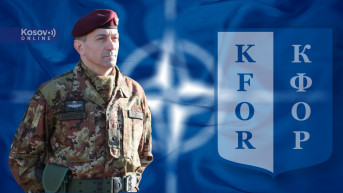
In an interview with Kosovo Online, the KFOR Commander, Italian General Enrico Barduani, discussed the current security situation in Kosovo, the explosion on the Ibar-Lepenac canal, the reasons why the bridge on the Ibar remains closed, the Kosovo Security Force (KSF), and the 2013 agreements.
The KFOR Commander says that the security situation in Kosovo remains calm but fragile.
“In Kosovo, the security situation remains calm but fragile, due to several constraining factors, including unresolved issues in the process of normalisation of relations between Belgrade and Pristina and rampant disinformation and misinformation. Nevertheless, KFOR continues to implement its long-standing UN mandate, at all times and impartially, by contributing to a safe and secure environment and freedom of movement. KFOR remains vigilant and maintains a visible and flexible presence across Kosovo, including the deployment of NATO reserve forces, which allows us prevent or minimise risks of potential escalation. But let me add that, along with operational preparedness, permanent and robust cooperation and trust-based communication with our local, regional and international counterparts continue to be crucial to safeguard regional stability,” he said.
Why did you reject the request to deploy KSF troops to the north after the explosion on the canal and does this mean that the KSF still needs KFOR permission to be deployed to the north?
Following the explosion, KFOR immediately deployed units to secure the Zubin Potok area around the damaged water canal and offered support to the Institutions in Kosovo including logistical, engineering, and explosive ordnance disposal assistance. In line with the 2013 NATO-Kosovo agreement, any potential mission of the Kosovo Security Forces in northern Kosovo requires prior authorization by the KFOR Commander. Based on the security assessment and KFOR's ongoing actions, I have not given such authorization as the situation was effectively managed by the Kosovo Police, supported by EULEX and KFOR. For the future, KFOR continues to offering additional support as needed, maintaining close coordination with the Institutions in Kosovo.
Are more KFOR troops needed at this time or is the current number satisfactory?
Our primary objective remains to prevent any renewed risk of tensions or violence. That is what we are doing every day, through regular patrols and engagements with representatives of all local communities across Kosovo. Due to the evolving security situation, last year NATO decided to increase the number of KFOR troops, through the deployment of reserve forces. Nowadays, KFOR’s strength is adequate to handle the current situation and to continue fulfilling effectively our UN mandate. Should the security situation on the ground warrant an immediate and prompt reinforcement of KFOR mission, NATO has in any event the capability to assure, that through additional reserve forces and the newly established Allied Reaction Force, currently led by the Italian NATO Rapid Deployable Corps.
Do you see the need for KFOR to secure some other locations in the north, besides the main bridge on the Ibar and the Visoki Decani Monastery? How do you view the requests to open the bridge and you recently held an exercise to protect the Visoki Decani Monastery - was that part of regular activities?
KFOR remains steadfast in its commitment to lasting security in Kosovo and regional stability. Our mission is well-resourced and postured to effectively implement its long-lasting mandate – based on United Nations Security Council Resolution 1244 of 1999 - of ensuring a safe and secure environment for all people living in Kosovo. Additional KFOR personnel and assets are temporarily stationed at key locations, including the Ibar/Ibër River bridge in Mitrovica and the Visoki Decani monastery, as part of periodic training to uphold our highest operational standards. KFOR maintains a fixed presence and conducts regular patrols at and in the vicinity of key locationsto monitor developments and respond as needed. Regarding the Ibar/Ibër River Bridge, NATO and KFOR's position has been clear, transparent and consistent throughout. Due to unresolved political issues, the opening of the bridge at this time would put KFOR soldiers and the local communities at unacceptable and unnecessary risk of violence. Decisions on the Ibar/Ibër River Bridge opening in Mitrovica must be taken through dialogue and in timely and effective coordination with the International Community and KFOR.
How realistic is the possibility of conflict in Kosovo at the moment?
As I mentioned before, the situation on the ground is calm but remains fragile. While I will not speculate on potential future scenarios, I can assure you that KFOR continuously monitors all developments that could impact security in Kosovo and the wider region. KFOR is well-resourced and positioned to prevent escalation and respond to any security situation, in line with our UN mandate. So we will continue to ensure a safe and secure environment and freedom of movement, at all times and impartially.
How much trust do you think the Serbian community has in KFOR and how would you assess cooperation with the Serbian community?
First of all, let me share with you my intimate conviction, corroborated by my previous experiences in Kosovo: the strongest desire of all people living in Kosovo, regardless of their respective ethnicity, religious faith or political belief, is to live together in peace. That said, we, as KFOR, are here to set the conditions for a long-lasting peace. But such peace requires commitment from both sides, first of all at the political and diplomatic level, with international support. KFOR is constantly in contact with the Serbian community and we engage with them impartially as we do with all the communities and people living in Kosovo. I am also in regular contact with the Chief of Staff of the Serbian Armed Forces, General Milan Mojsilovic. This is important to ensure timely information-sharing and avoid misunderstandings, especially in times of crisis and when tensions are high.
According to UN Security Council Resolution 1244, who has authority in the Ground Safety Zone and how are activities in this region regulated? Does the start of the construction of police stations in Kosovo in the immediate vicinity of the administrative border line contribute to security or not?
The ground safety zone, created through the Military Technical Agreement (MTA) of 1999, was fully relaxed in 2001. Since 2001, within its obligations by the MTA, Serbian security forces operate up to their respective side of the Administrative Boundary Line (ABL). In line with coordination procedures agreed with KFOR, Kosovo Police may operate up to 1000 meters from the ABL and conduct actions that are in line with its role as security responder. These obligations are designed to ensure coordinated action, avoid escalation and preserve a safe and secure environment. Previous notification and coordination of any activities in the vicinity of the ABL by the Serbian side and KFOR’s authorization for any KP’s activity short of 1000 m of the ABL is of utmost importance in order to avoid misunderstandings and avert unnecessary tensions.
How do you comment on statements by certain politicians who cite "sources from KFOR" that there are 1,500 Civil Protection members deployed in Raska?
These claims are bogus. They do not originate from KFOR or NATO sources and do not help to safeguard regional stability. Throughout its establishment, KFOR has maintained the highest standards of transparency in communicating its activities, through its official communications channels available to the public. As KFOR Commander, I maintain regular communication with all my key counterparts, including representatives of Kosovo’s security organizations, the Head of the European Union Mission on Rule of Law in Kosovo (EULEX), and the Chief of Staff of the Serbian Armed Forces, among others. And I intend to maintain this modus operandi throughout my tenure as KFOR Commander. Let me say that I am amazed by the fact that, despite what KFOR has done and is doing for the security of the region, there are people who try to exploit KFOR for unknown gain disseminating such news.

0 comments