
Baze: It's good that Albin Kurti didn't keep his promises, his ideas are chaotic
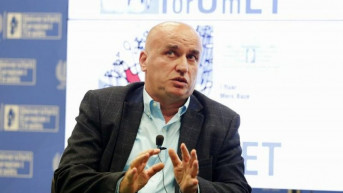
Albanian journalist Mero Baze assessed that Kosovo Prime Minister Albin Kurti helped the Special Court present the reasons why the leaders of the former KLA, who are accused of war crimes, should not be released, reports Gazeta Express.
In an interview with Periskopi, Baze commented on numerous political events in Kosovo during 2022.
As a connoisseur of political processes in Kosovo, Baze also referred critically to Kosovo President Vjosa Osmani and her "attacks" on Albania.
The previous year 2022 was marked by numerous events in Kosovo; there was no shortage of meetings with the Serbian side, tensions and protests within Kosovo. As someone who knows the processes in Kosovo, how would you rate the previous year of Kurti's government?
The past year was a true picture of what it really is, the rule of populist politicians. I see two positive things about management. The first achievement is that the government has not fulfilled its promises. I am not worried that Albin Kurti did not keep his promises. It would have been worse if he had filled them. His ideas about the development of Kosovo are chaotic, without any real support for the economic and financial reality of Kosovo and the economic model of the market. In this regard, I also consider it positive that he did not insist on implementing his ideas that he had as an opposition member. On the other hand, it is harmful that Albin Kurti tries to cause conflict with his opposition statements, complicates relations with the idea that there is an international conspiracy against him. Having fallen from power once after a conflict with the US, now every time he fails, he tries to raise tensions. In fact, he should not be overthrown, but destroyed as a superficial politician, without a stable vision for the future of Kosovo. And that's serious. There is a big difference in the Balkans between the fall and the downfall of a destructive politician. Politicians who fall out due to conflicts with Western politics in the Balkans become popular. Unfortunately, also among Albanians. We have a similar Sali Berisha in Albania. Their destruction must happen in front of the Albanian society from the daily and merciless confrontation with their ideas, in order to show everyone how much they are worth. And in this aspect, this year was also a good year against Albin Kurti and for creating a more realistic perception of him in Kosovo.
What are the three failures and three achievements of Kurti's government this year?
Failure in managing the situation in the north of Kosovo, failure in relations with Western diplomacy and failure in the fight against corruption are three obvious failures. As for the three achievements of the Kurti government, I don't want to be too cynical, but the first most important achievement is that it brought the press under control, the second achievement is that it helped the Special Court to justify why the KLA leaders should not be released and the third achievement is the fact that it won independence from Albania by treating it as an enemy state. These are the achievements of Albin Kurti. Since I don't live in Kosovo, I don't see any other achievements.
Prime Minister Kurti repeatedly refused the requests of the USA and the EU, how do you see this attitude towards international partners, do you think that Kosovo's relations with them are damaged and why was Kurti so stubborn towards them?
The rejection of US and Western recommendations as a whole to postpone the formal conflict over license plates has led to Serbs abandoning Kosovo's institutions, setting a dangerous precedent that will cost Kosovo every step of the way until that open wound is mended. This refusal also brought a conflict over the elections imposed on the territory that does not recognize the authority of the Kosovo government and the barricades that practically separate the north of Kosovo from the rest of Kosovo. I don't know what higher cost Kosovo could have paid because of the prime minister's ego.
In recent months, the Franco-German plan has circulated in several versions, but the official version has never been published. How do you view the versions that circulated in the media? Is that plan, as explained, in the interest of Kosovo?
We should not become omniologists and study the letters and commas of the plan. Importantly, the plan creates a security framework for mutual respect of borders between Serbia and Kosovo and unlocks efforts to separate Kosovo. This is enough for Kosovo to deal with the forest, not branches, as the current Kosovo government is trying to deal with. It's a US-backed plan, and that would be enough to make us safer with it than with Kurti's ideas about permanent conflict.
How do you see the Kosovo opposition?
The opposition in Kosovo has a complex of state-forming parties and as such they treat issues related to the future of Kosovo. Rumor has it, Krasniqi supports Kurti for the barricades, without asking who created the problem, Abdixhiku scolds him for being constructive with the US and the West, Limaj or Haradinaj encourage him as warriors, etc. So, there is a constructive approach, which is not politically correct. I am not saying that they behave like Albin Kurti, who did not even know the state of Kosovo, but we should not give oxygen to the government when it is the creator of the problem. It's another matter if Kosovo is under aggression not because of the government's fault or because of its mistakes. The last situations arose because of the confused policy of the Government and confused reactions.
For these two years, Kosovo has not received any recognition, how do you see Kosovo's foreign policy? Many Kosovo analysts have even assessed that it is the Albanian Prime Minister Edi Rama, who performs the role of the Minister of Foreign Affairs of Kosovo? How do you rate it?
Serbia's aggressive campaign blocked the recognition of Kosovo. For this reason, the Franco-German plan has a very positive dimension. I don't think that Edi Rama should take over the role of the Minister of Foreign Affairs of Kosovo, although Albania has an obligation to keep up with Kosovo in every way. But the government of Kosovo, especially the Ministry of Foreign Affairs and the president, have a hostile approach towards Albania. It is sad that the Ministry of Foreign Affairs of Kosovo grew up in Tirana, having lunch every week with Nexhmi Hoxha until 1990, and now refuses to welcome Albanian diplomats in the West in joint activities in the name of the poisonous approach of the government. Albania.
Vjosa Osmani also made it a popular sport to attack Albania first and then Serbia. It is harmful for Kosovo, not for Albania. In Albania they don't even take them seriously, they don't even know who they are. But in Kosovo they create a feeling of gloom, because they create the perception that Albania has abandoned them. In fact it is the opposite. Albanian diplomats are also Kosovo diplomats voluntarily and no one can find a single case that an Albanian diplomat has harmed Kosovo and no longer uses the language of the President or the Minister of Foreign Affairs of Kosovo against Albania.
In a speech at the end of the year, President Osmani caused reactions, because she declared that "the time of 'trading borders' has passed", alluding to the former idea of President Thaci. How do you evaluate this Osmani’s discourse?
The only case when the borders were threatened were the barricades that were erected due to the policies of Vjosa Osmani and Albin Kurti. Kurti and Osmani have the duty to be the "guardians" of Kosovo, to represent the state of Kosovo. And we in Albania have a proverb that says "a bad dog brings a wolf to the kennel". They almost brought Serbia to Kosovo. But, fortunately, this uprising was put down by the West and mostly the US. Osmani claims that it was the USA that wanted to divide the borders of Kosovo in 2018.
Did the relations between Kosovo and Albania strengthen during Kurti's government and if so, when? If not, why?
Fortunately, relations between Albania and Kosovo do not depend on governments, because there are no commercial or economic relations that the governments of Kosovo or Albania can influence. Unfortunately, the relations between Albania and Kosovo still remain human and not state relations. Albania has a negligible economic balance with Kosovo and a market orientation of its products that has nothing to do with Kosovo. Kosovo too. It has 70 percent of the market with Serbia. In the political aspect, relations between the governments of Kurti and Rama are frozen, and poisoned by Albin Kurti's megalomaniac desire to publicly intervene in the political life of Albania against Rama's government. I remind you that at the transition from 2018 to 2019, at the height of the student protest against the government, Albin Kurti came and held a meeting in Tirana, he addressed the protesting students who called for the resignation of Kosovo Minister Besa Shahini, as well as the attack on Gent Cakaj, another minister of Kosovo in the government of Albania. A supporter of national unification suddenly became an instigator of political relations between the two countries. And he continued his stupidity by participating in the elections with the tricks of some mythomaniac associates he has from Albania. Since then, malicious attacks on Albanian politics have continued.
It is true that Edi Rama took his aggressiveness with sportsmanship, not to say that he ridiculed him. But he did not make fun of Kosovo. The government of Albania stood by Kosovo in the energy crisis, supplying it with energy and fighting on the front of international diplomacy for any of its problems.
One of the events that caused a sensation at the end of this year is the analysis (if it can be evaluated that way) of the Academy of Sciences and Arts of Kosovo. In some parts, but especially in the chapter devoted to the politics of Albania, the factor of the Albanian state vis-à-vis Kosovo is seriously criticized. The most serious accusation seems to be in the finding that "Albania sees Kosovo as a kind of victim" that somehow, as the Academy's analysis implies, because of the conflict in Kosovo "it shouldn't have good relations with Serbia". Current Albanian Prime Minister Edi Rama, President Hashim Thaci and even the leader of the Albanians of North Macedonia, Mr. Ali Ahmeti, were heavily accused there. Did you follow that debate? How do you evaluate that analysis?
I saw it. The only thing I want to say is that the Kosovo Academy of Sciences suffers from the "glory" syndrome of the Serbian Academy of Sciences, an institution that is considered a nursery of Serbian nationalism and Great Serbian ideas. It is true that those Serbs who made anti-Albanian doctrines, but also against other peoples of the Balkans, did not give Serbia either glory or honor. It is a big misunderstanding to say that from Garasanin to Cubrilovic and Andric, the ideas of Serbian academics against Albanians made Serbia bigger and prouder. No. They diminished it, reduced it as a territory and disgraced it in the eyes of the world. Among many intellectuals in Kosovo, I noticed a kind of fetishization of the Academy of Serbia as the "mother of all evils" towards Albanians. That is a false myth. The Serbs had great intellectuals, but not those who built fascist platforms in the name of the Academy. Great intellectuals are those who have a critical opinion about the wrong policies of the state and do not lead the state to a dead end.
The only advice I have for Albanian academics is not to try to imitate the "glory" they have in their heads for the Academy of Serbia and its role in the national issue of Serbia. They destroyed Serbia. That's what they did. Fortunately, these people do not have any influence on politics and society. The Academy of Sciences in Albania and Kosovo is a Soviet atavism that is not based on competing scientific values, but on relations with politics. It is more of a social institution for better old age salaries.


comments