
Bolton: A military alliance directed against Serbia is a step backward
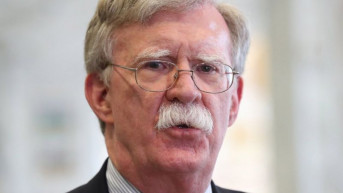
Former U.S. National Security Advisor John Bolton says he does not believe there should be any place for military alliances in Europe except for NATO, stating that any alternative military alliance, for any reason, directed against Serbia or anyone else, would represent "a real step backward."
In an interview with Politika, Bolton said that since the breakup of Yugoslavia, there have been efforts to limit Serbia’s position and influence.
"Unfortunately, this has not contributed to the development and expansion of real democracy. It has allowed people who feel like victims to refuse to accept apologies for rejecting solutions to the wars of the 1990s. I do not believe that the Serbs will agree to a solution for Kosovo and Metohija or with any neighbors in the former Yugoslavia or the Balkans, as long as the starting premise is that the Serbs are the problem — and I do not think that is the case," said the former U.S. National Security Advisor during Donald Trump’s first term and former U.S. Ambassador to the United Nations.
How do you interpret the external and other pressures on Serbia and the Republic of Srpska?
External actors should not use misunderstandings to cause regional instability to achieve their own goals. Moscow also seeks to maintain its influence and interests, just like other external actors, and that does not help in efforts to find solutions to exceedingly difficult problems, which takes time, although some issues have already been resolved. A few years ago, we found a solution for North Macedonia, and although it may sound like it was about the country’s name, there were many other underlying challenges — and the same applies to the Kosovo and Serbia issue, as well as other problems.
The solution should not be to demonize anyone but to encourage what I personally would like to see, which is diplomatic activity behind the scenes and seeing whether it could lead to progress and solutions. The answer lies in not burdening ourselves with the past, but in finding something that is in everyone's interest. We are striving to secure more foreign investment to boost economies across the Balkans, aiming to ensure political stability — because without it, there is no economic development. Again, I would say that quiet diplomacy is much better than mutual international accusations.
How do you view the Dayton Accords for Bosnia and Herzegovina?
Any side that has issues with the accords has a legitimate right to request that the matter be discussed, especially if it would, generally speaking, contribute to solving problems. The agreements should be carefully and thoroughly reviewed and should not be subjected to arbitrary interpretation, because among these peoples you have deep historical roots.
Serbia has expressed concern about the formation of a military alliance between Kosovo, Albania, and Croatia…
I do not believe there should be any place for military alliances in Europe except for NATO. Ultimately, I think the goal of most countries in Europe and the Balkans is to become NATO members. Regarding Ukraine's NATO membership, it is the one issue Russia is not willing to compromise on. Finland and Sweden have also reached that conclusion — after 75 years of neutrality, they realized their full security lies only within NATO's borders.
Having an alternative military alliance for any reason, whether directed against Serbia or anyone else, would represent a real step backward and a risk that now exists. If the NATO alliance were to begin to disintegrate, it would mean that its success over all these years — since its founding in 1949, maintaining peace and security among its members — would be brought into question, which would have very negative consequences not just for the Balkans but for Europe as a whole.
One of the key issues in Europe—and globally—is the war in Ukraine. How do you view the situation?
The situation between Russia and Ukraine remains very difficult, as there are still major differences in their positions, and there has been little sign of progress—at least in the past several weeks of negotiations. The talks have been quite limited in scope, focusing mainly on what kind of ceasefire might be achievable. A comprehensive ceasefire across the entire front remains a distant prospect, and a full resolution to the conflict is even further away.
It is difficult to predict what steps would be necessary for Russia and Ukraine to come close enough to reach an agreement, or at least a ceasefire that could lay the groundwork for sustainable negotiations.
Much will depend on how long President Trump continues to believe that the Russians genuinely want peace. In recent days, Trump has indicated he may be growing frustrated with Moscow.
While much of the world's attention is on Europe, the Chinese are watching the situation closely in the Middle East as well.
Everyone would like to see these conflicts come to an end, but I believe it is crucial that any agreement in Ukraine ensures that military aggression by one side is not seen as a successful strategy.
We want to send a clear message that military force should not be a tool for resolving disputes.
The next 30 days will be critical in determining whether real progress toward a ceasefire can be made—and if not, whether Trump will consider imposing sanctions on Russia, Ukraine, or both.
If the conflict in the Middle East escalates, what are Israel's goals in this conflict—and what are Iran's?
I believe the Israelis see the events of October 7, 2023, as a direct attack, likely with significant assistance from Iran. Iran has pursued a "ring of fire" strategy against Israel, using its terrorist proxy groups such as Hamas, Hezbollah, and the Houthis in Yemen.
Israel has inflicted serious damage on Hamas and Hezbollah in Lebanon, but it has not eliminated the capabilities of these two groups, nor of the Houthis.
There could now be a shift if the United States steps up its efforts to counter Iran’s attempts to encircle Israel and disrupt the global trade system.
Meanwhile, Iran has suffered major setbacks, including one of the biggest blows: the collapse of the Assad regime in Syria. This has cut off Iran’s key land supply route to Hezbollah in Lebanon.
Israel has also inflicted significant damage on Iran’s ballistic missile program.
The pressing question now is whether Israel will strike Iran’s nuclear weapons facilities. I believe this is under serious consideration. When Israeli Prime Minister Benjamin Netanyahu recently met with President Trump at the White House, I have no doubt that this issue was high on their agenda.
Iran is currently on the defensive and deeply worried about what comes next—especially about the internal stability of its own regime, which is weaker now than ever before. Public dissatisfaction in Iran is widespread, driven by economic and social frustrations as billions of dollars are spent on terrorist proxies and the nuclear program, rather than on improving the lives of Iranian citizens.
The Iranian regime is unstable, and a strike on its nuclear facilities could be enough to fragment its leadership.
In short, the situation in the Middle East is far from calming down. What began on October 7 is still very much alive—and it is likely to continue.
comments