
Dvořák: We stand in solidarity with the resistance of Kosovo Serbs
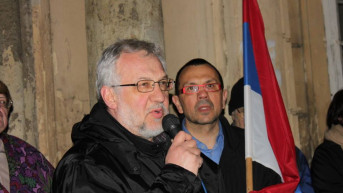
The oppression of Serbs in Kosovo under the rule of Albanian extremists is unlikely to change, and we admire the resistance of the Kosovo Serbs and stand in solidarity with them. Unfortunately, even the new U.S. administration makes it clear that nothing will change in Kosovo. But today’s world is changing rapidly, said Czech director Václav Dvořák in an interview for Kosovo Online.
Dvořák, who graduated from the renowned Prague Film School, is an activist for justice for Serbs in Kosovo and an opponent of Kosovo's independence. In this context, he produced the documentary film “Stolen Kosovo” and has organized numerous gatherings marking the anniversary of Kosovo’s declaration of independence on February 17, 2008, as well as the anniversary of the NATO bombing of Serbia on March 24, 1999.
In the days following the most recent anniversary of Kosovo’s independence and the elections in which the Serbian List achieved excellent results, Dvořák shared his views on the struggle of Serbs for their rights in Kosovo and the future of the Brussels dialogue, which is currently in a deep crisis.
Since your first visit to Kosovo in 2004, you have shown a strong interest in the position of Serbs and political relations there. With the recent parliamentary elections in Kosovo concluded, do you think the situation for Serbs could improve, given that over the past year they have been deprived of their rights, unable to use their currency (the dinar), most Serbian institutions in Kosovo have been closed, and employees are prevented from working?
The oppression of Serbs in Kosovo under the rule of Albanian extremists is unlikely to change much. We admire and stand in solidarity with the resistance of the Kosovo Serbs. Unfortunately, even the new U.S. administration makes it clear that nothing will change in Kosovo. But today’s world is changing rapidly. Russia, which in the 1990s was weak as an ally and could not support Yugoslavia due to a lack of military and economic power, has since worked hard on itself and is once again considered a major global power. The war it is waging against Ukrainian Nazis and the entire criminal NATO organization is likely to end in victory and establish a new order in Eastern Europe in the coming months.
Russia’s pressure on the Balkans will increase, which gives hope to the Kosovo Serbs and also to the Serbs in Bosnia. And if Serbia itself does not yield – and for now, it seems it will not – then Kosovo-Albanian radicals will have to treat Serbs and their institutions with much greater respect.
How do you see the future of Serbs in Kosovo? The Brussels dialogue between Belgrade and Pristina has completely stalled – it’s practically in a coma. Is there any hope that the appointment of the new EU Special Envoy for the Belgrade-Pristina dialogue, Peter Sørensen, will revive the process, or could it fall into an even deeper crisis?
Sørensen and the EU represent the corrupt European “elites,” who are now receiving lessons not only from the Russians but also from the new U.S. administration under President Trump. The European Union will change. It is in an economic, energy, and moral crisis, and its current political leaders are discredited. They have pushed a senseless political agenda that has driven the EU into a severe crisis. In many countries, there is already a shift happening—Hungary, Slovakia, Austria, and the Netherlands. In a few days, there will be a major change in Germany, and by autumn, I hope, in the Czech Republic as well. This will eventually impact EU policy. We Czechs have had the worst experience with EU membership, and I do not want Serbia to become another colony within the Union. Today, the EU is on a path of deep decline, rejecting democracy and promoting dangerous and false ideologies. Stay calm, remain neutral, and wait for the inevitable changes that will come soon. They will benefit you, us, and the suffering Serbs in Kosovo.
Your documentary “Stolen Kosovo”, although released in 2008, remains highly relevant. What truth does the film convey?
Even today, many years later, I would not change a single word or frame of the film. I stand by it completely. However, the film does not cover everything – it lacks a broader context. It talks about the history of Kosovo from the beginning of the 20th century but does not delve deeper into the past. It hints at the guilt of the United States, specifically the Clinton and Albright circle, and partly their motivations, but it does not address all the tools the U.S. administration used to dismantle Yugoslavia and plunder the southern Serbian province. The film does not cover everything that needs to be said about the violent breakup of Yugoslavia. Perhaps one day, I will revisit the topic and add more content.
You are known as a prominent activist in the fight for justice for Serbs in Kosovo. You have also initiated a petition calling for the Czech Republic to revoke its recognition of Kosovo’s independence. What have you been working on recently in terms of activism related to Kosovo?
Every year in Prague, we commemorate these tragic anniversaries, especially February 17. We organize protests against the recognition of Kosovo and demonstrations in support of Serbian Kosovo at Wenceslas Square in the city center. On March 24, we take part in a ceremony honoring the victims in front of the Embassy of the Republic of Serbia. We begin at 8 PM with the sound of an air raid siren—the same way the NATO aggression against Serbia and Montenegro began. Regular speakers include Czech politicians, artists, and representatives of civic organizations. Former President of the UN General Assembly, Mr. Jan Kavan, often gives a speech.
Unfortunately, the Czech governments that have come and gone have been slavishly pro-American, pro-EU, submissive, and corrupt. The mainstream media either ignore Serbia and Kosovo or parrot the propaganda nonsense of the EU leadership, American influence agencies, or the Kosovo Albanians themselves. But we stay connected through social media, and we will not stop.
As long as Václav Klaus and Milos Zeman were in office as presidents, there was no Czech ambassador in Pristina, even though the government had recognized Kosovo’s independence and established an embassy there. The diplomatic mission existed, but it was essentially empty, without an ambassador. With the inauguration of President Petr Pavel, a Czech ambassador was finally sent to Kosovo. That is unfortunate, and we regret it, but we are doing everything we can to remove the current disgraceful government and president from office. Elections are coming this autumn, and all indications suggest a major shift in Czech politics. So, keep your fingers crossed that we succeed.
How do you see Czech-Serbian relations at the moment? Is there any hope for a change regarding the Czech recognition of Kosovo’s independence?
Those of us who are older, who have lived through events and can compare, deeply appreciate the friendship between Serbs and Czechs. We have faced similar problems and crises in history, and we have had—and still have—essentially the same enemies today. We have been good allies in key historical moments, and I hope that will continue in the future. It is up to us to show younger generations the history and historical parallels. But above all, we must bring about a renaissance in our good state relations by changing the government and the president so that the new leadership will support Serbia’s just fight against the theft of its southern province and against the puppet terrorist quasi-state nurtured there by the U.S. and NATO.
0 comments