
From Kosovo Assembly deadlock to protests: Can the opposition mobilize dissatisfied citizens?
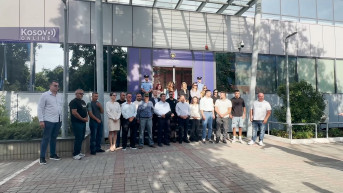
As the political deadlock in Pristina deepens, the opposition is increasingly mentioning extra-parliamentary pressure as the only remaining mechanism. However, no official call for protests has yet been issued. According to Kosovo Online's interlocutors, opposition parties in Kosovo are reluctant to call citizens onto the streets because they lack sufficient mobilization capacity, while a poor turnout would further marginalize the issue and give a political boost to Self-Determination leader and caretaker Kosovo Prime Minister Albin Kurti.
Written by: Milena Miladinovic
After Kurti failed to nominate a candidate for President of the Kosovo Assembly, the constitutive session was adjourned. Opposition parties called on presiding MP Avni Dehari to reconvene the session, but this has yet to happen.
While talks between Self-Determination and the Democratic League of Kosovo are under way over the President of Kosovo, the other two opposition parties—the PDK and the Alliance—are warning of protests.
Alliance member Daut Haradinaj said that, if the current situation continued, the opposition could resort to protests and blockades, while PDK members have been protesting outside the Kosovo Government building for five consecutive days to express their dissatisfaction with the political deadlock.
However, there has been no official call for citizens to take to the streets, raising the question of whether Kosovo's opposition actually has the capacity to mobilize the public.
Kosovo Online's interlocutors agree that the opposition lacks sufficient mobilization capacity and will also be cautious about calling citizens to protest, as a poor turnout would marginalize the issue of the institutional deadlock.
Deadlock too abstract an issue
Executive Director of the New Social Initiative Milica Andric Rakic believes that the opposition parties will ultimately refrain from calling citizens to protest, despite having announced the possibility, because they are aware that such a call would not attract large numbers of people.
Andric Rakic said that citizens were bothered by the institutional deadlock, but would not necessarily blame Self-Determination alone for it.
"I assume their own assessment is that, at this moment, they cannot bring a large number of people to a protest. Self-Determination itself had this problem to some extent. When they began organizing anti-corruption protests in 2015, they gathered 2,000 to 3,000 people. It was only when they added the Community of Serb-Majority Municipalities to that mix of anti-corruption protests that the demonstrations became more massive. This opposition, however, cannot mobilize any Serbian issue in the way Self-Determination could at the time. The institutional deadlock is too abstract an issue to agitate citizens sufficiently. That is why I believe the opposition talks about protests because it feels it should call for them, but at the same time does not dare actually do so because it probably assesses that not many people would turn out and that this would trivialize the issue. It is not that people are not bothered by the institutional deadlock, but they will not necessarily blame only Self-Determination for it, nor will they necessarily take to the streets over it," Andric Rakic told Kosovo Online.
Andric Rakic said that even if protests were held, they would be unlikely to have much impact on Albin Kurti.
"As far as Kurti is concerned, I do not expect him to fall. Even if there were greater public pressure and even if there were serious protests, I do not believe he would change course. He would probably view it from the perspective that he knows Kosovo society is polarized and that, however many people might be on the streets opposing the institutional deadlock, there are just as many at home supporting it. Therefore, I do not believe it would have an impact on him," Andric Rakic said.
She also believes that the lack of cooperation among opposition parties is a partial obstacle to a larger protest.
"Certainly, if they came together and jointly called for a protest, it would have a greater effect. However, generally speaking, for quite some time the atmosphere across the region has not been such that political actors can bring large numbers of people onto the streets. When protests become mass movements, it is usually because they are called by non-party actors. We are therefore living in a period in which political actors can motivate only a very modest number of people to turn out, and this is clearly a regional issue—or not necessarily a problem in itself, but certainly a problem for opposition parties in the sense that they no longer possess the mobilization capacity they once had," Andric Rakic said.
Solution lies with the political class
Constitutional law professor Mazlum Baraliu said that the opposition did not have the power to bring people onto the streets, considering the number of votes won by the three opposition parties—the PDK, LDK, and the Alliance—in the most recent elections.
Baraliu told Kosovo Online that protests were a democratic means of expressing political will, but that what was needed at this moment was trust and goodwill among the parties.
"Protests are a democratic means of expressing the will or demands of citizens, and there is nothing controversial about that. However, first and foremost, there should be goodwill and trust among the political parties so that they can reach an agreement, find a way, a model, an alternative, or some option for agreeing on the election of the President. Since that does not exist, we can only hope that goodwill and reason will prevail among the political parties, which appear to be more concerned with political interests, and perhaps even Machiavellian political intentions, than with forming institutions, even though that is the fundamental duty and obligation of each of the 120 MPs and every political party," Baraliu said.
He added that Kosovo needed political and democratic emancipation in order to move forward in addressing its problems.
"The people have been let down; they did not expect this. They placed their trust in each political option to the extent reflected in the vote. The parties should reach agreements, demonstrate goodwill, and show sufficient political and democratic maturity for the institutions to be constituted and become fully functional so that the country can move forward. There is a great deal to address domestically—the problems of citizens, economic and social issues—as well as internationally. Kosovo has a great deal of work to do and needs to rise to the occasion. I do not think this political class has demonstrated that it is up to that level," Baraliu said.
According to him, the opposition does not have sufficient public support to call protests, as was also demonstrated by the election results.
"It is enough to look at the percentages, at how much they received in the most recent elections—and not only those elections. Of an electorate of two million citizens, only 37 percent voted in the latest election. Of those, Self-Determination and its coalition won 50 percent. The opposition received less than half. That is crucial in determining and guiding the opposition's decision on whether it has the mobilizing power and strength to bring masses of people onto the streets. I do not think it does," Baraliu said.
Baraliu stressed that citizens had the right to exercise their democratic choice, but that protests would not produce a solution. The solution, he said, was in the hands of the political parties.
"The solution—and it is in the hands of the political class—would be to reach an agreement on the President. Since the PDK and the Alliance have, in a way, excluded themselves, the only remaining alternative is for the Democratic League of Kosovo and the election winner, Self-Determination, to reach an agreement. That is not difficult; it could be achieved within several hours, perhaps even several minutes. But there must be goodwill and a commitment to fulfilling the duties and obligations that every political entity has toward its voters, that is, toward the electorate," Baraliu said.
Opposition exercising caution
Milos Pavkovic, Strategy Director at the European Policy Centre, believes that Kosovo's opposition political parties will be very cautious about calling citizens to protest because there is a risk that such protests could fail for several reasons.
Pavkovic told Kosovo Online that there was clear discontent within the opposition over Albin Kurti's actions and the institutional deadlock, but that the question was how successful a call for protests would actually be.
"Over the past several days, MPs from opposition parties have attempted to enter the Assembly. They failed to do so, so they tried various performances—attempting to enter parliament, delivering speeches before an empty chamber, and so on. There is clearly a degree of revolt within the opposition over what Kurti is doing, and they are probably considering organizing protests in an attempt to send the message that what Kurti is doing constitutes a violation of the Constitution and that they have citizens on their side. However, the question is how successful those protests would be, or how many citizens they could actually mobilize. It has become clear that the opposition parties do not have the capacity to organize a major protest against Kurti. On the other hand, it is summer and the holiday season, so there is also the question of how many people are even in Kosovo at the moment. Thirdly, it has become apparent that citizens are frustrated with both the government and the opposition," Pavkovic said.
According to him, calling protests would be a highly risky move for the opposition.
"No one achieved a particularly favorable result in the elections, so an attempt to organize public protests would be a very risky move for the opposition. If they failed to gather a substantial number of citizens, it would actually only give Kurti a political boost and could potentially harm the opposition in any new parliamentary elections by reinforcing the perception that it is incapable and not up to the task," Pavkovic said.
He added that there was clearly no common ground among Kosovo's opposition parties.
"However, they also lack the potential in terms of having a significant number of seats that would allow them to form a government together and create room for negotiations among themselves. Given the current situation, even if the opposition united, it would not have enough seats to form a government, and there are no negotiations among the opposition parties. In fact, we can see that talks are taking place between Self-Determination and the LDK over a potential future government. Consequently, the Alliance and the PDK do not have the potential to do much more," Pavkovic said.

0 comments