
Escobar: Kurti rejected the proposal for dinars, there is a lot of frustration with this Self-Determination Government
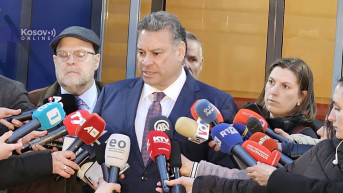
Deputy Assistant Secretary of State of the United States Gabriel Escobar stated that he had failed to persuade Kosovo Prime Minister Albin Kurti to suspend the decision to ban the Serbian currency in Kosovo until the European Union, the United States, and the Government of Kosovo find a long-term solution, such as electronic transfer of euros through the Kosovo system.
"The Prime Minister said it was a decision of an independent institution," Escobar said in an interview for Radio Free Europe.
However, Escobar said he still hoped that a solution would be found on Tuesday when the chief negotiators of Kosovo and Serbia meet in Brussels.
He added that he had not received any guarantee from the Prime Minister of Kosovo regarding the improvement of the draft of the statute for the formation of the Community of Serb-majority Municipalities in Kosovo.
He admitted that there was, as he said, "a lot of disappointment with this Self-Determination Government, not only in Washington but also in Brussels, Rome, Berlin, and Paris."
Before you traveled to Kosovo, you said that the focus of your visit would be a possible solution, as you stated, "uncoordinated decisions" to ban the Serbian dinar. After the meeting with the Prime Minister of Kosovo, you sounded optimistic. You said you had an open conversation, that Prime Minister Kurti said he would consider some of the proposals you presented. Did you receive any response from Prime Minister Kurti?
Yes, but let me explain why this is important. The United States is very committed to ensuring that Kosovo remains a multi-ethnic democratic society. For this to happen, all ethnic communities must feel safe and live in secure and dignified conditions. What is happening now with the decision of the Central Bank is that there are a large number of your citizens who are experiencing significant pain. These are people who receive modest salaries, we are talking about persons with special needs, pensioners, students, and the most vulnerable individuals. And this decision has deeply affected them. The government has stated that they have plenty of options, however, the government has not provided options for them, the government has said that they are responsible for doing it, and for many people, that's difficult. Some of the elderly do not have the proper documents, documents of some younger people are not accepted, some banks state that it takes on average about an hour to open an account, and not everyone has accounts open. The banks themselves, despite what your finance minister says, state that they need to open 30,000 to 40,000 bank accounts and that it takes an hour to open one account. This requires bank staff 40,000 working hours. If we consider that the average employee works between 1,000 and 1,500 hours per year, you can imagine how much time it will take to open these accounts. So, this uncoordinated move that led to the interruption is creating great difficulties for some citizens of Kosovo. Those who do not receive social assistance from Serbia do not notice how it affects a portion of the people. Those who receive their salary in euros and those who are paid in other ways do not recognize that there are people among them who are suffering. What is good is that the Prime Minister (Kurti) has recognized that there are people who are suffering. But that's not enough. We need a solution. That's why I asked the Prime Minister to suspend the decision while we, together with the European Union, therefore the United States and Kosovo, work on a long-term solution that would address your needs. This involves electronic transfers in euros through the Kosovo system. But now, we need to do something urgently. Unfortunately, I was not able to persuade him to do so.
Is this the latest response from Prime Minister Kurti?
That's the latest (response).
As of today?
Yes. What I still hope for is that when the chief negotiators meet in Brussels on Tuesday, they will find an immediate solution to enable cash transfers in euros to those people.
What are the next steps or what excuse did you get from Prime Minister Kurti?
The Prime Minister said it was a decision of an independent institution in which he did not want to interfere or that it was an inconvenience for people that could be easily overcome or replaced by payments from the Kosovo Government. But none of that will happen quickly. That's why we're seeking the suspension of the implementation of that decision. Normally, the Central Bank and the Ministry of Finance are doing everything not to create instability or unpredictability in the economy. And this has led precisely to that. Now, there are some people outside who believe that this was done to punish the Serbs. I don't believe in that. But because this Self-Determination Government does not have a long history of governance, I believe that sometimes there are people who do not think about the consequences. That's why I characterized it as somewhat incompetent in Brussels. When we talk about unintended consequences, and everyone has recognized that there are unintended consequences, they could have been foreseen, and they could have been foreseen if they were coordinated. The Quint has a lot of experience in converting currencies from one currency to the euro, but it took a long time. We only had five weeks.
Why did Prime Minister Kurti decide to continue with the (dinar) ban knowing that this issue could have been resolved through the Community of Serb-majority Municipalities?
That's a question for him. But the truth is that what we don't want to do is undermine the potential of the Community of Serb-majority Municipalities, which is very important. It's very important for Kosovo's future.
How do you feel as a US official being rejected by the Prime Minister (of Kosovo)?
It's not the first time, let me tell you. There is a lot of frustration with this Self-Determination Government, not only in Washington but also in Brussels, Rome, Berlin, and Paris. As we approach the twenty-fifth anniversary of NATO's action, it's important for people to understand that the strength of the relationship between the US and Kosovo lies with the people. We will always be close friends of Kosovo, but that doesn't mean we won't have differences of opinion with individuals and with individual governments, and I think that's where we are now. We're entering a period where there is a lack of communication, and we, at least from the US side, are doing everything we can to improve that relationship.
How will today's decision affect communication, partnership, and the relationship between the US and Kosovo?
Our relationship is based almost always not only on common interests but also on shared values, and one of those values we share is a commitment to human rights. The fact that the government in the world most favorable to Kosovo and the government most favorable to the US, which is the US and Kosovo, are facing these difficulties is not because of our policies towards Russia Ukraine, or China, but because of the treatment of minorities. This should be a wake-up call to the Prime Minister and his government regarding where this relationship is headed.
Will you consider taking any measures against Kosovo for this?
No. But the fact is that we are trying to help him take care of his own citizens. I think we're almost at the point where we're really trying to work with him. The question isn't whether there will be measures, but there are certainly consequences. We're entering the second, maybe even third, year without high-level meetings between Kosovo officials and the US administration. This should also be an indicator to people of where the relationship (between the US and Kosovo) currently stands.
Do you expect Kosovo to reconsider its decision on Tuesday? Earlier, they stated that they would not discuss this issue in Brussels. Last night, you told us that there would be discussions within the dialogue on Tuesday at the level of chief negotiators. Based on your information, will the dinar be one of the topics of discussion?
Yes, it will be.
Will it?
Based on my meetings yesterday, I certainly hope they will reconsider the decision. This is not a matter of politics; we want to solve this before it becomes a humanitarian issue. There's a way forward. We've agreed on electronic payments, we've agreed on euros, we've agreed on a long-term solution that gives you transparency and the capacity to fight against money laundering and other types of illegal money transfers. But it needs to be done properly and coordinated, in a manner consistent with European standards and agreements reached in Brussels.
Could this decision, or if Kosovo does not back down, affect US security support for Kosovo, such as the procurement of Javelins?
I don't believe so. Our support for Kosovo's independence, sovereignty, territorial integrity, and security is firm. Now, this is a policy issue, and how we deal with it will be in the realm of policy. But it will not affect our commitment to Kosovo.
One good thing that happened this week, or at least was welcomed by the Quint, is the decision regarding the Decani Monastery. How will that be crucial on Kosovo's path to membership in the Council of Europe?
That's a very positive and important decision. It's not just about the monastery, although it partly is about that; here it's about a commitment to the rule of law because you have a decision of the Constitutional Court. In mature, democratic societies, decisions of the Constitutional Court are final. So it had to be implemented. It was a tough decision, but it had to be made. Kosovo is now showing that it has the maturity to accept the decision of the Constitutional Court, no matter how unpopular it may be. But it's the right thing to do because it's the legal thing to do. And it will have an impact. There are two other conditions mentioned by the Council of Europe and sought by some European countries. One relates to land expropriation in the north, and the other is the Community of Serb-majority Municipalities.
Will the US meanwhile lobby for Kosovo's membership in the Council of Europe?
We're still assessing all options. We still need the Community of Serb-majority Municipalities. That's really key. When we talk about enlargement, let me explain to you why the Community is so important.
You discussed it last night with Prime Minister Kurti. The Draft of the Statute is on the table, Kosovo has not taken any steps to send it for review to the Constitutional Court. Did you receive any assurances that Prime Minister Kurti will do that soon?
I did not. Let me tell you why this is important, let me tell you what the Community is. The Community of Serb-majority Municipalities is an opportunity for municipalities with a Serb majority to provide services in the Serbian language, services they already have the right to provide. The Community has no executive powers, it's not a state within a state, and it has nothing that would give it veto power over your constitutionality or functionality, so nothing outside Kosovo's legislative framework. In other words, it provides reassurance and a little self-governance to minorities, which other minorities in the European Union and the United States already have. It's nothing more than bringing Kosovo's relationship with minorities living in Kosovo to a European level. That's why it was a part of the Ahtisaari Plan, the Brussels Agreement, and the Ohrid Agreement. We need to move forward with that quickly.
The other thing is, and this is extremely important – by December, the only candidates for European Union enlargement were the Western Balkan states. Since December, we have had Ukraine, Moldova, and Georgia. And while Ukraine is facing a situation – life or death – knocking on Europe's door, those doors will open. That means that the focus of enlargement will not be the Western Balkans but Ukraine. And they are hungry, they will close chapters and implement reforms. When the twenty-seven member states of the European Union open discussions in their parliaments, each and every one of them will not do so every time for Western Balkan countries as they become ready. There will be only one group, those who are ready and those who will wait for a very long time. Kosovo is not even a candidate for membership. As we try to move forward, as Ambassador Hovenier said, the fact that we don't have the Community and the issue of the dinar means that it is difficult for the United States to lobby those who do not recognize Kosovo, and who will decide on Kosovo's candidacy for NATO and EU membership. So, while Kosovo ignores the European path, which is dialogue, and while it ignores the European roadmap given to it, which is the Basic Agreement (from Ohrid), annex, and now the Statute of the Community of Serb-majority Municipalities, Europe says Kosovo is not cooperating with Europe. That's why, among other things, you have EU measures. We need to get those measures lifted, get you a candidacy, and we need to get you into the Partnership for Peace (NATO program) before we miss this historic chance. Ignoring the dialogue takes you away from that path.
Where is Kosovo heading?
I'm concerned about that. The Government of the Self-Determination Movement has fewer friends in Europe than it should. You still have many friends in Europe, but there are still many doubts about where this state is going. I'll tell you where it will go if we don't work on integrations. We will enter a period where you will see more and more people leaving the country, you will see fewer investments, so if we don't take urgent action, we will see a slow, or maybe not so slow, economic and demographic decline of the country.
I would like to return to the draft of the Community Statute. We have a draft of the Community Statute on the table, but it has not yet been sent to the Constitutional Court, the President of the Kosovo Assembly even stated that there was a possibility that the Government would come up with a new draft of the Statute. Given that you have not received any assurances that there is a new draft of the Statute, has the Ohrid Agreement failed?
No, it just hasn't been implemented. I think the Ohrid Agreement opens up huge opportunities for Kosovo. Under the Ohrid Agreement, 90 percent of the benefits go to Kosovo, I would say even more. Under the Ohrid Agreement, Serbia is required to recognize the sovereignty and territorial integrity of Kosovo, its administrative control over the north, to recognize passports, national symbols, flags, ID cards, diplomas, driver's licenses, and everything else. Serbia is also required not to block Kosovo's Euro-integration into any institutions. In return, Kosovo will establish the Community of Serb-majority Municipalities, which is an existing legal obligation. So, at the cost of something that should have already been done, it gets all the benefits. And that gives us, the United States, a platform to work on further recognition not only in Europe but worldwide.
Is there room for a new draft of the Statute?
There is, but we need to hurry. I mean, there always has been. And a part of the reason the European mediator gave them the draft of the Statute was because they didn't produce it themselves. So, we made one for them. And so, if they don't like it, they should do it themselves. But there must be a draft of the Statute.

0 comments