
Hill: Clear and sharp messages from Escobar to Kosovo, the dinar issue the latest - but the formation of the CSM is fundamental
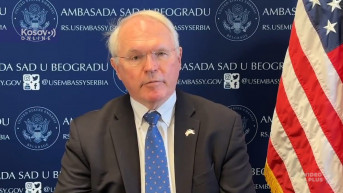
Ambassador of the United States to Serbia, Christopher Hill, assessed in an interview with Euractiv Serbia that the US Envoy for the Western Balkans, Gabriel Escobar, had sent quite sharp and clear messages to the Kosovo leadership. He added that although the issue of abolishing the dinar was the most recent, the fundamental question that must be resolved was the formation of the Community of Serb-majority Municipalities.
Hill stated that with the formation of the Community of Serb-majority Municipalities, all other problems, such as parallel structures or the use of the dinar, should be resolved, emphasizing that the question was only when it would be formed, not whether it would happen.
When it comes to European integration, our main obstacle was the issue of Kosovo and Metohija. How do you view the relations between Belgrade and Pristina? I think those relations have long been in a negative cycle.
Upon returning to Serbia after so much time, I would have liked to see much more progress, especially towards normalization. I'm glad the term normalization is being used. It means that Serbia and Kosovo can coexist, to use an old term from the Cold War. It means a situation where that border, or line, is something that connects rather than divides. The problem is that there is a lot of political and emotional charge. I hope, although hope cannot be the basis of policy, I believe there can be progress and I think what Miroslav Lajcak is doing is the right way.
But how? Do you understand that the Serbs in Kosovo are worried because they are living in increasingly difficult conditions? The latest thing that happened is that Kurti abolished the dinar as a means of payment.
That's a big problem right now. However, what is comforting is that everyone understands that this problem needs to be resolved. The US negotiator for the Balkans Gabriel Escobar was in Kosovo and sent quite sharp and clear messages to the Kosovo leadership. Several problems need to be resolved, and the issue of abolishing the dinar is the most recent and perhaps the most difficult. However, the fundamental question that must be resolved, and which has already been agreed upon in the past, is the Community of Serb-majority Municipalities. By establishing this community, all other problems, such as parallel structures or the use of the dinar, should be resolved. The question is only when, not if it will happen. The logic is very clear; both sides have already agreed to it, the EU wants it, and it will happen. I hope that something will be done about this.
Then I have to ask you, what is the purpose of dialogue and agreements if one side, in this case, Pristina, has not established the Community of Serb-majority Municipalities? That is the problem, and that is why there is an impression among most people, regardless of which political option they support, that Albin Kurti, whatever he does, never faces consequences, with strong support from the US and the EU.
It's not mine to tell people not to be dissatisfied. I believe that the logic behind what Miroslav Lajcak is proposing is more than clear. It's clear what needs to be done, some people understand it immediately, while others may need more time to grasp its meaning. It must be done, and I am convinced that it will be done and that the Community will be formed. Serbs have been in Kosovo for centuries, and that must be respected. I did say that history should be left to historians, but history must be respected, and it must be reconciled with how life looks today and what it will be like in the future. The Serbian community in Kosovo has the right to wake up in the morning and understand how their life will look, how they will receive pensions, how their children will go to school, and how hospitals will be provided for them. All of this is envisaged by the Community of Serb-majority Municipalities; it's not just a slogan that is constantly talked about but a fundamentally important element for any progress.
I have one more question about Kosovo. Last year, in an interview with the Voice of America, you said that you weren't sure if Kurti was still a US partner. What do you think about that today?
I would point out two things that Gabriel Escobar said on the same topic. There are definitely serious communication issues that need to be resolved. As for specifics, read what Escobar had to say about it; I think he was quite clear.
But what do you think?
I definitely have an opinion, but I strive to focus on developing our relationship with Serbia, to make it the partnership that I believe it can be. When I look at the Serbian delegation that traveled to Washington last week for dialogue on military issues, the fact that the head of the Serbian delegation addressed a large audience at our National Defense University, it's clear that there are many more things we agree on than there are differences. We must leverage that and continue to develop our relationship. Our relationship with Serbia must stand firmly on its own feet and not depend on third parties. We need to work together on issues where I am confident we can establish cooperation. We must be optimistic. Some will say I'm too optimistic. But if one is a pessimist, they will never achieve anything here. I think we can draw optimism from the things we have already achieved, and there is still work to be done.
You know that our path to the EU depends on the normalization of relations between Belgrade and Pristina. What is the first thing we need to do to stop this negative cycle?
The first thing is to respect the dialogue and the agreements already reached. One of them is the Ohrid Agreement. When Lajcak says that the agreement is fully valid, it means it is fully valid. I believe there is no need to try to change the way the validity of that agreement is expressed. When someone doesn't want to do something, then they invoke mechanisms. Mechanisms should not be abused. Lajcak knew what he was doing when he reached the agreement in Ohrid, and I think we should move forward on that basis.
Lately, it has been mentioned that the Ohrid Agreement could be a part of Chapter 35. What can be expected from this agreement if previous agreements have been merely dead letters?
I don't want to delve into what should be the elements of Chapter 35. That's something that needs to be worked on. The main idea should be that if some countries seek EU membership, then those countries must successfully resolve their problems with their neighbors. An important element of resolving problems with neighbors and having communication with them is the so-called "Open Balkan." I think it's a great initiative, and I congratulate Serbia for supporting it, as well as Albania. It has brought Serbia and Albania closer than ever before in the past. I think that's the right approach. The EU wants to admit new members, provided that they first resolve their problems, and that is understandable.
You have already mentioned the Open Balkan; as of March 1st, there is a common labor market. The members are Serbia, Albania, and North Macedonia. Do you think this is an opportunity for other countries to join this initiative?
I hope so. I think the Open Balkan is open to all who want to join, and no one is excluded. Anyone can join. That's the first thing. But if someone is interested, then they have to see what the benefits are. This issue of work permits is very important. The opportunity to get a permit and work in Skopje, Tirana, Vlora, or Sarande is very good, and people will certainly want to come and work in Serbia. Serbia has a problem with a shortage of labor, so this is beneficial. More agreements like this need to be concluded. It's painful to see columns of trucks and cars waiting at the border. Some of these problems can be solved with technology, not bureaucracy. I think more can be done. If the Open Balkan proves to be open to other countries and beneficial for its members, other countries will want to join.
You participated in the Business Forum at Kopaonik, and several of your statements had a strong impact. You said that Serbia should clearly and decisively continue on its European path. What did you mean by that?
When you try to join a club, you have to clearly and decisively show that you want to enter that club. It's all extremely complex, and it's important to understand that Serbia brings a different set of skills, so to speak. It doesn't resemble some of the previous members; it's a different country. That diversity isn't a bad thing, but Serbia needs to clearly demonstrate, by bringing with it different relationships with other countries, that it's something the European Union needs. It needs to show that it brings something that will be beneficial for the EU in terms of those relationships.
I have to ask you, in what way has Serbia not been clear and decisive in that regard?
Among many Serbs, there is a certain perception. Before the panel began, the moderator asked, "Do you think the EU wants Serbia in its membership?" Less than half of the participants responded that the EU wanted Serbia. Then came the question, "Does Serbia want to join the European Union?" And again, less than 100 percent responded positively. I think that when you try to join something, it's important to reach 100 percent.
Alright, but when you look at the last EU enlargement in 2013, and the pace of negotiations, if we look at Serbia and our neighbor North Macedonia, I don't think there's much room for optimism?
I understand that. So many years have passed. I was absent from the Balkans for 25 years, and when I returned, I found the same problems, which somewhat discouraged me. However, things have changed in recent months, partly due to this catastrophic war between Russia and Ukraine, leading to discussions about what should be done next, whether Ukraine can join the EU, and what will happen then with the Western Balkans. There's a lot of talk today, and enlargement is back on the agenda. But I definitely understand that people are disappointed. Sometimes we hear, "We want Serbia to have a European perspective," but Serbia says, "We already have a European perspective, and it has been going on for 17 years." So there are definitely problems. What's especially important, and I know history is important and painful, but if lawyers and historians want to dwell on history, let them, but we diplomats must focus on the future.
When you look at European politics, how much of a priority is enlargement?
I think it is relevant because the EU realizes that it's unfinished business. However, it's very important to develop the growth plans that the European Commission has brought forward. Important meetings have already been held in Skopje and Tirana on what can be done regarding access to the single market, ecology, and other issues. It's important that when Serbian citizens wake up in the morning, they should have no doubt that they belong to Europe. Of course, there are bureaucratic structures, but people must understand that Europe is the future of Serbia and that Serbia is in Europe today. Those who think Serbia is somewhere else and far away simply haven't been informed because Serbia is in Europe.
At the same time, however, there's a narrative that the Western Balkans is under the influence of Russia, China, and some other countries. Could all these problems have been solved if the Western Balkans had been admitted to the EU?
A "narrative" is a term that is often used, but having a narrative doesn't mean having the truth. Narratives sometimes do not reflect reality. I don't think this is a country dominated by pro-Russian thinking. This is a country that has decided to be a part of Europe. People will talk about the influences of other countries, but they must understand that Serbia has a different history and different relationships, and with those differences, Serbia can be a very good EU member. But everything has to go faster, and it's hard to expect people to wait 17 years and be satisfied with it; things have to move faster.
At the business forum in Kopaonik, you said that Serbia was doing some good things for Ukraine, but that some things were talked about, and some were not. What is the essence of that message?
The message is that some things are talked about, and some are not. I think that's the essence. I am very pleased with what Serbia and the Chamber of Commerce have agreed with the Chamber of Commerce of Ukraine. There is a quality dialogue about the reconstruction of Ukraine when the time comes, and I think Serbia should participate in that. Serbia and Ukraine have always had good relations and have never had problems. I think that's a productive relationship, whose positive nature has been improved by the current crisis. I don't believe Serbia has ever achieved as much with Ukraine as it has recently due to this terrible crisis caused by Russian aggression. That is very positive; the First Lady of Serbia visited Kyiv, and such visits are important. Ukraine needs a lot, Serbia has a lot, and I think together they can achieve even more.
The narrative here, from the first day of the war, is that Serbia supports Russia?
I don't believe it's fair to say that, and I would be cautious with such stories.
A few days ago, President Vucic said that Serbia was being conditioned to impose sanctions on Russia. Do you think Serbia will do that?
That decision is up to Serbia. The US stance is that Serbia should impose sanctions on the regime in Russia that has caused problems not only in neighboring countries but also across Europe, problems with food and energy worldwide. I'm not the one to tell Serbia what to do, especially regarding sanctions. It's a big question in Serbia, and I understand that.
Ambassador Hill, can you tell us how you envision the end of this war?
I don't know. All wars come to an end eventually. Some wars in the 17th century lasted for thirty years; I hope this war isn't like that. But wars do come to an end; there's a peace logic, and I hope Russia will understand that especially. Russia has done more for Ukrainian statehood than anyone else. Let's not forget that Putin occupied Ukraine, imagining that Ukrainians don't actually feel Ukrainian, but that's not the case. Whatever the goal was in entering this war, it's no longer there, and it has to stop. When and how it will end, it's hard to say, but it will surely end. A big question for Ukraine will be the extensive reconstruction ahead. That will, in a different way, also be a challenge for Russia because they are more isolated than ever before. They've gone in a completely different direction. For those of us who admire their culture, it's sad to see what happened to Russia in the 21st century. And that can be a project of reconstruction. We don't want Russia to be in this position for the rest of history, despite having brought it upon themselves. I think it's very important to quiet emotions and activate intellect because we'll have to rethink how we deal with Europe's security when this war ends.
Does the United States see the situation in Ukraine identically to your NATO partners, actually referring to the EU?
Identical is perhaps too strong of a word. I primarily deal with European security issues, and I've never seen such a multitude of perspectives on this situation. The viewpoints vary, including within the US itself. A vast majority of Americans support aid to Ukraine, and the same goes for most European countries. Like in many matters, when there are differing opinions, maintaining close contact is necessary. Our Secretary of State has spent more time on planes than all other secretaries combined. The goal was to remain close to one another, and I believe we have stayed close with Serbia as well. The discussions held in Washington on strategic matters and our views on Europe were very similar.
How do you envision NATO's future? Do you believe that Europe will one day organize its own army?
The idea of a European defense mechanism often arises, and the question of whether Europe should rely on the US is posed. I don't believe this should be termed as reliance on the US. Alliance doesn't mean dependence. We want a situation where the alliance holds mutual value. Several times in the 20th century, the US withdrew from Europe and had to return in difficult circumstances. We don't want that anymore. We want transatlantic relations to span the ocean, not divide it. I think Americans understand that our security space encompasses Europe, and I believe Europeans understand the same. There are many similarities, but Europe definitely faces various problems. It's trying to embrace countries with vastly different histories, and social realities, with huge differences in everything, and unite them within one union, and that's not easy at all.
I saw yesterday that the US Embassy posted a photo on Instagram, where you suggest that Serbia should become a NATO member.
Have we done that? I wasn't sure, I think it was a photo for the newspapers, and someone said, "Who's next?" We'll see.
Do you know that the majority of our people are against NATO?
Yes, and that's your right, and I must emphasize that we respect your military neutrality; Serbia decides on that. We fully respect the wishes of Serbia and its people. I want to emphasize that we can achieve even more while respecting your military neutrality. We want to have more military exercises together with the very capable Serbian army. We want more visits, and in that regard, the Ohio National Guard was outstanding. They received the Diplomat of the Year award from the state of Ohio for everything they accomplished in Serbia. I would simply like us to get to know each other much better. Regarding your military neutrality, for example, Sweden has been neutral for 200 years, so Serbia also has time. We're not pressuring you; the decision is yours. If it were up to me, the outcome might be different, but it's not up to me.
We can't avoid mentioning the political situation in Serbia. How do you view that? I assume you've seen that the opposition has come out with a list of demands?
I try not to talk about our domestic politics in the US, you're trying to get me to talk about the situation in the US, and I behave the same when it comes to the situation in Serbia. When you're a foreign diplomat, you want the situation to be peaceful, for people to agree with each other, for discussions to take place, and for an understanding of how the country should develop. If asked, you'll help them. But you don't want to publicly question the notion that the country itself must solve its problems.
I have to ask you...
I know many are disappointed because they want me to take one side or the other.
Not to take sides, just to comment. The opposition has said that this government must fulfill that list of demands, and we all know that it's not possible to meet them within the legal deadline, of June 2nd. What will happen if a part of the opposition says they will boycott the Belgrade elections?
You've asked me a hypothetical question...
It's not hypothetical, because some opposition parties have said so.
There's plenty of time until June 2nd. You have plenty of time until June 2nd. It's very important that the Serbian authorities have agreed to cooperate with the OSCE and ODIHR on the recommendations. ODIHR has a large number of recommendations, including voter lists and other issues. Some of these problems have long been present, and I hope they will be addressed. We support the close coordination with the OSCE bodies in this regard. Moreover, it's about Serbia's political system. Everyone has problems, and I don't want to get into our problems in the US, which are very serious at the moment. We also need to work on our issues, but I believe Serbia can handle these matters.
But for example, one of the demands is that the list leader cannot be a person who is not a candidate. And that's not an ODIHR recommendation, but a political demand. How do you view that?
People have the right to voice demands, some are reasonable, and others may not resonate. People have the right to make demands, and others have the right to accept or reject them. People make demands for different reasons, and I don't want to get into which demands are justified and which are not, which reasons the government should accept, and which it shouldn't. That's your affair, not mine.
In a few days, the name of the Prime Minister will be known. What are your expectations for the new government?
First and foremost, I hope the Prime Minister will be competent; that's an important role. Things are accelerating for Serbia. Things are speeding up in the world, and the question of relations with the European Union is accelerating. Serbia is a large country compared to its neighbors, but small compared to some others. As they say in the NBA, if you're small, you better be fast. Serbia must be able to have competent government bodies dealing with these very complex issues and try to prevent problems rather than lagging behind them. In this regard, seeing how Serbia adopts new technologies is truly remarkable and impressive. Just the other day, I was in a monastery and asked a monk about his profession, and he told me he was an electrical engineer. Serbia has impressive capacities for adopting new technologies, and it will need to continue doing so in the coming period.
There is always some campaign going on in Serbia and constant talk about elections.
Everyone is campaigning. We have congressional elections every two years.
But is it difficult to carry out all projects for the daily functioning of the state in such an atmosphere?
Every country has elections; there's no democracy without elections. I'm not saying it suits everyone involved, but it's simply a part of life, and we have to come to terms with it.
The good news for Serbia is that it will chair the global partnership for artificial intelligence. Do you think issues like modern technologies and artificial intelligence are taking up more space in our lives?
They occupy a huge space. On your phone, you can write someone a letter, but you're not actually writing it; you dictate it to some machine, and the machine writes it. There are a lot of challenges, and we need smart people who will think about the future and predict trends. I'm glad Canada and France put together that group and supported Serbia's participation. Those are important things.
Maybe this is an opportunity for Serbia to change its paradigm.
Changing the paradigm might be too strong of an expression. Serbia has a lot to offer to the world. Your history is difficult and seems to never end. It has been tough; the whole 20th century was difficult for Serbia from start to finish. But Serbia needs to understand that it has its strengths and is a player in the world, not in basketball or tennis. Serbia is a real player in various fields, and high technologies are becoming a kind of identity marker for Serbia. Serbia accepts some things that other countries hesitate to accept and moves forward. I think the most important thing is not to lose optimism and not to hesitate to move forward. I think everything will be fine with Serbia.
That's a great message. How do you view the relationship between Serbia and the United States at this moment?
I think our relationship is pretty good. I like the fact that we have sincere and positive conversations. Serbia and the American people have a sense of directness and clarity in conversation. I've said this before, and I'll say it again: one of our national traits that we share is that we don't like others telling us what to do. I think that can be said for both Serbia and the US, and it's a kind of common mood we share.
Does the cooperation between the two countries have to be built through culture, economy, and modern technologies, or do we have to view all these things through the lens of politics?
I don't believe everything has to be viewed through the lens of politics. If you talk to your basketball players who play in the US, I don't consider them politicians in any way. Every relationship has a political and economic dimension, and we are your largest trading partner when it comes to services. There are many US tech companies in Serbia. We have connections in the field of culture, and the fact that there is a large number of Americans of Serbian descent is very important. Besides, most of them are not involved in politics at all. It seems to me that it's better than everyone engaging in political discussions. If you add all the different elements - culture, sports, economy, and politics, but also international relations, and the fact that among American troops we have Serbian military engineers in the Sinai desert. We also have Serbian soldiers in our battalion in Lebanon, dealing with the same problems in the world, and I think it would be good to sometimes stop and think about what we have in common and build our relationships on that in the future.
I was in Washington last week for the premiere of the film "Heroes of Halyard," which took place at Capitol Hill. I think we need more events like this to build our relationships.
It's an incredible story that very few Americans and Serbs know about. We commemorate it every September in Pranjani, climbing to the top of the hill where US pilots managed to land C-47 planes, which were large aircraft at the time, and evacuate 500 airmen. What's very striking when you look at some old photos is that some US pilots are boarding planes without shoes. What happened to their footwear? In many cases, they gave them to the families who saved them and told them not to worry because they would get new shoes in the US. That's the generosity we should celebrate.

0 comments