
Gouillon: In the last two years, 14% of Serbs have left the north under pressure from Kurti's regime
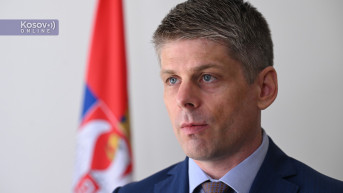
The current living conditions of the Serbian people in Kosovo are illustrated by the fact that in just the past two years, 14% of Serbs have left the north. Serbs in Kosovo are currently experiencing real terror, and since Albin Kurti came to power, there has been a noticeable increase in direct attacks on the Serbian people, which, unfortunately, in most cases remain unresolved and unpunished. Arnaud Gouillon, Director of the Office for Public and Cultural Diplomacy of the Government of the Republic of Serbia, points out these facts in an interview with "Politika."
Gouillon states that all this is part of the efforts of the authorities in Pristina and Kurti's extreme Self-Determination movement to mobilize their electoral base ahead of the upcoming elections and to offer a policy of extremism, nationalism, and hatred towards the Serbian people as an alternative to unsuccessful economic policies and a lack of concrete solutions to improve people's lives.
"The shameful and illegal decision to ban representatives of the Serbian List from attending the session of the so-called assembly of Kosovo, characterizing them as terrorist and criminal groups, supports this. As the election date in the southern Serbian province approaches, Kurti's extremist regime is increasingly encouraged to fulfill its idea of an ethnically clean Kosovo, and the living conditions in which the Serbian people currently find themselves in Kosovo and Metohija speak volumes, with 14% of Serbs having left the north of Kosovo in just the past two years," says Arnaud Gouillon.
The violence by police in Kosovo is intensifying, with even Pristina announcing a "storm" that would ethnically cleanse the territory of Serbs...
Recently in Paris, in a highly watched program by journalist Andrea Berkhof, I presented data that since the beginning of the year, 113 ethnically motivated attacks on Serbs have been recorded. At the end of October, we created and published in English a map of physical attacks on Serbs that had occurred from the beginning of the year until October 27, when we systematized the data held by the Office for Kosovo and Metohija. At that time, 81 physical attacks on Serbs in the southern Serbian province had been recorded. Of these, 45 attacks were committed by Albanian civilian extremists, encouraged by incendiary rhetoric from the authorities in Pristina, and it is particularly worrying that 36 attacks were carried out by members of the so-called Kosovo police. This instills distrust among the Serbian population in the temporary institutions, as they fail to provide adequate protection, leading them out of fear for their own safety to leave their homes. We must also mention the increasingly intense strengthening and arming of Kosovo security forces, an Albanian military formation, whose very existence according to international law is illegal and absolutely unacceptable.
Yet no one reacts.
There will be no complete shutdown in schools - even if every...
Although the international community and NATO formally do not support the transformation of the KSF into a military formation, we witness their participation in peace missions and military exercises. Their growing presence in the northern part of Kosovo and their display of force in front of the Serbian population create an atmosphere of fear and insecurity that disrupts the everyday life of the people.
How do you interpret the silence of the western part of the international community over the terror being conducted against Serbs in Kosovo?
Unfortunately, the silence of the international community is nothing new in our reality and is not surprising. I will remind you that the greatest terror against the Serbian population in Kosovo and Metohija by Albanians was suffered after the end of the aggression on the FR Yugoslavia and the arrival of international forces as guarantors of peace and security. During this period, about 250,000 people were expelled from their homes, including Serbs and other non-Albanian populations, about 45,000 houses and apartments were burned, destroyed, and usurped, and over 100 churches, monasteries, and holy sites of the Serbian Orthodox Church were destroyed. All this continued until the March pogrom under the watchful eye of the international community and security forces with a mandate to protect the Serbian people and Serbian holy sites in Kosovo and Metohija. However, the complex geopolitical situation in the world forces us to rely on representatives of the international community, and the major political changes we are witnessing today give us hope that the international community will be more responsive to our government's appeals and that changes on the ground will be visible. Namely, that the Serbian people in Kosovo and Metohija will experience relief. The image that the international community has towards Serbia and the Serbian people is gradually changing. During the period of brutal aggression on the FR Yugoslavia, there was a unified stance on "evil Serbs," and almost all foreign media spread propaganda against Serbia and the Serbian people.
What is the situation like today?
Today, the situation is different, but not great. However, it is important to note that the reputable French newspaper "Le Figaro" recently acknowledged that the aggression on our country was illegal, and that the breach of international law, or the opening of Pandora's box, as President Vucic also stated, did not start with Russia's attack on Ukraine, but with the bombing of our country without the approval of the UN Security Council. One of the priorities of the Office for Public and Cultural Diplomacy, of which I am the director, is to spread the truth in the global public and the facts about the difficult situation of the Serbian people in Kosovo and Metohija.
How endangered are cultural goods, including churches and monasteries on Kosovo and Metohija, from Albanian separatists?
Recently, I had the opportunity to participate in the opening of an exhibition in Paris at UNESCO, dedicated to Serbian cultural goods that are listed on the World Heritage in Danger list. The fact that UNESCO has included the monasteries of Visoki Decani, Our Lady of Ljevis, Pec Patriarchate, and Gracanica confirms that these Serbian holy sites are valuable to all of humanity. I often remind people in my native France that the Monastery of Our Lady of Ljevis is as significant to the Serbian people as Notre Dame is to the French, and that these two historical, spiritual, and cultural assets date from the same period. On the other hand, their inclusion on the list of cultural goods in danger indicates that they are fragile and very endangered, so their protection must be an imperative in our actions and appeals to the international community to protect them at all costs.
There is a noticeable hybrid war being waged against our country. How do you comment on this? How much does it bother some centers in the West that President Vucic can easily talk with Washington, Paris, Berlin, but also Moscow and Beijing?
The sabotage of the Ibar-Lepenac canal, which I mentioned, for which Albin Kurti immediately blamed Belgrade, occurred at a time when attempts to destabilize the state and the violence we witness every day on the streets of cities across Serbia, are evidence of the hybrid war targeting our country. Following this event, we could see that numerous media in the political West almost simultaneously broadcast Pristina's false accusations of Belgrade's involvement in this event. Also, I want to mention that our office immediately sent statements to these media in English, French, Italian, and other languages, making sure that the global public received President Vucic's response and denial. Albin Kurti has a clear goal, through media propaganda and false accusations, to justify the occupation of the north of Kosovo and Metohija by his illegal military forces, for which, as we see, he has the tacit consent of many important international community entities. In addition, these media attacks aim to slow down Serbia's European path and to strike at President Vucic, whose independent and free-spirited stance is not viewed favorably in this period of fragile geopolitical events. President Vucic is perhaps the only politician today who successfully maintains good relations with both the political West and the political East, and it is precisely such a policy that guarantees the survival of our country and the continuation of policies that bring economic and infrastructural development, as well as continuous growth in the living standards of our citizens.
How satisfied are you with the job as the director of the Office for Public and Cultural Diplomacy?
I must emphasize that it is a great honor to have received such an important and responsible task to promote Serbia in the world in the best possible way. Although the Office for Public and Cultural Diplomacy is a new form of diplomatic and political activity in our country, I am pleased to say that we have formed a great team of hardworking people who achieve results. The previous period has been extremely important for our activities and work. Apart from the recent exhibition in Paris, which I have already mentioned, I would also highlight our trip to Copenhagen, where we presented the digitization of the Miroslav Gospel, the oldest preserved manuscript written in Cyrillic. Through cooperation with the Kingdom of Denmark, which leads the world in technological achievements of this kind, we will succeed in maintaining the centuries-old continuity of preserving this Serbian relic through digitization. We also participated in the second Serbia-Italy Scientific Forum, where I spoke about the significant contribution of Serbian scientists to the development of world science, both in the past and in the present. At these and other events, I have noticed a great interest from people to learn about the culture and history of Serbia, which brings me motivation and support for further work.
What is the situation of Serbs in the Federation of Bosnia and Herzegovina?
Serbs in the Federation of BiH, unfortunately, share a similar fate with their compatriots in Kosovo and Metohija. Few people know that in four municipalities in the Federation of BiH, there is a majority Serbian population, but despite this, after the Dayton Peace Agreement, they did not become part of the Republic of Srpska, which has left their population in a difficult position. These municipalities are Drvar, Bosansko Grahovo, Bosanski Petrovac, and Glamoc, whose visits I always look forward to because the Serbian people from these areas leave a special impression on me. Their position is extremely difficult, and their fate is martyric as they face numerous administrative problems, discrimination, and violence. However, their brave demeanor and survival under such conditions show that the Serbian people possess a natural strength and endurance to overcome all pressures. It is important to emphasize that the Republic of Serbia and its state leadership, led by President Aleksandar Vucic, have not forgotten them, and since 2012, special attention and support from the Republic of Serbia have been directed towards the Serbian people living in those areas.
Will your humanitarian organization also delight the children in Kosovo and Metohija this Christmas?
Of course! Like every year, our humanitarian organization will delight the children in Kosovo and Metohija this Christmas. As part of the 20th anniversary Christmas convoy, we have prepared a full trailer of new clothing, toys, and school supplies. This is not just a gift but also a message that they are not forgotten, that they are in our thoughts and hearts. The joy of the children and their smiles are the greatest reward for all our efforts. We are also marking 20 years of existence of our humanitarian organization Solidarity for Kosovo, through which we have carried out a total of 55 humanitarian convoys over these two decades. I must emphasize that our mission is not only humanitarian, it is also deeply moral for the people living there. For this reason, ten Frenchmen will travel 2,000 kilometers to celebrate the New Year and Christmas together with the Serbs in the enclaves in Kosovo and Metohija.
Does this also provide an opportunity to tell the truth about the suffering of the Serbs?
Their stories and testimonies of what they have seen and experienced will be told at conferences and in the media, as this is one way to reveal the truth about life in Kosovo and Metohija. This is our joint mission – to bring hope and show that they are not alone. For me, as for many others, the Serbs in Kosovo and Metohija represent a true inspiration, because with their strength, perseverance, and unwavering will, they do not give up even in the toughest moments. We will be with them as long as they need our help! This anniversary is just another confirmation of our commitment to be with them.
0 comments