
Gouillon: Clark’s Statements Shocking and Irresponsible, Serbs in Kosovo Facing Extinction
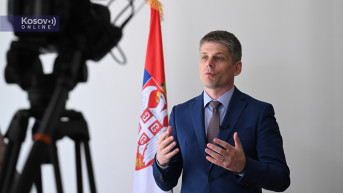
The Director of the Office for Public and Cultural Diplomacy, Arnaud Gouillon, emphasized that the statements made by former NATO commander for Europe, Wesley Clark, are "shocking and irresponsible." Gouillon questioned whether the international community should allow the Serbian population in Kosovo to vanish.
"These remarks are shocking and irresponsible. Must we really allow Kosovo Serbs to disappear in order to satisfy the long-term goals of certain neoconservatives? Should we remain silent in the face of statements from a former military leader who now acts as a sort of lobbyist for extremist Albanian factions in Kosovo?” Gouillon said in response to Clark’s interview with ABC News.
Gouillon assessed that Clark made several inaccurate and misleading statements regarding NATO’s bombing campaign against Serbia in 1999 during the Kosovo war.
“General Clark’s role in these events is multifaceted, and due to his uncritical and factually incorrect assessment of past events, the Office I lead has issued a public statement,” Gouillon wrote on his X account.
In his interview with ABC News, Clark stated that "Serbia must accept a future without Kosovo" and expressed pride in the operation he commanded 25 years ago, claiming it brought “mostly peace” to the region.
In a statement by the Office for Public and Cultural Diplomacy, Gouillon emphasized that these comments are deeply damaging to Serbia and its Christian minority in Kosovo.
“These remarks are profoundly harmful to Serbia, especially to the Serbian Christian minority in Kosovo, who continue to be oppressed by the Muslim Albanian majority. Deprived of their rights and treated as second-class citizens, Kosovo Christians live in seclusion within ghettos, venturing out only at great personal risk, and are occasionally subjected to violent pogroms. From a population of 250,000 in 1999, Kosovo Serbs now number fewer than 100,000, and the pressure on them continues to mount,” Gouillon stated.
He added that he fails to see what General Clark can take pride in, given that during NATO's 78-day bombing campaign, “international law and the UN were blatantly disregarded as bombs rained down on Serbia, relentlessly targeting civilian infrastructure such as markets and residential neighborhoods.”
“The humanitarian situation in Kosovo is devastating,” Gouillon noted.
He recalled a statement from then-UN Secretary-General Kofi Annan in 1999, highlighting that “NATO airstrikes caused numerous civilian casualties, and the extensive destruction and significant damage to infrastructure and production facilities had a devastating impact on industry, employment, the environment, essential services, and agriculture.”
“Among the most vulnerable and neglected victims are over 500,000 Serbian refugees from various past Yugoslav conflicts, civilians subjected to systematic property destruction and livelihood deprivation, lawlessness and senseless violence, thousands of confirmed murders, countless unexplained deaths, and indescribable suffering (...) Regions visited by the Kosovo Mission witnessed numerous murders, arson, looting, forced expulsions, violence, retaliatory attacks, and terror,” Annan stated.
Gouillon explained that Serbian Christians in Kosovo remain targets of harassment and violence aimed at their eventual eradication.
“Their survival depends entirely on the fragile ties they maintain with Belgrade,” Gouillon stressed.
He added that, at a time when Serbia is nearing EU accession, the West faces strained relations with Russia, and the U.S. is inaugurating a new president expected to address ongoing conflicts, General Wesley Clark’s comments unnecessarily reopen old wounds.
“In the conclusion of his interview, the American general stated, ‘Albania is doing very well economically, and Kosovo can do even better. I believe this is a period of transition.’ However, Kosovo—which is recognized by fewer than 100 countries—continues to be regarded as a mafia state, a hub for various illicit activities tied to the European Union,” Gouillon concluded.



0 comments