
Greif: Resolution on Srebrenica a dangerous precedent; trend of politicizing historical tragedies is worrying

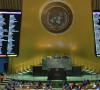
Israeli historian and expert on the Holocaust and war crimes, Gideon Greif, stated in an interview with Kosovo Online before the UN General Assembly session on the resolution on Srebrenica that the trend of politicizing historical tragedies was deeply concerning and that passing this document would be a dangerous precedent that would not encourage reconciliation and peace but rather produce consequences affecting not only regional security in the Western Balkans.
"Moreover, opening the door to resolutions of this nature sets a dangerous precedent that could truly lead to the proliferation of similar resolutions aimed at various conflicts around the world. This could further politicize historical tragedies and hinder efforts towards genuine reconciliation and understanding," emphasizes Greif, who was also the chairman of the Independent Commission for Investigating the Suffering of All Peoples in the Srebrenica Region during the period from 1992 to 1995.
Undermining the integrity of the UN
To what extent will backstage maneuvers and pressure on small states affect the outcome of the vote on the resolution in the General Assembly?
It is indeed concerning that backstage maneuvers and pressure on certain UN members can influence the decision-making and voting process in the General Assembly. Such inappropriate influence undermines the integrity of the decision-making process and jeopardizes the objectivity of the final outcome. Therefore, it is essential that decisions of this magnitude are made based on factual evidence, thorough analysis, and consideration of broader implications for regional stability and international relations. Any attempt to exert inappropriate pressure or manipulate the decision-making process undermines the principles of transparency, fairness, and respect for the rights of sovereign nations to make independent judgments.
Is that even possible?
Efforts must be made to ensure that the decision-making process remains free from external influence and that all member states have the opportunity to express their perspectives and concerns openly and without fear of retaliation or coercion. Ultimately, the credibility and legitimacy of the General Assembly's decisions depend on the integrity of the process and a commitment to upholding the principles of justice, impartiality, and respect for international law.
Pandora's box
Are you afraid that this resolution could open Pandora's box of similar accusations in other parts of the world?
Absolutely. As someone deeply committed to preventing crimes and promoting peace, I am truly concerned about the potential consequences of this resolution on global stability and the advancement of reconciliation and understanding among nations. There is a genuine concern that the adoption of such a resolution could indeed open Pandora's box of similar accusations in other parts of the world. Labeling an entire ethnic group as genocidal based on disputed historical events sets a dangerous precedent that could potentially be exploited for political purposes in various conflicts around the world. Establishing a precedent where entire nations are slandered and labeled as genocidal risks further politicizing historical tragedies and perpetuating divisions and hostilities. This could undermine efforts towards reconciliation and peacebuilding not only in the Balkan region but also in other regions grappling with the legacy of past conflicts. Moreover, such resolutions have the potential to exacerbate existing tensions and incite new conflicts, ultimately leading to further human suffering and loss. It is imperative to approach issues of historical accountability with caution, objectivity, and a commitment to truth and justice, rather than resorting to simplistic, divisive narratives.
What is the reason for insisting on voting for such a resolution? Is there a hidden agenda?
The insistence on labeling the Serbian people as genocidal in the context of Srebrenica reflects a deeply troubling trend of politicizing historical tragedies for various agendas. The ultimate or hidden goal behind such insistence may vary but often includes geopolitical interests, domestic political considerations, and attempts to shape historical narratives for strategic advantage. It is important to recognize that conflicts like the one in Bosnia and Herzegovina were multifaceted, involving multiple actors and crimes committed by different sides. By focusing solely on one aspect and attributing collective guilt to an entire ethnic group, the nuances and complexities of the conflict are ignored, ultimately hindering true reconciliation and peacebuilding efforts. Moreover, such insistence can foster resentment and deepen divisions, maintaining cycles of conflict rather than promoting understanding and healing. Instead of assigning blame and deepening grievances, efforts should be directed towards fostering dialogue, acknowledging the suffering of all victims, and working towards a shared future based on mutual respect and understanding.
Unbiased sources
Why did the international community, including the co-sponsoring countries, not want to consult the report you prepared on the events in Srebrenica when making the decision?
It is concerning that certain parties may choose to overlook or disregard comprehensive reports in decision-making processes, especially in the context of sensitive and complex historical events. The decision-making process regarding resolutions or actions related to events like Srebrenica should ideally include a thorough examination of all available evidence and reports, including those from credible and unbiased sources. Ignoring or dismissing such reports not only undermines the quest for truth but also risks leading to new misunderstandings and divisions.
What do you see as the key issue regarding the tragic events in Srebrenica?
It is crucial to contextualize the events in Srebrenica within the broader Bosnian war, where crimes were committed by multiple sides over several years. As tragic as the events in Srebrenica were, they must be understood within the larger framework of the conflict, where all sides suffered losses and committed crimes. In conclusion, while I acknowledge the suffering of all victims of the war in Bosnia and Herzegovina, I believe that a resolution singling out one ethnic group as genocidal is counterproductive and could fuel further tensions and divisions.
However, the resolution's proponents refer to the binding judgments of the ICTY, which explicitly state that genocide was committed in Srebrenica. Who should be trusted, court rulings or historians?
As an expert on the Holocaust and war crimes, I firmly believe that in matters of historical analysis, it is crucial to rely on the assessments and findings of historians and experts in the field. While court rulings play an important role in delivering justice within the legal framework, they are not always capable of providing a comprehensive and nuanced understanding of historical events. That is the job of historians and experts. In matters of historical interpretation, historians and experts provide the most reliable and comprehensive insights. Historians, including myself and a group of international experts, have conducted extensive research and analysis of the events in Srebrenica, relying on a wide range of sources and methodologies. Our collective conclusion is unequivocal: genocide did not occur in Srebrenica.
Abolishing RS and Kosovo's lawsuit
How critical would the adoption of the resolution be as an argument for abolishing the Republika Srpska?
Such a decision by the UN General Assembly would undoubtedly stir tensions and divisions in the region, potentially leading to further instability and conflict. While the issue of the Republika Srpska's status is complex and multifaceted, adopting a resolution declaring the Serbian people genocidal could serve as a catalyst for those advocating for the abolition of the Republika Srpska. The consequences of such a resolution extend beyond its immediate implications, as it could encourage nationalist sentiments and exacerbate existing grievances among various ethnic groups. This, in turn, could reignite simmering tensions and undermine the fragile peace and stability painstakingly built in the region since the signing of the Dayton-Paris Peace Agreement.
Could the adoption of the Srebrenica resolution be a "boost" for Kosovo officials to initiate a lawsuit against Serbia, claiming that Serbia committed genocide against Albanians in 1998 and 1999?
The adoption of the Srebrenica resolution could indeed provide momentum for Kosovo officials to initiate legal proceedings against Serbia regarding the events of 1998 and 1999. This potential escalation in legal actions is deeply concerning, as it could worsen existing tensions and further strain relations between the two sides. Moreover, such actions have the potential to revive historical accusations and prolong cycles of conflict and animosity. As someone who has witnessed the devastating consequences of war and genocide, I am deeply concerned about the possibility of further legal confrontations that could destabilize the region and impede efforts toward reconciliation and peacebuilding. It is essential that all parties show restraint and prioritize dialogue and diplomacy to resolve contentious issues and conflicts peacefully. Legal actions should be approached with caution and should not serve as tools for deepening divisions or perpetuating cycles of violence. Instead, joint efforts should be made to foster understanding, reconciliation, and mutual respect among all communities in the region.
A part of the public attacked your report, claiming it does not provide an objective picture and covers up the crime. How do you respond to them?
Those who attacked the conclusions of our commission probably did not read our report and likely did not bother to delve into the text that we painstakingly wrote over about two years. I will present just some of the clear conclusions from the final report, citing the page numbers from the final report where all answers can be easily found. The commission, in its final report, unequivocally condemns the killers and calls for their punishment to the full extent of the law (p. 1290). The commission expresses deep regret for the innocent victims who were killed in the incident. The commission in its report calls on the peoples of that area, who have been in prolonged conflicts, to find the golden path of reconciliation and peace (p. 1293). The commission expresses deep regret for the innocent victims who were killed in the incident. The commission in the report explicitly and unequivocally, in black and white, calls on the peoples of that area, who have been in conflict for years, to reach an understanding, negotiation, and reconciliation (p. 1293). The commission calls on the peoples of the region to find the golden path to peace, reconciliation, and fostering friendly relations (ibid.). This explicit call comes after the commission firmly states that a grave crime was committed in Srebrenica and that its perpetrators must be severely punished. The commission condemns, in the strongest terms, the crime committed in Srebrenica (p. 1290). From this, it follows that one of the claims directed at the commission, that the commission is trying to cover up the crime and its perpetrators, has no basis in reality.

0 comments