
Grenell: I hope Kurti realizes that all this hostility will not help the people of Kosovo
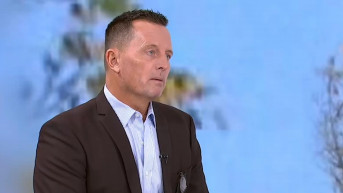
Former US President Trump's special envoy Richard Grenell said that the release of Serbian police officer Dejan Pantic into house arrest was the first step towards de-escalation and that he expected the Serbian side to remove some barricades.
In an interview with Euronews Serbia, he pointed out that the joint announcements of the European Union and the United States were political statements that did not give concrete results and that he expected greater engagement from the USA.
How do you comment on the latest news that due to the release of some Serbian detainees, de-escalation is possible in the north of Kosovo?
I was very glad to see the reports that the detainees were released to house arrest, but some other Serbs were also imprisoned and now it is very important that everyone works together to de-escalate the situation. I am very concerned because special forces have been transferred to the north, because arrests have been made and that barricades have been erected as a result. Transferring one prisoner to house arrest is a gesture of goodwill. I think that now the Serbian government should respond similarly. More precisely, to move one or two barricades and influence de-escalation.
I think that Serbs in Kosovo should not be arrested for such activities. I know that there were belligerent statements in which these people were called terrorists. The situation is very tense, but I think that the authorities in Pristina made a good move by transferring this man to house arrest. Other people should be freed, but at the same time all barricades should be removed. That is one way to de-escalate the situation.
I would like to make something clear. Namely, under President Trump, we had a different path and I believe that the Americans should be much more aggressive in their leadership in this conflict. Europeans cannot go in and take one side or the other or try to negotiate without the negotiations yielding results. The Europeans have been managing the situation for two years, and it has become much worse. Americans need to stop being in the background. Biden's team decided to let the Europeans lead, and the situation worsened. They agree with that. We wouldn't be in that situation with Donald Trump. Why? Because we understood that there must be economic development. These political fights must stop.
When people have jobs and when we can get the economy growing on both sides, then the animosity disappears because people focus on a better future. We need to get back to it. That's why I appeal to Kurti's government to stop sending special units to the north, to stop arresting people, and I appeal to the Government of Serbia to remove some of the barricades because de-escalation has already begun with this one person who was transferred to house arrest.
You say that in some way Europe failed in conducting these negotiations, that this would not have happened if America had been in its place. Now we see the common position of the EU and the US that de-escalation on Kosovo and Metohija is necessary. How important is this insistence of the international community now and who can it influence more - Pristina or Serbia?
Those are all good questions, but after reading the US and EU statements, I think it's more of a political statement that doesn't help the situation. By issuing a joint statement saying " de-escalate situation" it will not get results. We have to launch very specific ideas.
There is no one from the White House who actually deals with the issue and knows the details, someone who really has the ability to step in and offer a solution. Here, let me help the White House a little now. When one prisoner happens to be transferred to house arrest, it is a good development. Now the Serbian government should respond by removing some of the barricades. We should call Kurti again to withdraw the special forces again. It is a violation of the Brussels Agreement. You cannot ethnically change the composition of the police force. That doesn't help. I would call Kurti's government to deal with economic development, and not constantly with these political issues with which it tries to manipulate and score political points.
Focus on getting jobs for the people of Kosovo and for the economy to grow. Serbia's economy is growing and I would ask the Serbian government to focus on the economic issues in which they are doing well, and to ignore the political fights and attacks that are coming and to try to understand that strengthening the economy is the best way to solve the problem. At the same time, we must also call on Kurti's government not to start causing problems in the north. I would invite the people of Kosovo to compare the situation two or three years ago with the situation today. Now what is the purpose of these conflicts?
I have talked to friends in Albania and people who are of Albanian origin and they understand that focusing on economic matters is the right way and the right path. I would ask Berlin and Paris to focus more on the arguments at the table instead of making political negotiations and some kind of papers that do not help the situation.
Yes, Mr. Grenell, but how do we get back to the negotiations now? Kurti himself was actually surprised by the decision on house arrest for Dejan Pantic, he said that he was actually a terrorist and that he should not be released in such a way. The time given to KFOR to influence the removal of the barricades is running out. Where is now and how far is mainstream politics on this issue?
I hope that Kurti understands that all these hostilities will not help the economic situation of the population of Kosovo. If you look at all these ideas that the Americans have proposed in the last 15 years, Kurti was against all of them. Let someone show me an American economic idea that he accepted. Recently there was a problem with the thermal power plant. It does not help the people of Kosovo. I would tell him to join the Open Balkans.
I know he has some very serious questions about whether that plan is politically motivated. I think there are good justifications for some questions about the Open Balkans, in the sense that it should not be the plan of one country but the plan of the entire region. I am sufficiently convinced that countries should join the Open Balkans and that they should support it because it will improve their economy.
We need to work with Kurti so that he understands that the idea of the Open Balkans will not become the idea of one country and that it will not be a political issue. I know what his concerns are, I had them too, and it should be ensured that this does not happen and that the Open Balkans is something that will also benefit Kosovo, if it participates. This is how the economy improves. But these are all very difficult questions. What I believe is that we should turn from politics to economics, to help the people of Kosovo to develop their economy and to catch up with what the Serbian and Albanian economies are doing.
To try to attract jobs, investments. They are now on the path of conflict. American companies are very cautious and hesitate to invest money in Kosovo because it is constantly in some kind of conflict. The economy of Serbia, the economy of Albania are growing, and the economy of Kosovo has been going through difficult times for the past two years, and I think we should start avoiding conflicts and focus on the economy.
You are talking about the economy here, but here we have certain deadlines and agreements from the international community regarding the issue of dialogue between Belgrade and Pristina. Do you think that now from this point of view it is realistic to expect them to be respected?
I don't think it will surprise you if I say that I believe that American leadership is needed. It is of crucial importance. I would appeal to President Biden to send someone who is much more involved.
This process seems to be led by the Europeans, and anyone who looks rationally at this situation must come to the conclusion that in the last two years we have not progressed at all, but only regressed. I argue that this is because people focus on politics rather than economic development. In Kosovo, they have no use from us sitting around the table and talking about politics.

comments