
Hamilton: NATO respects Serbia’s military neutrality, there is currently no consensus on Kosovo’s membership
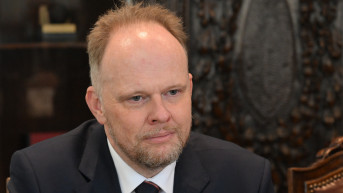
NATO Deputy Assistant Secretary General Kevin Hamilton stated that the Alliance respects Serbia’s military neutrality and will cooperate with Serbia on that basis. He also pointed out that Kosovo cannot become a NATO member without the consensus of all Alliance members, reports Radio Television of Serbia.
The first joint military exercise between the Serbian Armed Forces and NATO is being held at the “Jug” base and the “Borovac” training ground near Bujanovac, at the invitation of official Belgrade.
In an interview with RTS, Hamilton thanked Serbia for the invitation.
How does the Alliance view the importance of the exercise, and what does it practically represent for relations between Serbia and NATO?
“We are grateful for the invitation from the Government of Serbia and the Serbian Armed Forces to hold this exercise in Serbia. This is the first such joint exercise between NATO forces and Serbia, and I believe it represents a new level of understanding, dialogue, and interoperability between NATO forces and the Serbian Armed Forces. This specific exercise taking place in Borovac, in southern Serbia, is focused on training for peacekeeping operations, and it is an opportunity for the Serbian Armed Forces and NATO forces to learn from one another how to conduct peacekeeping operations, which I believe will help the Serbian Armed Forces when carrying out such operations under the auspices of the United Nations around the world.”
Serbia insists on military neutrality, but NATO speaks about strengthening cooperation and interoperability, which is one of the goals of this military exercise. When speaking about the interoperability of the Serbian Armed Forces with NATO forces, how close is Serbia today to NATO standards, and where is the line between military neutrality and practical integration into the NATO system?
“That is an excellent question, and I would answer by saying that there is nothing mutually exclusive between interoperability and cooperation with NATO on the one hand and military neutrality on the other. NATO fully respects Serbia’s policy of military neutrality. We have done so through the Partnership for Peace over the years, and moreover, NATO has advanced relations with other neutral countries such as Switzerland and Austria, for example. We have these deep and advanced relations with those countries, which are also neutral and make sovereign decisions regarding their foreign and security policies, and the same applies to Serbia.”
In recent months, we have seen intensive contacts between the highest officials of Serbia and NATO, in addition to the joint exercise, meetings with the leadership of the Alliance, and messages about enhancing cooperation. The U.S. Ambassador to NATO spoke of a “new era” in relations with Serbia. What exactly does this new era mean, especially in the context of his message that defense and security cooperation with unreliable partners creates long-term strategic dependencies that are difficult to break free from?
“I think NATO as a whole is increasingly interested in investing in our partnerships. My role as Deputy Assistant Secretary General for Partnerships, which is a new position within NATO, is to ensure more regular dialogue with our key partners, such as Serbia. My presence here in Belgrade is part of that, and I hope to have the opportunity to visit Belgrade and other parts of Serbia even more frequently. Nevertheless, what we expect from all our partners is that they invest in their own security and demonstrate this within their regions, by investing in security and stability. In Serbia’s case, it is clearly the largest country in the Western Balkans, economically and militarily the strongest. Serbia has significant influence in this part of Europe, and we rely on our partnership with Serbia to ensure that this region remains stable and secure for the people living here, and consequently for the entire Euro-Atlantic area.”
When NATO says it respects Serbia’s military neutrality, does that mean permanent respect for that position or an expectation that it may one day change?
“Our Alliance, when it comes to partnerships, is driven by demand and requests. Therefore, I would not want to predict Serbia’s future course regarding military neutrality or other policies, but as long as Serbia adheres to that policy, NATO will respect that decision and cooperate with Serbia on that basis.”
In Kosovo, the political situation remains unstable, and Serbs have often been targeted by actions of the Kosovo Police during political crises and election campaigns. In almost every conversation between Serbian officials and NATO, security in Kosovo is a central topic. Does NATO share Belgrade’s concerns regarding the security of Serbs, and how does it assess the security situation in Kosovo?
“I think we currently assess the situation in Kosovo as relatively stable and calm, but also fragile, and that is why KFOR, under a United Nations mandate, maintains its presence in Kosovo. They have the mandate and responsibility to protect all communities in Kosovo, including the Serbian community. We have a good relationship with Serbia on this issue, and there is constant dialogue between the KFOR commander and the commander of the Serbian Armed Forces. What is now needed, alongside KFOR’s work in ensuring security in Kosovo, is the strengthening of the political process — the continuation of dialogue between Belgrade and Priština under the auspices of the European Union, which NATO supports. While we provide assistance in security and stability for everyone in Kosovo, we also hope that the political process will move forward.”
An initiative supporting Kosovo’s membership in NATO has appeared in the U.S. Congress. Can Kosovo become a member of the Alliance without Belgrade’s consent and without the consensus of all NATO members, considering that four members still do not recognize Kosovo’s independence?
“You are correct in saying that NATO functions on the principle of consensus, and it has always been that way. I cannot comment on discussions taking place in the United States Congress, but I can say that NATO has cultivated a relationship with Kosovo for decades, and that it is a positive relationship aligned with our relationship with Belgrade, and that is the position we will continue to uphold.”
So there is no place for Kosovo in NATO?
“That would require a consensus that currently does not exist.”
That the consensus of member states is the main obstacle to Kosovo’s NATO membership was also emphasized by Alliance representatives in a recent analysis by our portal. According to interlocutors of Kosovo Online, the initiative by U.S. congressmen on this issue does not carry significant political weight.


0 comments