
Kanin: Kosovo at an impasse, risk of violence growing
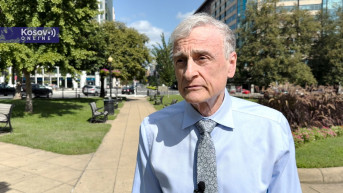
David B. Kanin, a lecturer at the Johns Hopkins School of Advanced International Studies and a retired analyst with the US Central Intelligence Agency, told Kosovo Online in an interview that the crisis in Kosovo will continue even after a new government is formed, because Kosovo's politicians are hostile toward one another, which will also affect the Serbian community, which already has no great expectations of Prime Minister Albin Kurti.
Albin Kurti has secured another term as prime minister, but the opposition has announced that it will challenge the decisions adopted at the constitutive session before the Constitutional Court. After nearly two years of political deadlock, is Kosovo finally emerging from the institutional crisis – or are we already seeing the foundations of a new one?
The crisis continues, there is no president, and there is no parliament functioning in the public business. Even assuming they do pick a president, the politicians are still so hostile toward each other that it is not clear whether the government will become functional.
In presenting the program of his new government, Kurti did not mention the Serbian community even once. At a time when relations between Serbs and Albanians are already seriously strained, what message does this send to Kosovo Serbs, particularly those living in the north?
There is no real message for the Serbs. These two communities are at odds. They live in separate countries inside their heads. Kosovo thinks it’s a state and that Serbs are in that state. Serbs believe they are part of Serbia. As long as that’s the case, what Kurti says or doesn’t say in any particular statement isn’t of much importance.
The Serb List says that this government represents a continuation of policies that have violated the rights of Kosovo Serbs and strongly opposes the appointment of Serbs whom it claims do not have the support of the Serbian electorate. What can the Serbian community realistically expect from another Kurti government?
In my view, the Serbian community does not expect anything from that government. Kurti is clearly hostile toward the Serbs, and they’re hostile toward him. So, what’s going to happen, is that Serbs will continue to complain about whatever takes place as reflecting them being victimized by a government that does not have their interests at heart. Whatever happens, Kurti will say that the Serbs are really still loyal to the government in Belgrade, that does not accept the right of Kosovo to exist.
This is an impasse, and none of these current events change that impasse. One example of this is, of course, with the Constitutional Court judges. There were Serbian judges who boycotted the court, and now they want back in. Kurti says no. The impasse continues. The status issue remains unresolved, Kosovo’s status is still in question, no matter what happened in 2008.
Some say that the ethnic distance between Serbs and Albanians has never been greater – that they live next to one another rather than with one another. How dangerous is this division, and should Washington and Brussels do more to protect minority communities, rebuild trust and prevent the further marginalization of Kosovo Serbs?
You have asked two separate questions. Again, the situation is going to stay as it is. The impasse is going to continue. Nothing that is going on in current events will change that. As far as the West is concerned, I hope that by now all sides in the region realize that the West has no answers for them.
The West has been engaged for a long time, telling all sides what they should and should not do, and they continue to have no results. The Western countries are having enough trouble managing their own internal politics, much less forming solutions for somebody else’s politics. It’s been more than three decades of this. There are no solutions that are going to come from the West. The locals are going to have to deal with each other, or there will be no agreement at all.
The Belgrade-Pristina dialogue is at a standstill, while Kosovo still needs to complete the process of electing a president. With Kurti returning as prime minister, should we expect a change in his approach toward Belgrade? What would have to happen for the dialogue to regain serious momentum?
The dialogue has never been under serious momentum. Since April 2013, when the agreement was reached, there have been some so-called “low-hanging fruit”, small deals made on small things, but the big issues have never been resolved. The biggest issue is the existence, that is, the formation of the Association of Serb Municipalities in Kosovo.
If this institutional deadlock continues, how serious is the risk for Kosovo? At what point does the prolonged inability to establish fully functioning institutions raise the question of whether Kosovo is becoming dysfunctional?
That is an important question, and the simple answer is – I don't know. What I do know is that all the impasses, domestically and internationally, are going to continue. The question is at what point does the chronic problem of Kosovo's disputed status, because it is still not a state as far as five members of the European Union are concerned, at what point does that become acutely dangerous. Is there a danger of serious violence? I do not know the answer to that question, but I do believe that the longer this goes on, and it will continue for some time, there will be more danger of future violence.

0 comments