
Haxholi: First month of new Assembly marked by lack of planning and coordination
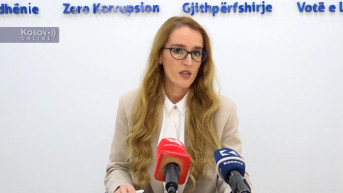
The Kosovo Democratic Institute has assessed that the first month of the new, 11th legislature of the Kosovo Assembly was marked by a lack of joint planning and coordination among parliamentary bodies, KosovaPress reports.
At a press conference presenting a report on the planning and organization of the Assembly’s work, the Institute’s senior researcher Violeta Haxholi said that the current legislature continued to face challenges inherited from previous ones.
“The first month of the 11th legislature did not begin with proper organization or a clearly defined pace of parliamentary work. On the contrary, we continue to face the same challenges that previous legislatures encountered in planning and organizing their work. The Assembly is therefore operating without a common plan and without the necessary coordination among parliamentary bodies,” Haxholi said, according to KosovaPress.
She pointed out that the Assembly had still not adopted an overall work plan, despite being required to do so under its Rules of Procedure. She also noted that parliamentary committees, even before they had been fully constituted and begun their work and before adopting their own work plans, had been required to consider draft laws submitted by the Government.
Haxholi cited the Draft Law on the Prevention of Money Laundering and Combating the Financing of Terrorism, noting that it had been considered under an expedited procedure and adopted with deviations from the Assembly’s Rules of Procedure.
She also pointed to the uneven distribution of MPs among parliamentary committees, noting that MPs from smaller parties were often required to serve on several committees simultaneously.
“We have MPs who are members of as many as four committees, a large number who serve on three committees, while around 40 MPs are members of two parliamentary committees. On the other hand, there are also MPs who have chosen not to serve on any committee. These include political party leaders, as well as other MPs,” Haxholi noted.
She also presented the Institute’s recommendations for improving the planning and organization of the Assembly’s work.
“We recommend that the Assembly adopt its overall work plan as soon as possible in order to establish a system of joint planning and coordination among plenary sessions, parliamentary committees and other Assembly bodies,” Haxholi said.
She added that the Institute also recommended greater use of technology and the digitalization of internal parliamentary processes, both for scheduling sessions and for monitoring the implementation of individual work plans and the Assembly’s overall work plan.
0 comments