
Kugler: The formation of the CSM is necessary, Vienna could be a place for dialogue
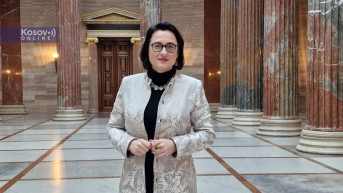
Gudrun Kugler, chairwoman of the Austria-Serbia Friendship Group in the Austrian Parliament from the Austrian People's Party (OVP), emphasizes that the upcoming parliamentary elections in Austria are of critical importance because they will determine whether Austria will choose a left or right ideology or the middle path promoted by the People's Party. In an interview with Kosovo Online, she also expresses her hope that Serbia would join the EU as soon as possible and says that the situation of the Serbian community in northern Kosovo is a "very critical point," which is why the formation of the Community of Serb Municipalities is necessary.
How do you view the current situation in Kosovo and the unilateral actions of Prime Minister Albin Kurti?
Austria recognized Kosovo as an independent state 16 years ago. Like all countries in the Western Balkans, Kosovo also needs a credible EU perspective. However, a common European perspective can only succeed if everyone contributes and if good neighborly relations are ensured in the region. Therefore, comprehensive normalization of relations between Serbia and Kosovo is essential and a prerequisite for a credible EU perspective. The EU is mediating the dialogue between the two countries, and quick progress and constructive engagement from both sides are needed to implement the agreements already reached. Every step forward, no matter how small, is very important. From my point of view, a still unresolved and very critical issue is the state of the Serbian community in northern Kosovo, where the formation of the Community of Serb Municipalities is necessary to ensure an appropriate level of self-governance for the Serbian community and comprehensive protection of Serbian cultural and religious heritage. In this sense, we have a clear expectation that Kosovo will fulfill its international obligations.
Unlike the US, the EU, the UK, France, and Germany, there hasn't been a condemnation of Kurti's actions from Austria. Why is that?
The serious unrest in northern Kosovo in the spring of last year, which included attacks on KFOR contingents and journalists, deeply concerned me. The international community, including Austria, clearly and immediately condemned this incident and the violence that occurred at the time. The same applies to the armed attack in Banjska in September last year. Both sides are actively calling for de-escalation. Recent unilateral actions by Kosovo, without prior coordination with international partners, are not helpful. We urgently need stability in the region, and for that to happen, open issues must be resolved through dialogue.
Your party colleague Andreas Minnich advocates for Kosovo's EU membership by 2029. Is that realistic?
Kosovo applied for EU membership in December 2022. So far, the EU has not addressed this further due to the non-recognition of Kosovo by several member states. Austria supports Kosovo on its path to the EU and is also advocating for further consideration of its application. However, it must also be clear that Kosovo still needs to undertake an intensive reform journey toward the EU to bring the prospect of accession within reach. At the moment, I am not willing to speak about specific timelines. Of course, in the end, full normalization of relations with Serbia must occur. This is also a fundamental prerequisite for Kosovo's EU membership.
What does Serbia mean to you, and particularly Serbs in Austria?
I greatly value the large Serbian diaspora in Austria and maintain good and intense contacts with Serbs in Austria. Many people of Serbian origin make significant contributions to Austria. I would like to say thank you for that. For integration and harmonious coexistence, it is important to recognize and respect these people and their culture.
The Danube is a strong symbol of the connection between Serbia and Austria. We are Central Europe, we look out for one another, and we need a strong common voice. The Balkans have always been important to Austria. Today, we see ourselves in the European Union as advocates for the Western Balkan countries. Vienna could also mediate in conflicts in the Balkans and serve as a place for dialogue.
Do you see Serbia as a future EU member, and will you politically support it?
Austria is one of the strongest supporters of Serbia's integration into the European Union, not only due to geographical proximity but also because of close political, economic, cultural, and above all, human ties. As a friend of Serbia, I strongly support this long-standing Austrian commitment.
As for Serbia’s EU accession, this requires meeting high standards, aligning with EU regulations, and harmonizing foreign policy positions with the EU. Serbia has made positive strides in recent years. I hope that Serbia will continue on this path and consistently push forward the reform agenda necessary for EU accession.
Serbia is part of the European family, and I hope that Serbia will make further progress to join the EU as soon as possible. As you know, Austria has always been firmly committed to the European integration of the Western Balkans and believes that the region has a realistic prospect of joining the Union.
Why are the elections on September 29 so important?
Elections are always important. In elections, citizens decide how to respond to the challenges and crises of our time. Voting is a privilege that not everyone has. Anyone with the right to vote should go to the polls.
These are critical elections because these are particularly difficult times – a ring of fire around Europe, deindustrialization, demographic collapse, internal conflicts partly related to migrants, the mental health crisis among children... The question is whether Austria will choose left or right ideology or take the middle path. The People's Party promotes the middle and common sense – a balance between extremes.
What does the OVP stand for?
The People's Party stands for centrist and sensible policies: hard work should pay off, families must be supported, and security is the foundation of our coexistence.
Austria has had a strong economic presence in the Western Balkans for many years, with numerous Austrian companies operating in the region, and we have also been a reliable partner in international missions for decades. In our election program for the upcoming elections, we have clearly stated strong support for the European perspective of the Western Balkans.
I also believe that the EU needs to further increase its offer and support for the Western Balkans. We must help the countries meet the accession criteria. The European Commission’s growth plan for the Western Balkans is an important tool for promoting positive incentives on the path to the EU through gradual integration and strengthening the trust of the region's countries in the EU. As the EU, we must remain credible to the people in the region's countries.
Will you run again for president of the parliamentary friendship group with Serbia?
Parliamentary groups negotiate these positions by consensus, and then they are assigned. I hope to first be elected to parliament and then to that position. As president of the Austria-Serbia parliamentary friendship group, I have worked in recent years to strengthen our bilateral relations with Serbia, especially at the parliamentary level.
0 comments