
Milovic: Pristina's decision to ban the delivery of medicines endangers and makes Serbs' life difficult
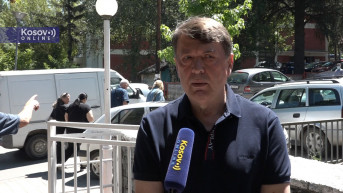
Deputy Director of the Clinical Hospital Center in North Mitrovica and former Mayor of Zvecan, Dragisa Milovic, says that the ban on the delivery of goods and medicines from central Serbia to Kosovo is another in a series of unilateral moves by Kosovo's Prime Minister, Albin Kurti, with the aim of further complicating the lives of Serbs in the hope that they will realize there is no perspective and leave their ancestral homes.
In an interview for Novosti, Milovic emphasizes that the Clinical Hospital Center "Kosovska Mitrovica," with 500 beds, provides services to Serbs as well as Albanians.
"In recent days, we have been using our last reserves of medicine; if there were to be an emergency operation or an accident with several injuries, I'm not sure if we would have enough supplies for urgent treatment. We appeal to the international community to influence Pristina to withdraw this decision, as it violates our basic human rights," Milovic says.
He adds that due to Kurti's embargo decision, people's lives are at risk. Milovic points out that the lives of children, chronic and oncology patients, and diabetics are affected.
"We had a meeting with representatives of KFOR. They are soldiers, and their role is to hear and record what we are facing and pass it on to other addresses. We hope that the international community will react this time, even though we have witnessed their double standards. I must mention that they only welcomed the return of Albanians to Kosovo and Metohija, although Resolution 1244 stipulates that the return of everyone should be enabled. Unfortunately, Serbs and many non-Albanians have not returned to their homes," Milovic emphasizes.
Authorities in Pristina announced the withdrawal of 25% of special police units from municipal buildings in four municipalities. Is this another bluff by Kurti, and is it enough to make Serbs reconsider their decisions?
Miroslav Lajcak, without any basis, announced that this is the first positive step for de-escalation, but for the Serbian people, it is absolutely insufficient for de-escalation. To calm the situation and return to some form of normalcy, we cannot play with percentages. All false mayors and special units need to be withdrawn, as we see no reason for them to be present in the north. Special units cannot be stationed in the north, let alone in municipal buildings, according to any agreement. The second condition for de-escalation is the release of all arrested Serbs who were arrested with beatings, and the third is the formation of the Community of Serb Municipalities, in accordance with the agreements from 2013 and 2015.
How did you receive the assessments from the EU Report, blaming Serbs for tensions in Kosovo due to their leaving institutions and setting up barricades?
These are unfair statements coming from those who, through their actions and inactions, contributed to the deepening of this crisis, which has been going on for two months. They tacitly agreed to hold elections, allowed special police units to enter municipal buildings with long guns, used force to expel employees from their workplaces, and prevented citizens from exercising their rights regarding municipal administration.
Does our people have the strength to resist if Kurti decides to occupy northern Kosovo forcibly?
We Serbs live on our land and property; we haven't taken anything that doesn't belong to us. This crisis cannot be resolved through force but only through dialogue between both sides while respecting each other's interests. One side cannot get everything while the other gets nothing. There can be no peace and security if someone wants to impose their solution through force. We hope that KFOR, according to Resolution 1244, will be the first protective factor, but if they don't want to or don't have the strength, we rely on our homeland, Serbia. President Vucic has repeatedly said that there will be no pogrom, no new "Operation Storm," and that nothing can be achieved through force and violence. Honestly, I am cautiously optimistic; some may be in a hurry, but we must be patient and wise.
Recently, Escobar called on Belgrade not to oppose Kosovo's membership in all international institutions, including the UN. If the US crosses our red lines, is it time to turn more concretely to seek help from Russia and China?
I believe it is good that the President of Serbia requested that the problem be discussed in the UN Security Council. Resolution 1244 is still in force, and that is the right place to address the problems that we have been facing since 1999. China and Russia, countries with the right to veto, are present there. Our concerns, the concerns of Serbia and Serbs living in Kosovo, should be heard. Serbia has its red lines, and there is no recognition of Kosovo's independence, no membership in the UN, and these are the things that cannot and should not be negotiated. We will see if the request for this issue to be discussed at the UN will be accepted. We must emphasize the gravity of the situation in the 21st century, that we have the right to live like any other normal nation.

0 comments