
Osmani: "Western Balkans QUAD" does not endanger "Open Balkan"
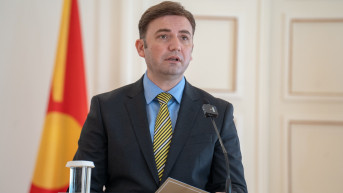
The QUAD platform is the promotion of specific values and ideas directly related to the European integrative process, that is, harmonization with EU positions on current issues facing the European continent, North Macedonia's Minister of Foreign Affairs Bujar Osmani said.
In an interview for "Politika," Osmani referred to the implementation of the Brussels Agreement and the agreement reached in Ohrid between Belgrade and Pristina, emphasizing how important this step was for the entire region.
What is the "Western Balkans QUAD" platform, what is its role, and on what principles is it organized? Isn't this a counterpart to the "Open Balkan", which Pristina strongly opposes, while opinion in Montenegro on this regional initiative is divided?
It is about promoting the full harmonization of four countries' foreign policies (North Macedonia, Albania, Kosovo, and Montenegro) with the EU's common foreign and security policies. This informal forum is authentic and in no way links to or threatens any regional initiative, especially not the "Open Balkan" or the Berlin Process.
I often mention the fact that the region has over seventy regional initiatives, each with its own justification and weight. The revitalization of the Berlin Process, for example, does not exclude the "Open Balkan", which proved its justification and necessity by being our original initiative and that we ourselves defined the dynamics of activities and meetings as the three countries considered them justified or necessary. The ideas and agreements were originally similar to the ideas and goals of the Berlin Process, and both initiatives are complementary in this regard.
On the other hand, the QUAD platform is the promotion of specific values and ideas directly related to the European integrative process, that is, harmonization with EU positions on current issues facing the European continent. Harmonization of the region's countries with the EU's common foreign and security policy is much more than meeting "benchmarks"; it is the essential decision of the countries about their affiliation, sincerity, and loyalty to the EU accession process. As countries that have achieved this, I want us to promote this policy in the region as positive and successful, with the desire to see all Western Balkan countries' foreign policy positions and interests harmonized with Brussels as soon as possible. The ambitions of all six countries in the region are to become part of the EU at some point, so we must co-create the EU's foreign policy, and it is simply correct that in this process of integration, we now fully agree with that policy. In relation to other countries from the Western Balkans region, as well as Eastern Partnership countries that also aspire to be EU members, the goal of the QUAD is to encourage all aspirant countries to align their foreign policy with the EU policy, as their authentic interest, but also as a common regional interest, for the region's and the European continent's stability.
A high-level meeting was held in Ohrid under the auspices of the EU and the US acting as observers. What is the broader significance of the agreements reached after the ten-hour talks in Villa "Biljana"?
The agreement and its full implementation are important not only for Serbia and Kosovo but also for the entire region and its European future. I would like to remind you that the meeting between President Vucic and Prime Minister Kurti took place in Ohrid, in the same building where the Ohrid Framework Agreement was reached, which is considered the most successful peace agreement that emerged from the conflict in the former Yugoslavia.
We consider Kosovo and Serbia to be our close neighbors, and we undoubtedly want the Ohrid meeting to be a turning point in the relations between these two countries. Our experience in resolving our own open issues, both at home and with our neighbors, demonstrates that politics and dialogue, compromise, and diplomatic solutions bring numerous benefits. They create internal stability and cohesion, friendships with neighbors, partnerships with international friends, and regional stability, progress, and prosperity.
North Macedonia is the presiding country of the OSCE. How do you see the political and security situation in the world and in the Balkans?
North Macedonia assumed the OSCE chairmanship at the moment of the most difficult security and geopolitical crisis since World War II, which will undoubtedly leave lasting consequences in several domains. The rule-based principle of maintaining international relations has practically been broken. The overall European security architecture has been called into question. The OSCE's vision as a platform for dialogue on intercontinental cooperative security has been severely shaken. Practically all of the OSCE's principles and obligations, contained in the final act of Helsinki and in international law in general, were violated by Russia's aggression against Ukraine.
Even in such difficult circumstances, North Macedonia works diligently on the OSCE's political management and will do everything to protect the organization's principles. We use our hard-earned experience to contribute to the process of greater stability and European security. Regardless of how disturbing and disheartening the developments on the ground are, we continue to work to avoid escalation.
When it comes to the Balkan situation, we are particularly pleased with the progress made in the relationship between Kosovo and Serbia. The fact that the meeting was held in Ohrid we perceive as the trust we have gained from our neighbors, as a country whose direct interest is the success of the agreement, but also as a recognition of North Macedonia's achievements as a country that fosters a political culture of dialogue and diplomatic resolution of disputes.
The willingness to implement their obligations in connection with the agreement reached in Brussels (on February 27) and the implementation of the Annex, expressed by both sides, inspires confidence. As the chairman of the OSCE and also as the Minister of Foreign Affairs of North Macedonia, I always welcome realistic and sustainable initiatives to solve problems.
0 comments