
Rafuna: I believe we will have a new government by the end of January; Institutions and reforms are needed

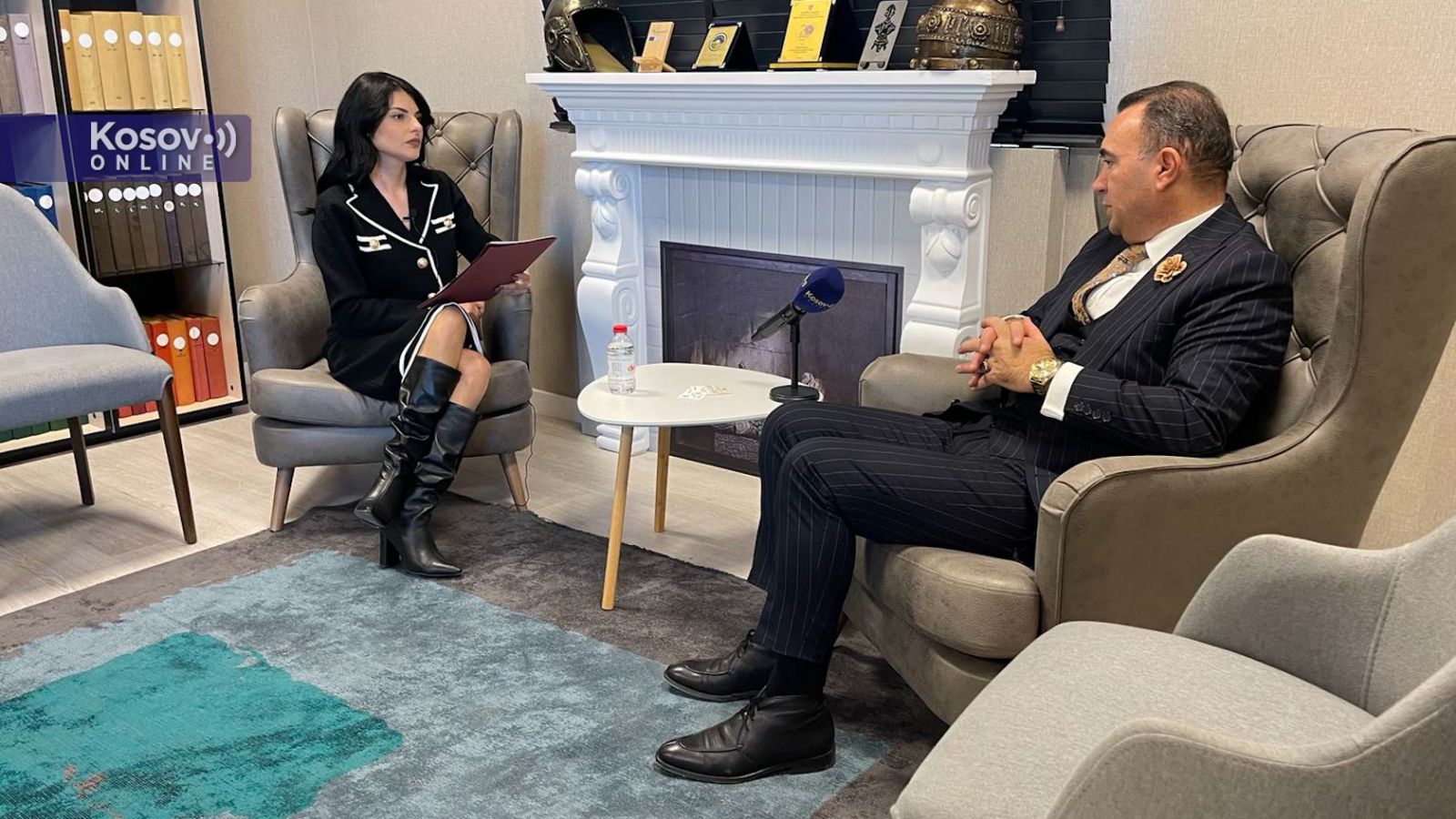
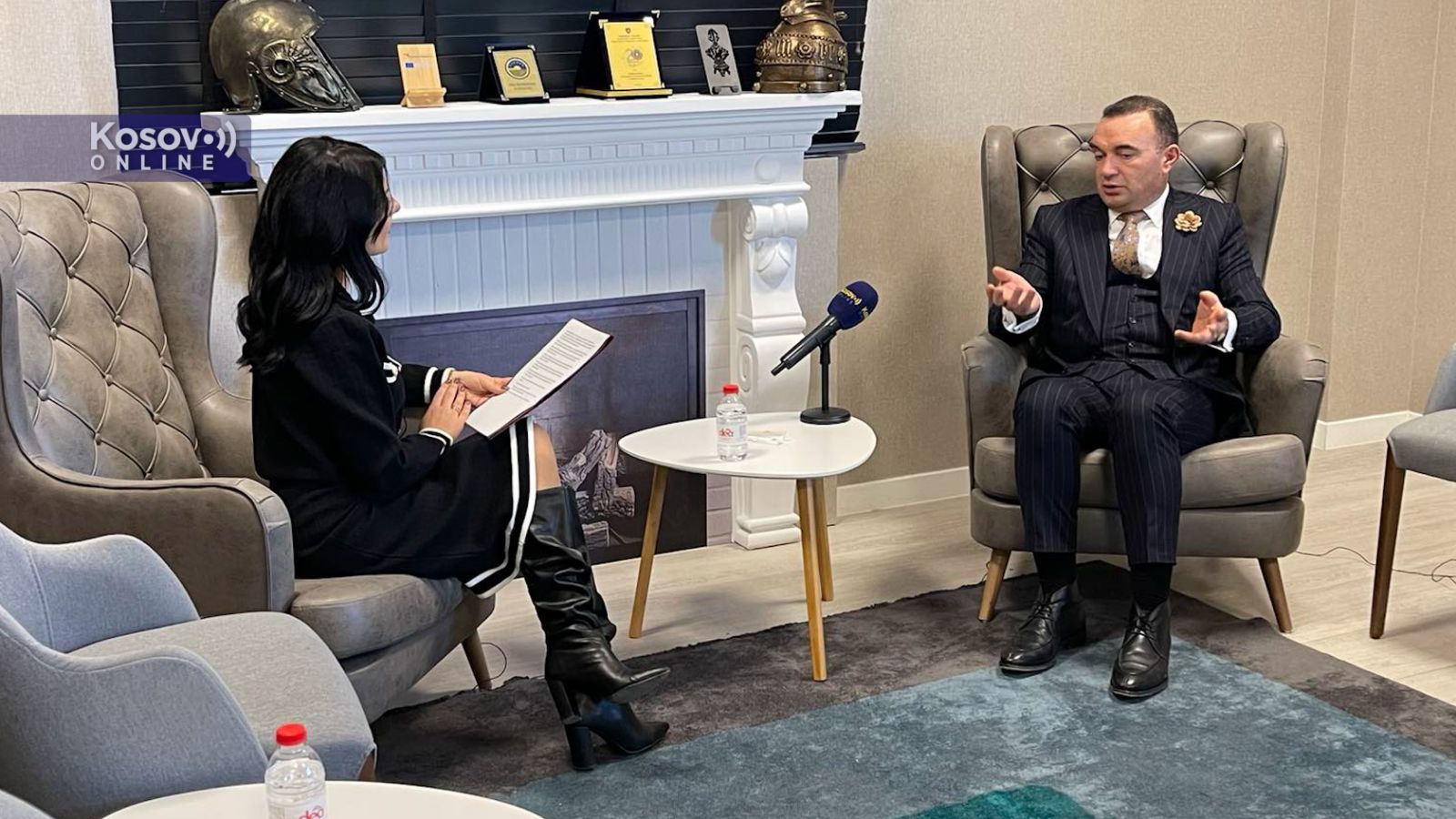
This year has been difficult for Kosovo’s economy, and it is essential that institutions be formed as soon as possible, because reforms are needed across all sectors and foreign investors must be motivated to come and invest in Kosovo, said the President of the Kosovo Chamber of Commerce, Lulzim Rafuna. Nevertheless, he is optimistic that a new government will be formed by the end of January.
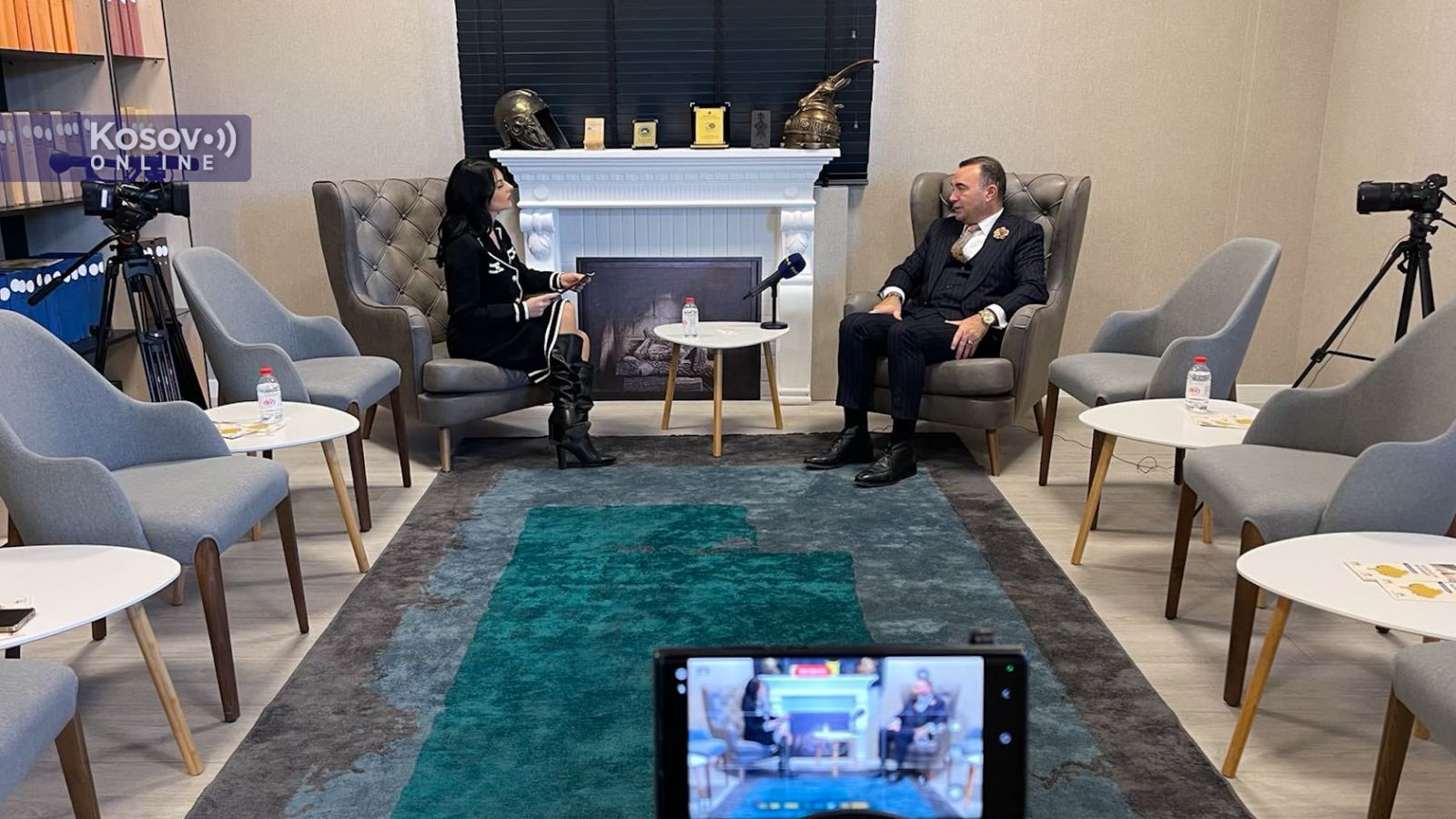
In an interview with Kosovo Online, summarizing 2025, Rafuna stressed that the suspension of the planned U.S.–Kosovo strategic dialogue is not a positive message for the business community, but expressed hope that once certain conditions are met, it will be relaunched.
He is also confident that citizens should not worry about being left without salaries in the first months of 2026, because the Law on Public Financial Management allows the budget to be extended for the first two months of the following year. He added that the announcement of an increase in the minimum wage to €425 in January may be linked to the pre-election campaign.
Kosovo is entering the new year without institutions, a situation that has lasted almost a year, since February. How does the current situation affect the economy?
We have had a difficult year—one can say that freely—because we faced problems with electricity. Companies were required to switch to the free market and procure electricity from other suppliers, which are two to three times more expensive than those from which they previously sourced electricity. That was the hardest challenge for companies this year. Another issue is that we did not have institutions, so we were unable to vote on foreign agreements totaling around one billion euros that are pending in parliament. These are capital projects that would directly affect our economy and development, as well as the development of the business sector.
How important is it that, after the elections, the situation from the past is not repeated and that institutions are formed as soon as possible? Can the economy withstand another institutional crisis?
It is difficult. We need institutions, fiscal reforms, reforms in education, healthcare, and the judiciary—we need reforms everywhere so that we can move faster, because the countries around us implemented these reforms two to three years before us, and we need to hurry to catch up. We also need to do more to attract foreign investment. If we do not have state institutions, it will be difficult to motivate foreign investors to come and invest in Kosovo, which is why it is essential to have institutions as soon as possible.
The budget for next year has not been adopted. What consequences will this have? Is there a fear that citizens will be left without salaries? We saw what happened in Priština and with RTK.
There will be no difficulties or problems in January and February, because by law, if elections are held before the end of the year, 21.12 percent of the budget is automatically transferred for the first two months. For January and February there will be no problems—everyone will receive their salaries. That period is also used to begin preparations for capital projects, but in March and April we need a budget in order to start new projects.


Should citizens fear for their salaries?
No, I do not believe so, because elections will be held on December 28 and I expect that by the end of January we will have a government. I do not believe there will be blockades like those we have had so far. If things function as we anticipate, there will be no difficulties or problems with salaries.
How does the overall situation affect foreign investment? Does the fact that Kosovo has been unable to function normally for almost a year lead investors to choose other destinations?
When it comes to foreign investment, one thing should be kept in mind. Large companies and globally known brands, when they come to Kosovo, see the entire Balkans as one market. They do not look only at Kosovo’s political, legal, or economic situation—they look at the whole region. If there are political tensions or problems somewhere, they view that with caution and do not want to come immediately. Yes, if we do not have institutions, that certainly affects foreign investment inflows, but as I said, we need to start reforms and motivate foreign investors to come and invest in Kosovo.
The United States has so far been Kosovo’s largest partner and supporter, but the planned strategic dialogue was suspended. Does this affect the economy?
That is also not a good message for the business community. It is not a good signal for American companies aiming to invest in Kosovo. Ultimately, before investing here, they consult with their government. I believe this is temporary, based on the information we have as a Chamber, and that once certain conditions are met, the strategic dialogue will resume. From day one, we have called on our government, parliament, and other state institutions to act as soon as possible so that we can restart the strategic dialogue with the U.S. government.
What is the current economic situation in Kosovo regarding imports and exports?
The trade deficit remains large—exports cover only 12 percent of imports. Inflation, according to the latest information from the Kosovo Agency of Statistics, stands at 5.3 percent, which is very high, with electricity prices having the greatest impact. It is necessary to have institutions in place as soon as possible and for them to begin working so that inflation does not increase further, but instead decreases.
Who is Kosovo’s largest trading partner?
Within the Balkans, the largest partners at the moment are Albania and North Macedonia, according to information from the customs service. From the European Union, it is Germany.
What does Kosovo import from Serbia? What barrier does it pose that goods are still imported through only one crossing?
This is a major problem we have been discussing for a long time with the President of the Serbian Chamber of Commerce, Marko Čadež, to find solutions to administrative barriers. Some are political, because products from Kosovo labeled as produced in Kosovo are not allowed entry into Serbia by Serbian authorities, and we are seeking for that to be lifted as well. Another issue is the ban on imports from Serbia. Currently, imports take place only through Merdare, which is not good. All border crossings have customs offices, and a solution should be found to equip crossings such as Bela Zemlja, Jarinje, and others with scanners so that goods can enter there as well. This is feasible, and I have been working with the European Commission for some time to find a solution so that entry is not limited to Merdare alone, where there is only one scanner. A scanner provided by the U.S. government has arrived, and I believe another from Germany will arrive within the next two weeks, which will speed up imports. However, queues on the Serbian side are still long, trucks are waiting, and that is a problem, because when our producers or traders call to load goods, not everyone is willing to come to Kosovo if they have to wait one or two days to enter.
There is an announcement that the minimum wage in Kosovo will be €425 starting in January. What is your opinion?
The government has now increased the minimum wage to €425, but we are not satisfied—not because of the amount itself, but because we did not have the opportunity to conduct an analysis to assess the impact on companies. We therefore requested that the decision not take effect immediately, and that we be given time to consult with our members and others to determine what is best. The minimum wage may even be higher, but there needs to be a package that supports businesses.
Was this rushed because of the campaign?
I am afraid it was, because now is not the right moment. We will have elections this month, and that is not good. If the minimum wage is increased, it must be borne in mind that this concerns a category of people who are unskilled and without higher education, which makes it a sensitive issue. Research needs to be conducted, dialogue maintained, and a solution reached regarding the appropriate level of the minimum wage.


0 comments