
Rafuna: The crisis in parliament has a major impact on the economy, political parties must form institutions as soon as possible
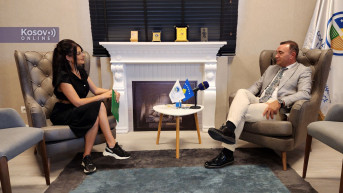
President of the Kosovo Chamber of Commerce, Lulzim Rafuna, said in an interview with Kosovo Online that the current political situation and institutional crisis in Kosovo have a significant impact on the economy, stressing that the current deadlock affects all sectors without exception. He appealed to political parties in the Kosovo Assembly to make parliament functional as soon as possible.
Rafuna pointed out that due to dysfunctional institutions and a blocked parliament, many capital projects remain unused, adding that even the release of funds from the EU’s Growth Plan requires ratification in the Assembly.
He also added that Kosovo must work on increasing exports by subsidizing certain sectors, reminding that Kosovo imports goods worth around six billion euros annually, while exports amount to about one billion.
Mr. Rafuna, how much do the political situation and institutional crisis affect the economy?
They affect it greatly, because we have around 900 million euros in capital projects on hold due to parliament, since agreements with the World Bank and other international organizations must be ratified. If we had that money directed toward capital projects, economic growth would be much different. That is why I take this opportunity, through your media, to call on all political parties in the Assembly to make institutions functional as soon as possible.
Who is most affected and how does this manifest (are there layoffs, lower wages, reduced exports…)?
First, the Assembly needs to be formed, because we need laws. You can see what dynamics we have here. We also have the EU’s development plan, which also requires parliamentary ratification, and all of this affects every sector, not just one, for example construction, but also agriculture, and others. With reforms and funding, production would increase, which would automatically lead to increased exports. Currently, exports cover only about 13 percent of imports, and that number needs to change.
What is the situation with foreign investments?
If we look at the situation compared to last year, or two or three years ago, it is the same, about 800 million euros, with most investments coming from our diaspora. More work needs to be done here. The law on strategic investors must urgently be revised so that procedures are shorter and less complicated.
Do you have interlocutors in the current (caretaker) government, are the appeals of businesses and associations being heard?
We do cooperate, but as a caretaker government, they have no authority to deal with strategic solutions. Therefore, we must wait for a new, fully empowered government, which will be able to resolve issues, draft laws, and change the situation.
What needs to change in Kosovo in order to improve the economy?
We need to identify the sectors where we are competitive and support those that export the most. The export-import balance must change. For example, we have the wood industry, furniture, IT sector, metal industry, we need to see which of these sectors can be subsidized so that exports increase and imports decrease. Kosovo imports goods worth around six billion, while exporting only about one billion. The numbers change from year to year, exports grow slightly, but so do imports.
The Energy Regulatory Office has announced that the liberalization of the electricity market is a legal and European obligation, established by laws adopted by the Kosovo Assembly back in 2016. Yet you have warned that this decision could negatively affect the economy. What is the solution?
Companies were required to sign contracts with electricity distribution companies. We requested a one-year transitional period, because the deadline was very short,only two months to prepare. Our statement came in March, and by June 1 the decision was made that all companies meeting the conditions, those with more than 50 employees or over 10 million in turnover, must enter the liberalized electricity market. We asked for a one-year transition period so the market could prepare better, so we could have more options for purchasing electricity, and also for a support package to help businesses adapt to the liberalized market, and for us to jointly determine an appropriate date or month to enter the open energy market. They did not want to heed our advice, and now the matter is in court.
0 comments