
Rohde: Formation of the CSM Kosovo's obligation; Banjska changed everything; if Serbia does not recognize Kosovo, we will have a frozen conflict
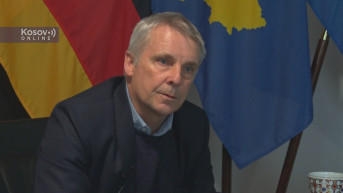
In an interview with Kosovo Online, the German Ambassador in Pristina, Jorn Rohde, openly answered questions about the petition in the north for the dismissal of mayors, the dialogue between Kosovo and Serbia, the Serbian community, the status of the Serbian Orthodox Church, the transformation of the KSF into the Kosovo Army, Germany's role in the dialogue, the formation of the CSM, what happened in Banjska, and the integration of the Western Balkans into the EU.
On Wednesday, the collection of signatures for a petition to remove the mayors began, which, according to Ambassador Rohde, is a very positive step forward.
"Firstly, I must emphasize that I usually do not like queues, but queues like the ones we saw on Wednesday are seen as a positive development. However, to briefly go back, the decision made by Kosovo Serbs in November 2022 to withdraw from all institutions was, in our view, a big mistake, an own goal because you deprived yourself of the opportunity to participate. Now we hope that this mistake can be corrected and that we will have full participation of Kosovo Serbs in Kosovo institutions. Of course, when you withdraw, you cannot come back as if nothing happened, and that's why we have a process. On Wednesday, the first successful step was taken. I see that the signature collection has started in Mitrovica and Leposavic, and I hope it will begin soon in Zubin Potok and Zvecan", Rohde said in the conversation with Kosovo Online, which was conducted a day before the start of the signature collection in Zubin Potok and Zvecan..
It involves collecting signatures for the removal of the mayors, but not the local councilors. Could this be a trigger for a new crisis if we have Serbian mayors at the head of municipalities in the north but Albanian councilors?
I would like to emphasize that we should solve one problem at a time. Everything started when Kosovo Serbs withdrew from institutions, and that's why we have a challenge now. Now we have the first step to change the mayors, and I hope the quorum of 20 percent will be fulfilled. Then comes the second step, a referendum where you need 50 percent plus one, meaning a large part of the population should participate. This is a positive step that shows we are in a political process, not in a process of withdrawal and accusing each other.
Do you expect the return of the Serbs to the Kosovo Police?
There have been many resignations, not only in the case of the police, but the police have employed new staff, including from minority communities, including Kosovo Serbs. When you resign, you have to bear the consequences.
After license plates and the energy agreement, has the dialogue gained new momentum, and what can we expect in 2024?
We have seen a massive registration of Kosovo license plates, we have seen the results of the energy agreement after 25 years, and electricity bills will be paid in the near future. We have also seen increased interest in Kosovo passports. We want to see an acceleration of the dialogue. There were meetings this week on the sidelines of the Davos summit; I know that Kosovo Prime Minister Kurti is there, and President Vucic was there. Still, I would like to see more direct meetings instead of involving a third party. It would be good for representatives of Kosovo and Serbia to meet directly to expedite the process because we need a solution, especially in favor of the general population.
Has the time finally come to establish the CSM?
Yes. This is Kosovo's obligation from 2013 and 2015 that has not been implemented yet. You saw the statements from the Quint, as well as Germany, about what we discussed publicly. Kosovo has stated that it is ready to accept this proposal brought by the EU Special Representative, which we fully support. As you know, Serbia has so far refused to sign, and now we are at a standstill. Lajcak is working hard to overcome this situation because, in the end, we need a solution for all parallel institutions to be integrated, and for the Serbs in Kosovo to feel at home and a part of society. Not just them, but everyone should feel at home. And to speed up the European path, both countries, Kosovo and Serbia, belong to the EU.
Recently, EP representative Viola von Cramon visited Kosovo and stated that representatives of the Serbian community had told her that they felt like second-class citizens. How do you view this?
I saw her comments and met with her. I think the Kosovo Government needs to do more to approach Kosovo Serbs, but I expect Serbian representatives to work in that direction. Boycotting the parliament by Serbian MPs is not a way to show that they feel at home. Kosovo is an independent state; we support Kosovo's integration into EU structures, and Kosovo is here to stay; you are a part of this society, you can't sit on two chairs. Compromise and engagement from both sides are sought. Kosovo Serbs are in a difficult position, caught between demands from Belgrade and pressure from Kosovo, and it is a situation we must overcome. That's why we need the Kosovo Government to reach out, but minority communities must also accept living in Kosovo, not as a part of Serbia.
Will the dialogue slow down the upcoming elections in the EP and the US?
I sincerely expect politicians to seize opportunities rather than always finding excuses not to work. We recently had elections in Serbia that were extraordinary; we might have elections in Kosovo, but we have elected leaders who should work in the interest of the people, peace, and EU integration. And yes, you mentioned elections in Europe; however, that shouldn't prevent leaders in this region from acting responsibly.
What is Germany's role in the dialogue?
As I said earlier, we fully support the EU representative. Germany wants every country in the region to join the EU as quickly as possible, but that depends on two things: the countries themselves and, of course, the EU doing its homework. We are already at 27 members, and with an additional six, we would be at 33. The Western Balkans is the EU's backyard, and we clearly demonstrate that we are one of the main protagonists supporting Kosovo, Serbia, and others in the EU. Whether it's the Berlin Process, the last summit of which was in Tirana, or we have regular high-level meetings, financial support for the Balkan countries is now coming to bring them closer to the EU, which must still do its homework. What is certain is that there is no enthusiasm to accept countries that do not have good neighborly relations. As my Chancellor said, it is inconceivable for two countries that do not recognize each other to enter the EU. That's why we need complete normalization. That's why we push for an acceleration of the dialogue.
Kosovo recently received visa liberalization, but now the question arises of when the Serbs holding passports issued by the Coordinating Administration will get it?
Two things. It is great news that every citizen of Kosovo can now travel freely to the EU. We fought long for this, especially Germany. Kosovo is the last country to receive visa liberalization. We also want all Kosovo Serbs to enjoy visa liberalization. The easiest way is to have a Kosovo passport. Regarding the mentioned passport, the EU Commission has published a proposal for a regulation that will allow Kosovo Serbs with these passports to benefit from visa liberalization. This proposal will be discussed in the Commission and the European Parliament. The goal is clear; we want everyone to benefit from visa liberalization. The easiest way is for everyone to have a Kosovo passport, which is why I mentioned at the beginning that there is an increased interest in Kosovo passports from minority communities.
How do you view the events in Banjska?
Banjska changed everything. It was a terrorist attack. These were not dissatisfied citizens; they had rocket launchers, automatic weapons, grenades... We are still looking for the alleged perpetrators who must be brought to justice. Milan Radoicic admitted responsibility, but there is still no accountability. We cannot accept the principle of impunity. If you commit a crime, you must be brought to justice. We hope Serbia is working on it. Personally, I could not have imagined that something like this would happen, and that is why NATO increased its presence afterward, and Germany will do the same with a new contingent starting in May. What we want is peace and stability. Such attacks are the opposite of that. If the perpetrators of the attack in Banjska are not punished, how can trust between the two countries increase? It was a major incident, and the perpetrators must be punished.
Can Russia destabilize the Western Balkans?
Russia attacked Ukraine, a neighboring Orthodox country, and since then, thousands of people have died. This has been aggression on European soil, and the whole of Europe has united against Russian aggression. Germany is one of the countries that strongly supports Ukraine in regaining lost territories and restoring stability. We hope that all countries, including Serbia, will join the sanctions. This aggression must not succeed, as Putin will then try to create divisions and hatred in other parts of the world and, of course, here. I always emphasize that this has been aggression against a neighboring Orthodox country by Russia.
Does Germany support the transformation of the KSF into the Kosovo Army?
For us, Kosovo is an independent state and has the right to security forces. We have a military attaché in Pristina, and Kosovo has a military attaché in Germany. We support this transformation and will continue to support it.
Is the Serbian Orthodox Church endangered in Kosovo? We have seen numerous incidents of temple break-ins as well as attacks through the media.
Let me emphasize one thing. I am in very close contact with the SOC representatives here. The Serbian Orthodox Church here is part of the cultural heritage of not only the SOC in Kosovo but of the entire world. Hence the UNESCO heritage. For me, safeguarding the rights of the SOC mentioned in the Ahtisaari Plan is a test of whether minority rights are respected. You have seen my statements and the statements of the Quint for the Decani Monastery. The Constitutional Court's decisions must be implemented in every country, especially when it comes to minority rights or, in this case, religious rights. The sooner the decision is implemented, the more successful Kosovo's candidacy for the Council of Europe will be.
Why can't the Quint force the Government of Kosovo to implement the Constitutional Court's decision on the Decani Monastery?
So far, every government of Kosovo has not implemented this decision. Sometimes it takes time to do the right thing, but I don't see Kosovo's candidacy for the Council of Europe being successful if this issue is not resolved. There will soon be a discussion about it, and recommendations on what needs to be done before voting on admission will be submitted, and this topic will be among those recommendations.
Do you see Kosovo in the UN in five or ten years?
That is a very hypothetical question. We want Kosovo to be in all organizations. The Ohrid and Brussels agreements stipulate that Serbia will not oppose Kosovo's membership in international organizations, but now we have rhetoric against it. However, you have a written text in the presence of the High Representative, who said that there was an agreement and that it was time to implement the agreement, and be sure that the EU, Germany, and the Quint are working hard for the agreement to be implemented on both sides. Kosovo has its obligations, including the Association of Serb Municipalities, but the other side has obligations, too. Our expectation is for the agreement to be implemented because only in this way can the path to Europe, peace, and security be achieved.
What if Serbia does not recognize Kosovo? What is the future of the region then?
It is a question of what happens if there is no progress; then you will have a frozen conflict. I always say that if Europe does not come to the region, and if the region does not do its homework, people will go to Europe. I see the demographics of the entire Western Balkans – Serbia has lost a million people in the last 10 years, Bosnia is losing people, and Kosovo's migration rate is also high. We need people to have hope that things will improve rather than remain frozen in constant conflict. Political leaders must find compromises.

0 comments