
Sekerinska: NATO will not allow a security vacuum in the region; we will continue supporting the Belgrade-Pristina dialogue
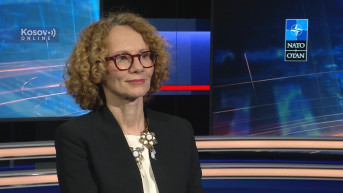
NATO Deputy Secretary General Radmila Sekerinska said in an interview with Kosovo Online that KFOR would remain a guarantor of stability in Kosovo, but stressed that the path toward lasting security remained political and that NATO would continue to support the EU-facilitated Belgrade-Pristina dialogue. Speaking about KFOR’s future, Sekerinska said that the Mission’s presence was being gradually adjusted to the security situation on the ground, but that NATO would not allow a security vacuum to emerge in the region.
Written by: Jelena Novakov
Commenting on the judgment of the Specialist Chambers in The Hague, Sekerinska said that NATO was aware of the judgment and of the fact that it was subject to appeal, stressing that KFOR remained focused on implementing its long-standing UN mandate and maintaining a safe and secure environment and freedom of movement for all people in Kosovo.
Speaking about the Serbian community, the NATO Deputy Secretary General said that KFOR maintained a strong and visible presence, particularly in northern Kosovo, and worked closely with Kosovo Police and EULEX. Regarding the main bridge over the Ibar River and the Visoki Decani Monastery, she said that any change to KFOR’s presence would be implemented gradually and transparently, based on an assessment of the security situation.
Sekerinska also stressed that decades of hard-won peace must not be jeopardized, noting that long-term stability ultimately depended on all sides choosing dialogue and cooperation over violence. According to her, NATO would continue contributing to stability in Kosovo and the region and supporting the Belgrade-Pristina dialogue as the framework for resolving outstanding issues.
NATO has said that it takes note of the judgment in the case against the former KLA leaders in The Hague and that KFOR remains focused on maintaining stability in Kosovo. Does this judgment pose a security risk, particularly for minority communities?
I am aware of the judgment of the Kosovo Specialist Chambers and note that the decision can be appealed. I will therefore not comment on the proceedings. What I can say is that our commitment to preserving regional stability is unwavering. We see the Western Balkans as a region of strategic importance to the Alliance. This is demonstrated by our activities throughout the region, and particularly by our peacekeeping mission in Kosovo.
KFOR is appropriately positioned and remains fully focused on implementing its long-standing United Nations mandate, based on UN Security Council Resolution 1244 of 1999. KFOR contributes to maintaining a safe and secure environment for all people living in Kosovo, as well as freedom of movement at all times. It does so impartially and in close coordination with Kosovo Police and the European Union Rule of Law Mission in Kosovo (EULEX), in accordance with their respective security roles.
KFOR is expected to reduce its troop numbers to pre-2023 levels. What is the future of KFOR in Kosovo?
We are optimizing KFOR’s deployment and presence as a result of the gradual improvement in the security situation on the ground. The ultimate objective is to ensure that our mission remains capable of carrying out its mandate in line with the security environment and operational requirements. KFOR’s presence has been continuously adjusted since 1999 to ensure that the mission remains prepared to respond to changes in the security environment.
The optimization process will continue gradually and in a measured manner. It will be conditions-based and can be fully reversed if developments that could negatively affect long-term security in Kosovo and regional stability so require. The process is being carefully coordinated with all relevant stakeholders, as well as with representatives of Kosovo Police and EULEX.
Local political actors are also regularly engaged and informed, including the Serbian List, whose representative, at the party’s request, met with KFOR Commander Major General Ozkan Ulutas on August 11. Major General Ulutas maintains close contact with all key interlocutors in Kosovo’s institutions, international organizations and the Serbian Armed Forces, and I expect this to continue under the leadership of the new KFOR Commander, Major General Roberto Vergori, who is due to assume command of the mission in mid-October.
KFOR will remain a reliable guarantor of stability. Our mission will continue to have the appropriate number of personnel, equipment, training and organization necessary to implement its long-standing UN mandate, as well as the capabilities, readiness and flexibility required to respond to a range of security scenarios.
Decades of hard-won peace must not be jeopardized. Stability in the region ultimately depends on all sides choosing dialogue and cooperation over violence. NATO makes an important military contribution, but the path toward long-term peace is political.
That is why we continue to strongly support the European Union-facilitated dialogue as the framework for resolving outstanding issues while respecting the rights of all communities. We are in close contact with the European Union Special Representative for the Belgrade-Pristina Dialogue, Peter Sorensen, and we expect Belgrade and Pristina to engage constructively and in good faith in the dialogue.
The Serbian community in Kosovo has expressed concern about the transfer of some of KFOR’s responsibilities to Kosovo Police. Kosovo Police officers were recently accused of using excessive force against an elderly Serb, but have since returned to duty. What measures are being taken to ensure the security of the Serbian and other minority communities?
KFOR does not have a law-enforcement mandate, so I will not comment on individual allegations that fall within the jurisdiction of institutions in Kosovo. Our mission continues to work closely with security organizations in Kosovo, including Kosovo Police, in accordance with the highest operational standards and the principle of fair and equal treatment of all communities.
KFOR maintains a strong and visible presence, particularly in northern Kosovo, in the interest of all communities, including the Serbian community. KFOR’s Liaison and Monitoring Teams also conduct activities throughout Kosovo on a daily basis. This helps ensure that KFOR is well positioned to respond to local security needs in accordance with its UN mandate.
The decision to withdraw KFOR personnel from the main bridge over the Ibar River, as well as from the Visoki Decani Monastery, is among the main concerns of the community in North Mitrovica. Given the recent judgment in The Hague and other incidents, is there a possibility of postponing the withdrawal from the bridge?
KFOR has begun a gradual transition away from a permanent presence on the main bridge in Mitrovica, in line with the improved security situation in Kosovo. This is being carried out transparently and in consultation with all relevant stakeholders.
Some KFOR personnel remain present on the bridge, while KFOR units continue to patrol the surrounding areas.
Regarding the Visoki Decani Monastery, KFOR’s commitment to the security of the monastery and the surrounding communities remains firm. The integration of Kosovo Police into the security arrangements at the monastery is a gradual, conditions-based process. This process is being carefully coordinated with representatives of the Serbian Orthodox Church, Kosovo Police and EULEX.
KFOR personnel remain appropriately positioned to respond to relevant security developments affecting the monastery and the surrounding communities. Any further changes will follow a detailed assessment and will be implemented gradually and transparently, with full respect for the monastery’s religious and cultural significance.
Finally, as with other cultural and religious sites protected by KFOR, any decision on the complete withdrawal of KFOR personnel from the Visoki Decani Monastery will be taken by the North Atlantic Council, NATO’s principal decision-making body.
Members of the Serbian community have expressed concerns about their security, and many have left Kosovo over the past five years. From a security perspective, what would you recommend to members of the Serbian community in Kosovo?
NATO has supported peace and stability in the Western Balkans since the 1990s. Our commitment remains strong today.
NATO’s presence in Kosovo through KFOR has made a crucial contribution to peace and stability over the years, enabling significant economic and social development.
For more than two decades, KFOR has maintained a safe and secure environment for all people in Kosovo and freedom of movement. This is no small achievement, and it has been recognized by all communities. At the same time, we are very much aware of the many challenges that remain. I therefore want to reiterate that the path toward lasting security in Kosovo is political.
To that end, we will continue to support the European Union-facilitated dialogue on the normalization of relations between Belgrade and Pristina.
We will not allow a security vacuum to emerge, and we will continue contributing to stability in Kosovo and throughout the region.

0 comments