
Sekerinska: NATO did not participate in consultations on the alliance of Albania, Croatia, and Kosovo
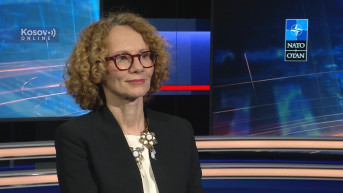
NATO Deputy Secretary General Radmila Sekerinska stated that the Alliance did not take part in discussions on the Declaration on Defense Cooperation signed by Croatia, Albania, and Kosovo in March last year, but that NATO membership does not prevent countries from having additional defense agreements with third parties.
In an interview with Beta, Sekerinska said that investment in defense is important for the security and stability of the Western Balkans, which are also affected by geopolitical developments, but above all political dialogue, adding that NATO members from the region make a significant contribution to stability, N1 reports.
“We believe that all countries in the region can contribute and are interested in supporting regional stability. Therefore, we expect everyone to provide support in that regard,” Sekerinska said.
Asked about the recent meeting of defense officials of Croatia, Albania, and Kosovo and the announcement of their first joint military exercise, as well as the reaction of Serbia’s Ministry of Defense, which stated that this has the potential to produce long-term security consequences and destabilize the situation in the Western Balkans, Sekerinska said that Albania and Croatia contribute to regional stability.
“Albania and Croatia are not only reliable and valuable allies within the Alliance. They are also important contributors to regional peace and stability. They are present in KFOR, but in general, they are very focused on supporting this agenda in the region,” Sekerinska said.
She added that it is evident that the global geopolitical situation has also affected the region.
“You see more exercises, more investment in defense and security, but we always call on allies and partners to also engage in political dialogue and resolving remaining issues in the region. Our presence in the Western Balkans aims to support this kind of political dialogue,” Sekerinska said.
Support for the Belgrade–Pristina dialogue
To that end, she added, NATO also supports the Belgrade–Pristina dialogue and creates an environment conducive to a political solution.
“I have no doubt that all our allies firmly believe that security, peace, and prosperity are the only approach for the Western Balkans,” Sekerinska emphasized.
The NATO Deputy Secretary General said they expect and count on those responsible for the attack on KFOR mission members in Zvecan and the clash in Banjska in 2023 to be brought to justice, adding that in this way they want to prevent such events from recurring.
“We have received guarantees or a very clear commitment from the authorities in Belgrade that responsibility will be established and that will be our position in the future as well,” Sekerinska said.
NATO Secretary General Mark Rutte said at a conference in Brussels this week that he is “still waiting for accountability” for the events in Kosovo, adding that the President of Serbia had promised him this would be fulfilled and that he expects it to happen soon.
“This will very clearly be a call that we will repeat again and again, and we expect the Serbian authorities to come forward with results,” Sekerinska said.
Asked whether that means there have been no results so far on that issue, Sekerinska replied that Rutte “therefore reiterated the call for accountability.”
“NATO’s presence in the region, through KFOR and various other teams, demonstrates the Alliance’s clear commitment to supporting peace and stability,” Sekerinska said, stressing that the Western Balkans are of strategic importance to NATO and that the Alliance remains very active in the region.
She recalled that NATO has several members in the region, Montenegro, Albania, and North Macedonia, as well as partners, including Serbia.
“Of course, global geopolitical circumstances have become more dangerous and unpredictable. The Alliance is very focused on strengthening deterrence and defense and continuing support for Ukraine, but that does not mean we are losing sight of the importance of the Western Balkans,” Sekerinska said.


0 comments