
Starovic: We don't expect Trump to withdraw Kosovo recognition, but hope for a firmer stance on Kurti
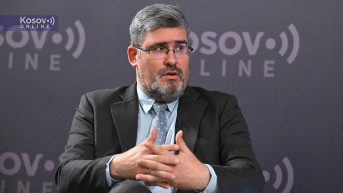
"I believe significant opportunities are opening up to further improve relations between Serbia and the United States with the arrival of Donald Trump’s administration. While relations have been on a stable trajectory of gradual improvement, new perspectives are emerging. If for no other reason, it's because Trump is very popular in Serbia, and that's a potential smart statesmen should capitalize on," said Nemanja Starovic, Serbia’s Minister of Labor, Employment, Veterans, and Social Affairs, in an interview with Voice of America. He is the first Serbian official to visit the U.S. following the presidential elections.
Starovic attended the forum of the International Democratic Union in Washington, which brings together dozens of parties worldwide, including the Republican Party and members of the European People's Party (of which SNS is a member). He also participated in closed Republican meetings.
What does the Serbian government hope to gain from the incoming U.S. administration? You mentioned the potential for improving relations—what specifically?
On the one hand, we shouldn't harbor illusions of a dramatic 180-degree shift in U.S. foreign policy—that never happens. But I believe the new administration will be more willing to listen to Serbia. Unlike many countries, over the past four years, we maintained connections with individuals close to Donald Trump, had a certain level of communication, and now it's time to capitalize on that. We hope for a higher level of understanding and small, positive steps to improve bilateral relations, both economically and politically.
I genuinely believe there is a good and realistic chance that U.S. President Donald Trump, during his second term, will finally visit Serbia. Such a visit would represent a turning point both symbolically and practically. I'm confident our people would welcome Trump with great enthusiasm."
Specifically, do you anticipate changes regarding Kosovo?
We shouldn't foster illusions or overly ambitious hopes that the U.S. administration would revoke its recognition of Kosovo’s independence—that's not realistic. But we do hope for greater understanding, particularly concerning the challenges faced by our people in northern Kosovo. This is a community deprived of fundamental political, human, and economic rights.
Considering the experience of Trump’s first administration, I am confident the new administration will adopt a somewhat firmer stance toward Albin Kurti, given the pattern of unilateral measures he implements. We've seen that the current administration has also been very critical of him, and we are grateful for every statement from U.S. diplomats condemning such unilateral measures. However, unfortunately, this rhetoric and these positions are not accompanied by concrete actions.
Here I see an opportunity for the new administration to take a stronger approach, ensuring rhetoric is backed by punitive measures against the Pristina administration.
Do you think Serbia will receive different treatment due to the business dealings of Trump’s son-in-law Jared Kushner, such as the luxury complex development on the site of the General Staff building?
That seems like an oversimplification of a much more serious issue of bilateral relations, reducing it to a single business deal. While I don’t rule out the possibility that it could contribute something, I think the mosaic of our bilateral relations is far too complex to be boiled down to the impact of one business arrangement.
Following the explosion on the Ibar-Lepenac canal, for which Belgrade and Pristina blame each other, Serbia has called for an international investigation into the incident. Who do you expect to conduct this investigation, given that EULEX lacks the mandate to do so?
I'm not entirely sure EULEX doesn’t have the mandate to carry out such an investigation...
They Do Not Have Executive Powers...
We often hear this formula: the Kosovo Police are the first responders, followed by EULEX, then the KFOR mission, and finally, we see that KFOR is ready to prevent escalation. Either way, we are absolutely prepared to conduct our own investigation into this incident or sabotage—whatever one may call it—within the capacities we have. At the same time, we are ready to provide maximum support to EULEX, KFOR, and, in some cases, even through the mediation of other bodies, to the authorities of the provisional institutions of self-government in Pristina.
So, you are ready to cooperate?
Absolutely. It is in our best interest to resolve this matter completely. We are entirely certain that what happened—this sabotage—has absolutely nothing to do with Serbia's authorities or the legitimate representatives of the Serbian people in northern Kosovo and Metohija. While we do not know whether the specific perpetrator of this act might come from the Serbian community or not, it is important for us to uncover who organized and supported it and what is behind this criminal act.
At the end of October, the Serbian government adopted two draft laws: one on social assistance for certain population categories in northern Kosovo, and another on the jurisdiction of judicial bodies. Simply put, the latter envisions the Higher Court and Prosecutor's Office in Belgrade having jurisdiction over prosecuting those accused of violating the rights of Serbs in northern Kosovo. Both drafts have been criticized by the EU and the U.S. If the judiciary law is adopted in the Serbian Parliament, how will it be practically implemented? Would it involve Kosovo extraditing to Serbia individuals it considers its citizens? Is that realistic?
"Since the ministry I head proposed the law on Kosovo as a zone of special social protection, let me address that first. This proposal is significant because it aims to improve the position of our compatriots in Kosovo, who have faced difficult conditions due to Albin Kurti's pattern of unilateral measures. The law, once passed, would introduce two financial aid mechanisms for citizens in Kosovo: one for unemployed individuals, providing 20,000 dinars per month, and another for individuals over 65 years of age who are not entitled to a pension.
As for the other law, concerning the introduction of a special prosecution office and court with jurisdiction over Kosovo and Metohija, the goal was to address the legal vacuum that has existed, especially in the past two years, since Serbs withdrew from the judicial institutions in northern Kosovo. These institutions were integrated based on the Brussels Agreement. However, since the agreement’s most crucial part—the establishment of the Community of Serbian Municipalities—has not been implemented, this withdrawal created a legal vacuum. Crimes still occur, and there was a need to establish judicial institutions to fill this gap.
But how? How would a prosecutor's office in Belgrade prosecute someone Kosovo considers its citizen?
From the moment the law is passed, the usual mechanisms would apply: territorial jurisdiction would extend to Kosovo and Metohija, and the prosecutor's office and court would perform their duties. A different question is whether individuals being prosecuted would be available to that judicial body. Those who are unavailable could be prosecuted in absentia."
A parliamentary group within the ruling coalition, the Socialist Movement, proposed a law on foreign agents, requiring NGOs receiving foreign funding to register as agents of foreign influence. This is similar to laws in Russia, Belarus, and Georgia. While this proposal does not come from your political group, it is part of the ruling coalition. Do you think this is a good direction for Serbia?
I’ll answer briefly: this is not a law that has gone through the legislative procedure within the Serbian government, nor was it proposed by the government. Every political party has the right to affirm its policies, including through parliamentary initiatives, but this is not something the Serbian government supports. I don’t believe it will appear on the agenda of upcoming parliamentary sessions.
If it did reach the government, would it pass?
I’m not sure. I wouldn’t want to speculate; we haven’t debated it within the government.
Do you personally support such a law?
I would need to review the proposed provisions.
EU member states have not reached a consensus on opening Cluster 3 in negotiations with Serbia, citing reasons such as Serbia’s misalignment with EU foreign policy, the lack of sanctions against Russia, issues with the rule of law, and the dialogue with Kosovo. These criticisms seem to have remained unchanged for years. Does the government have the political will to address them?
I believe we have demonstrated political will through actions, both this government and previous Serbian governments. This is reflected in the recommendations of the European Commission, which has, for the fourth consecutive year, given a positive recommendation to open Cluster 3. However, for the past three years, the European Council has refused to act on that positive recommendation.
We would not have received such a recommendation if the European Commission did not recognize the efforts we have made in necessary reforms. We amended the Constitution to ensure greater judicial independence, but this has not yet been reflected in the opening of a new cluster.
Currently, we are in a holding pattern. The Hungarian presidency is making considerable efforts to bring this matter to the agenda. I wouldn’t speculate on whether this will succeed or not, but I believe that failing to open a negotiating cluster for the fourth year in a row would send a very negative message. It would not properly motivate our state administration to continue its efforts and stay committed to the reform agenda.
There are ongoing student blockades across the country, following citizen protests after the death of 15 people when a shelter collapsed at the Novi Sad railway station. Students are specifically demanding the release of those arrested during the protests and the disclosure of documentation related to the station’s reconstruction. Will the government meet the demands of the protests?
This is a significant tragedy. I was born and live in Novi Sad, right across from that ill-fated railway station. Everything that happened is a tremendous shock and a tragedy. I take this opportunity to express my condolences to the families of the victims.
What is very important is that, alongside addressing political accountability, we are also determining criminal responsibility in the most direct sense. Two ministers have resigned, as has the director of Serbian Railways Infrastructure. The prosecution began its work very quickly and intensively; I believe around 100 people have given statements, and about ten have been detained.
It’s unrealistic to expect criminal proceedings to conclude within a month or two, as these are complex cases.
Regarding the protests, I fully understand the anger in the initial days. A large number of people came to Novi Sad to express their grief or outrage. However, it seems to me that what we are witnessing now—with a smaller number of people engaging in increasingly aggressive actions in the streets—is gradually losing connection with the tragedy and respect for the victims. I fear that the atmosphere being created is very harmful, with minor physical clashes occurring at several locations. That is the last thing we need. As for the demands, I genuinely do not understand them. Regarding the publication of documentation, I am unsure whether that would help the ongoing investigations. I believe we should leave this to the prosecution to handle responsibly and in accordance with legal authority. In the political sphere, I reiterate that we have seen ministerial resignations, and even Aleksandar Vucic himself offered a fair, gentlemanly solution in the form of a consultative referendum where citizens could decide on his political position, which could potentially lead to his resignation...
But no one is demanding the president's resignation. The demands are to release those detained during the protests and to disclose the documentation. Will the government meet these demands? You said you're unsure whether releasing the documentation would help, but what about the other demand to release those detained during the protests?
I believe that most of those detained, starting from November 5 onward, have been released in recent days.
What will the government do to ease tensions in society? If the protest demands are not met, what is the next step?
I believe our approach has been consistent—not just regarding this wave of protests that began on November 1 but also concerning protests like those under the slogans 'Stop Bloody Shirts' or 'One of Five Million.' We have not responded using a repressive apparatus; there has been no visible police presence on the streets, and protesters have not been prevented from demonstrating, even in cases where protests were not officially scheduled.
Surely, a hallmark of a democratic country is that police do not assault people who protest peacefully?
I agree, but let me give you an example: remember the 'Yellow Vest' protests in France in late 2017 and 2018? Ten people lost their lives, many lost one or both eyes. That was how a paragon democratic state reacted to the blocking of rural roads. Serbia has not and will not respond in such a manner. I think our approach has proven to be the right one. I also understand citizens frustrated by blocked roads and other inconveniences. But I believe this is still a better course than entering any phase of repression.
So, you will let the protests fizzle out on their own?
I provided you with an example of how it was in 2018 and 2019. I think, given the current circumstances, this is the least bad and most optimal approach.

0 comments